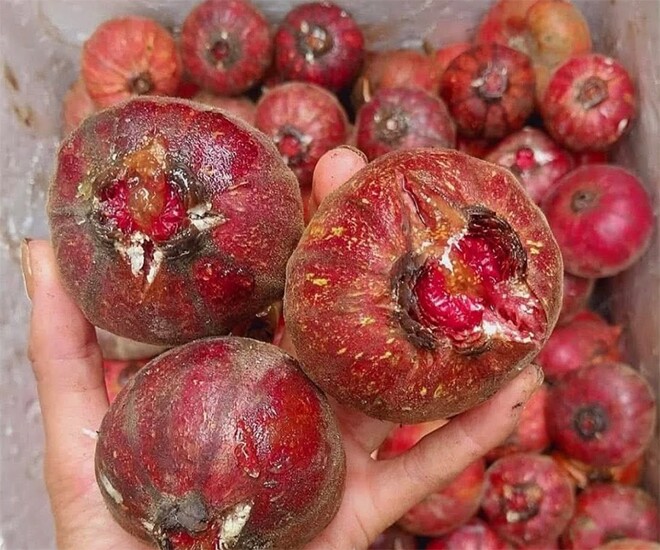
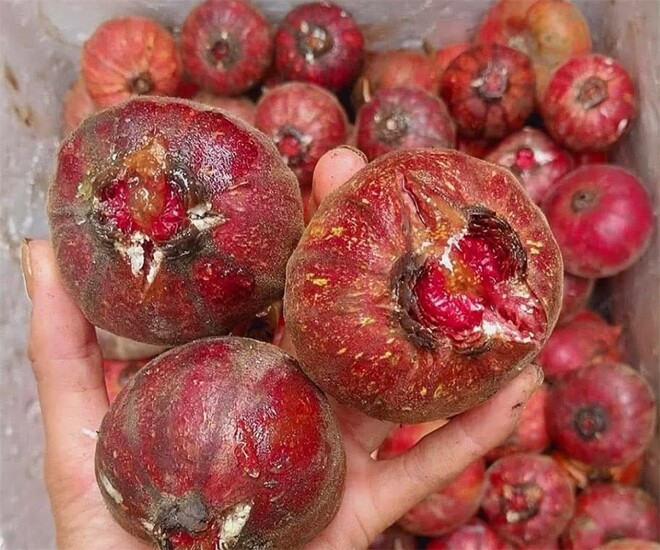
The Indian Fig, also known as the Broad-leaved Fig, Giant Indian Fig, Elephant Ear Fig, or Fig Apple, is a tree native to the mountainous forests of Northern Vietnam, including provinces like Bac Ninh, Lang Son, and Phu Tho. For many individuals born in the 80s and 90s who grew up in the midlands and highlands, the Indian Fig holds nostalgic value, reminiscent of childhood days spent foraging ripe fruits in the forest with elders.
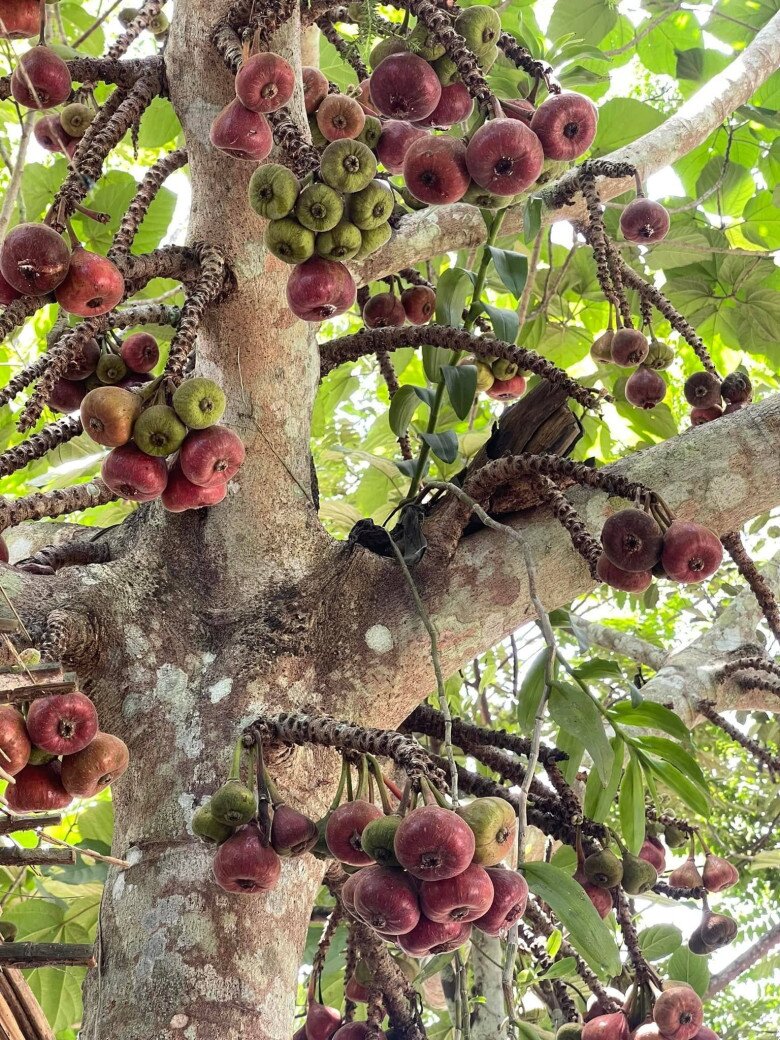
The Indian Fig is easily identifiable by its large, broad leaves resembling lotus or elephant ears. In many regions, young leaves are used to wrap filtered flour cakes, ant egg cakes, or prepare rustic dishes. The fruit, though similar in shape to common figs, is significantly larger. They grow in clusters on old branches, at the base, or on leafless branches, creating a unique visual spectacle.
When ripe, the fruit turns a deep purple-red, with some as large as a fist. Cutting it open reveals a stunning array of colors: a white outer layer, followed by a vibrant red, and an inner yellow section with fibrous strands resembling a flower. The core contains a golden-brown, jelly-like syrup and a milky white latex. This syrup gives the Indian Fig its distinctive flavor.
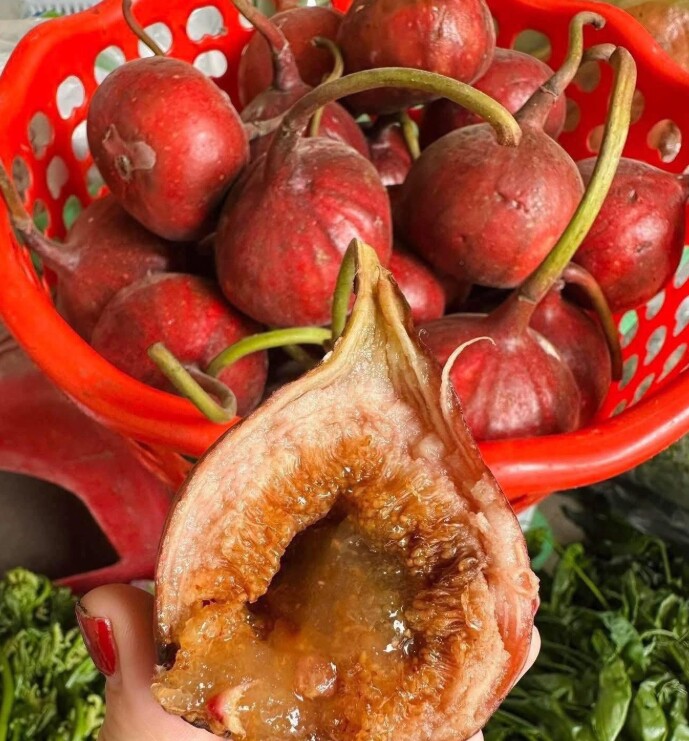
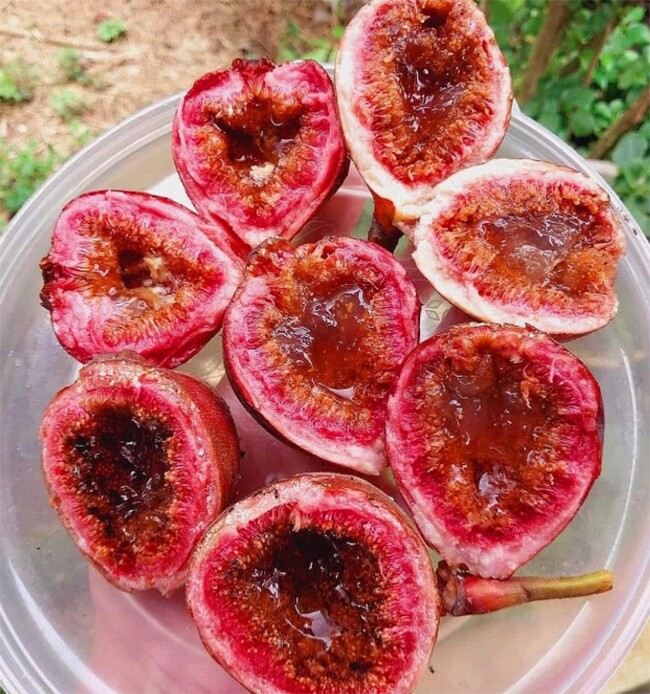
Ripe fruits offer a refreshing sweetness, soft texture, and a subtle fragrance. The sweetness of the flesh spreads across the tongue, followed by the cool, sweet syrup with its signature forest aroma. Many find its taste distinct from common figs or mulberries, becoming more enticing with each bite. It’s a popular choice for cooling down during late autumn and early winter.
Local experience suggests that the Indian Fig tree flowers and fruits around mid-July in the lunar calendar. After 3-4 months, the fruits ripen and can be harvested for several weeks under favorable weather. Traditionally, people foraged for fruits in the forest, but now many cultivate them in their gardens for a steady supply.
The Indian Fig tree is remarkably easy to grow, thriving in well-drained, loose soil, suitable for hillsides or home gardens. Young trees require consistent watering to establish roots. Mature trees are drought-tolerant, disease-resistant, and low-maintenance. With ample sunlight and regular organic fertilization, they grow robustly, with wide canopies and stable yields.
Online marketplaces and plant groups offer Indian Fig trees of various sizes, from seedlings to grafted trees over a meter tall, priced from tens to hundreds of thousands of VND based on size and age. Gardeners report that well-cared-for trees can bear fruit within a few years.
Social media is filled with images of gardeners boasting Indian Fig trees laden with fruit in their yards. Some trees bear hundreds of fruits clustering on trunks and old branches, creating a stunning display. Beyond fruit production, the tree is prized as an ornamental plant for its large, beautiful foliage and unique shape.