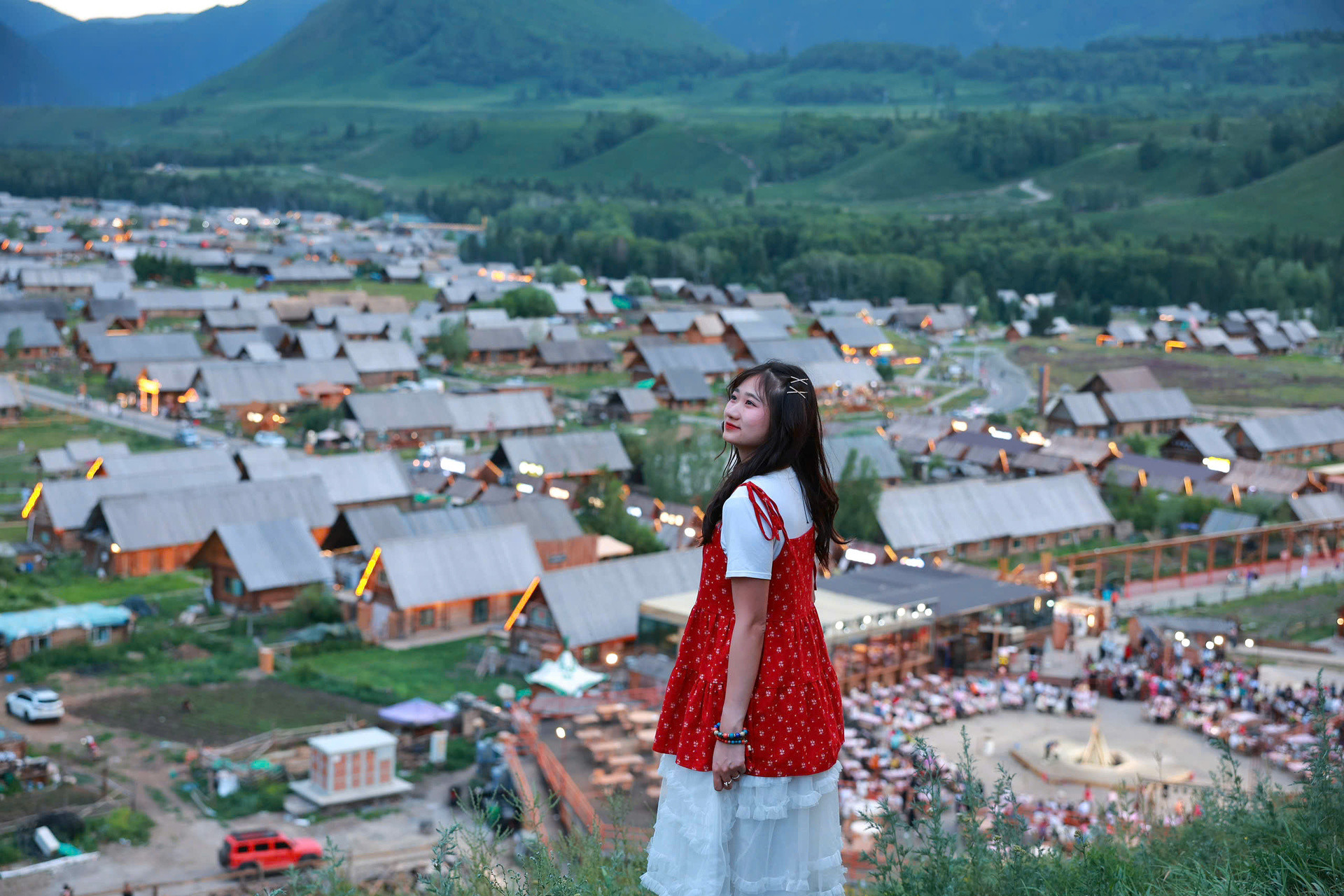
At 10 PM, the twilight envelops the wooden houses, meadows, and the meandering river around the village, leaving Linh utterly captivated.
“Visiting Heimu truly made me understand why it’s often likened to a village straight out of a fairy tale,” Linh shares.
In late June, Thuc Linh embarked on a 9-day journey to explore Northern Xinjiang. Along with her companion, she traversed Urumqi, Kanas Lake, Heimu Village, Sayram Lake, Xiata Snow Mountain, Nalati Grassland, and the renowned Duku Highway… The total cost for this self-guided trip, including flights, was approximately $2,300 per person.
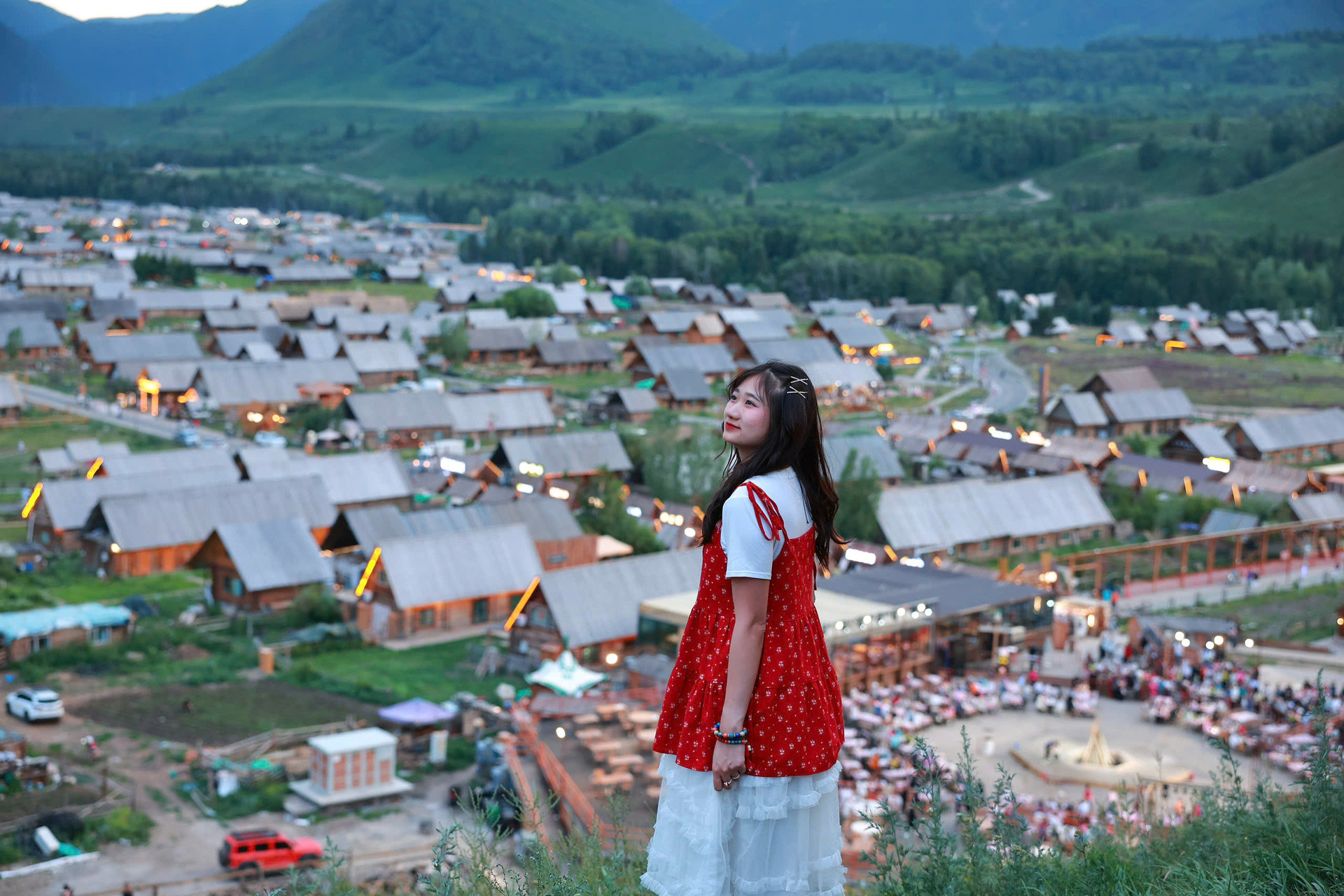
The 10 PM scenery in Heimu Village
A Serene Village, Straight Out of a Fairy Tale
Nestled within the Kanas Scenic Area, Heimu lies in the valley of the Altay Mountains, near the borders of Kazakhstan, Mongolia, and Russia. It’s hailed as “China’s most beautiful village.”
After two days of continuous travel, upon arriving in Heimu, all of Linh’s fatigue seemed to vanish.
“The atmosphere here is incredibly peaceful. The locals are friendly, and life moves at a slow pace. The village is even more beautiful than I had imagined,” she says.
At night, the group stayed in a traditional wooden house belonging to a local family. Though not large, the house was clean and well-equipped, akin to a small hotel. Despite being late June, the weather in the village remained cool, with a chilly morning breeze, eliminating the need for air conditioning.
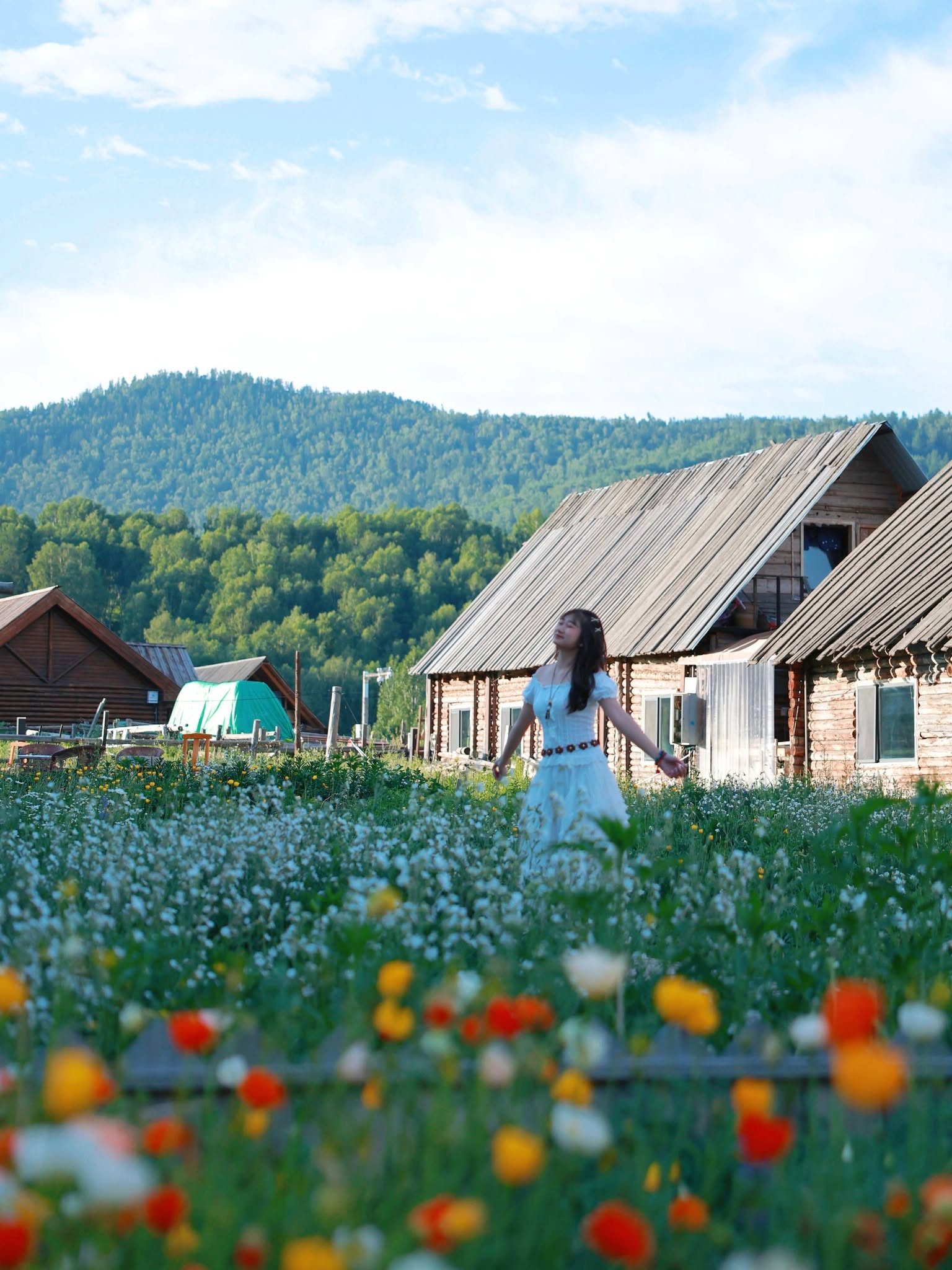
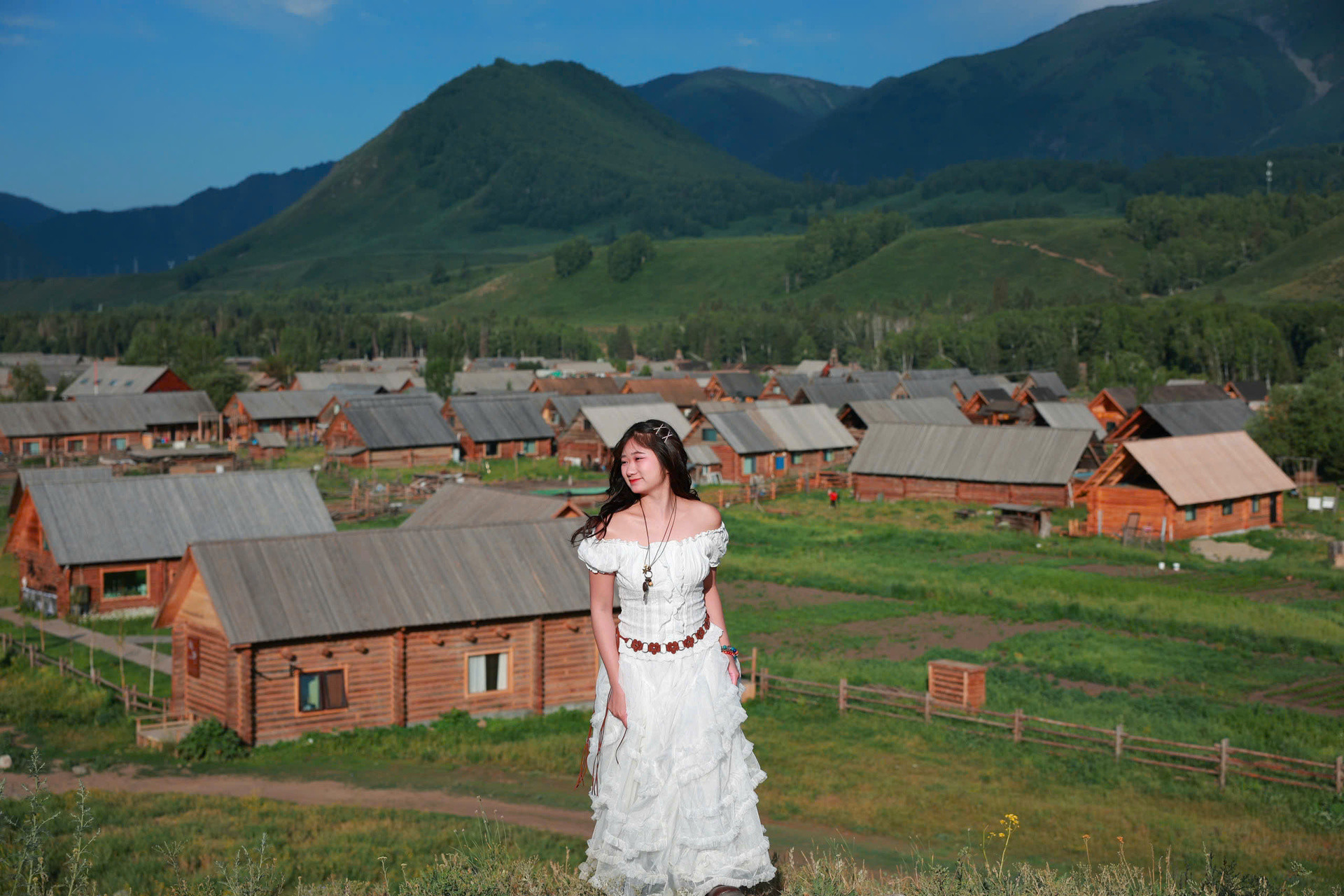
Heimu is renowned for its wooden houses nestled among meadows and vibrant flowers
Heimu retains the charm of a mountain village, with wooden houses scattered across meadows, and the faint smoke from kitchens rising at dawn and dusk. Alongside traditional livestock farming, many families now offer homestays or tourism services, yet life here remains slow-paced, a stark contrast to the bustling cities.
Each season, Heimu showcases a unique beauty. In spring, hundreds of flowers bloom, with vast fields of purple flowers stretching across the grassland to the foot of the mountains. In autumn, the pine forests turn golden, orange, and crimson, as vibrant as a painting. When winter arrives, the entire village is blanketed in white snow.
Linh visited the village in summer, yet it wasn’t hot at all. Mornings and nights were cool, with golden sunlight, and the scenery was brimming with vitality.
“I woke up at 6 AM, rented an electric cart to explore the village, weaving through narrow paths. On both sides were summer flowers in full bloom, distant green meadows, and majestic mountains. I just wanted to go slowly to take it all in,” she recounts.
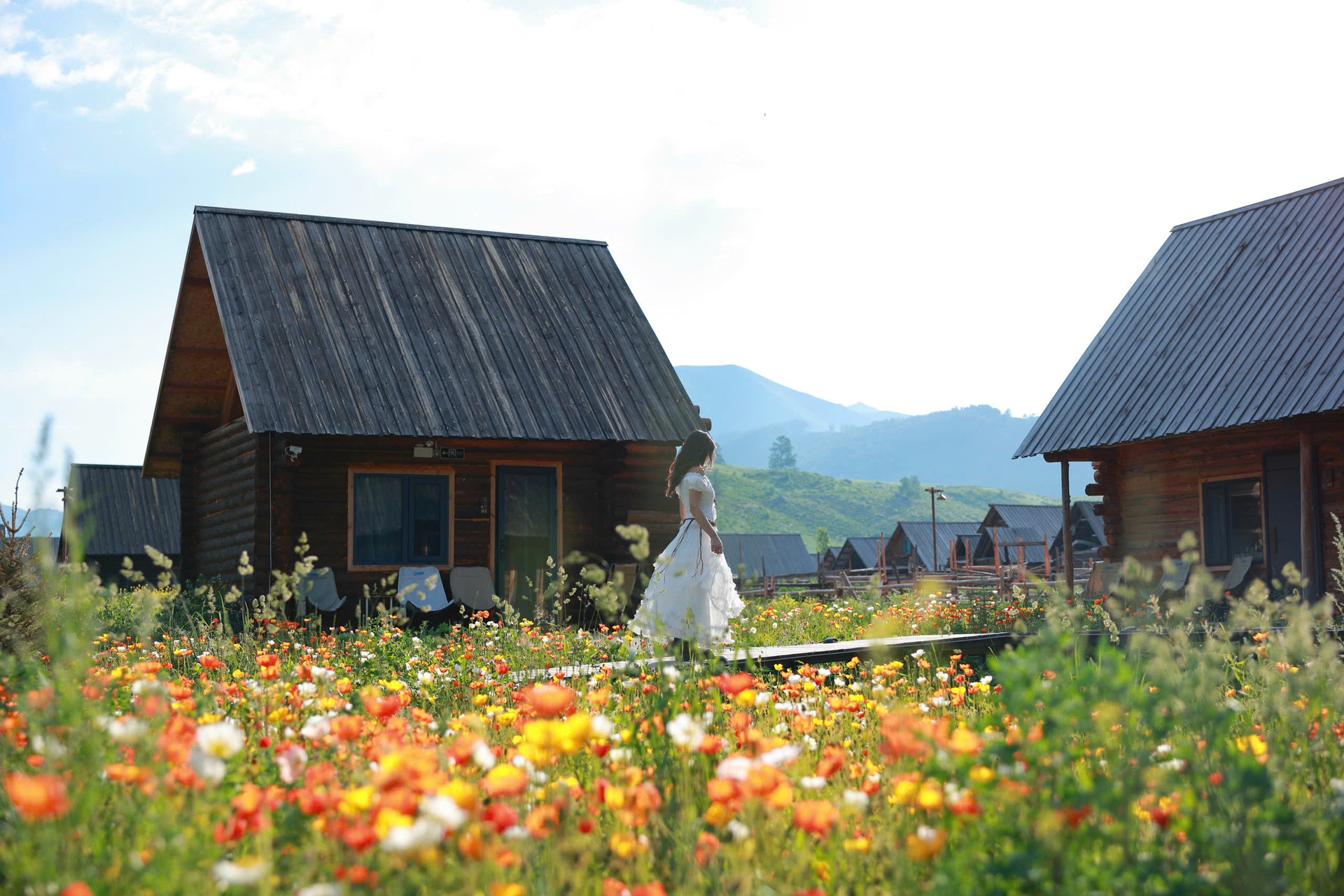
Golden sunlight bathes the vibrant poppy fields in Heimu
A “Back-Breaking, Leg-Weary” Journey with Breathtaking Scenery
Before reaching Heimu, the Vietnamese group visited Kanas Lake, a lake within the eponymous nature reserve. The lake boasts a distinctive emerald green color, surrounded by pine forests, snow-capped mountains, and vast grasslands. However, Linh notes that this area is quite crowded, with long travel times, so those prone to motion sickness should prepare accordingly.
After leaving Heimu, the journey continued to explore many famous landmarks of Northern Xinjiang. One of the most anticipated spots for Linh was Sayram Lake, often referred to as the “last tear of the Atlantic Ocean.”
“It took nearly half a day by car to get there, but it was completely worth it. Everywhere I looked, I was amazed. The lake’s shores were filled with colorful flowers, the water was crystal clear, and in the distance were snow-capped mountains. Most of the time, I just sat and admired the scenery rather than taking photos,” Linh recounts.
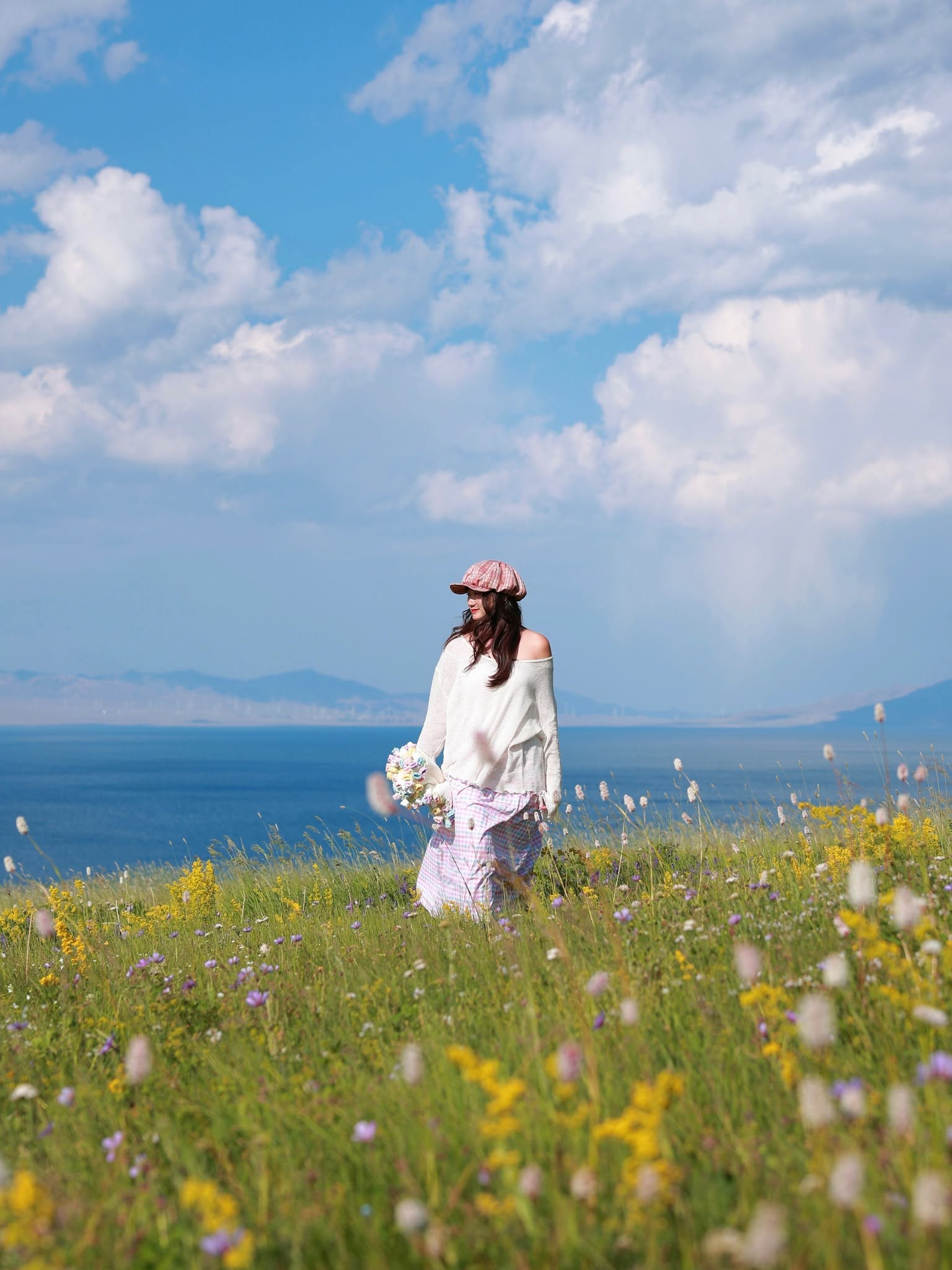
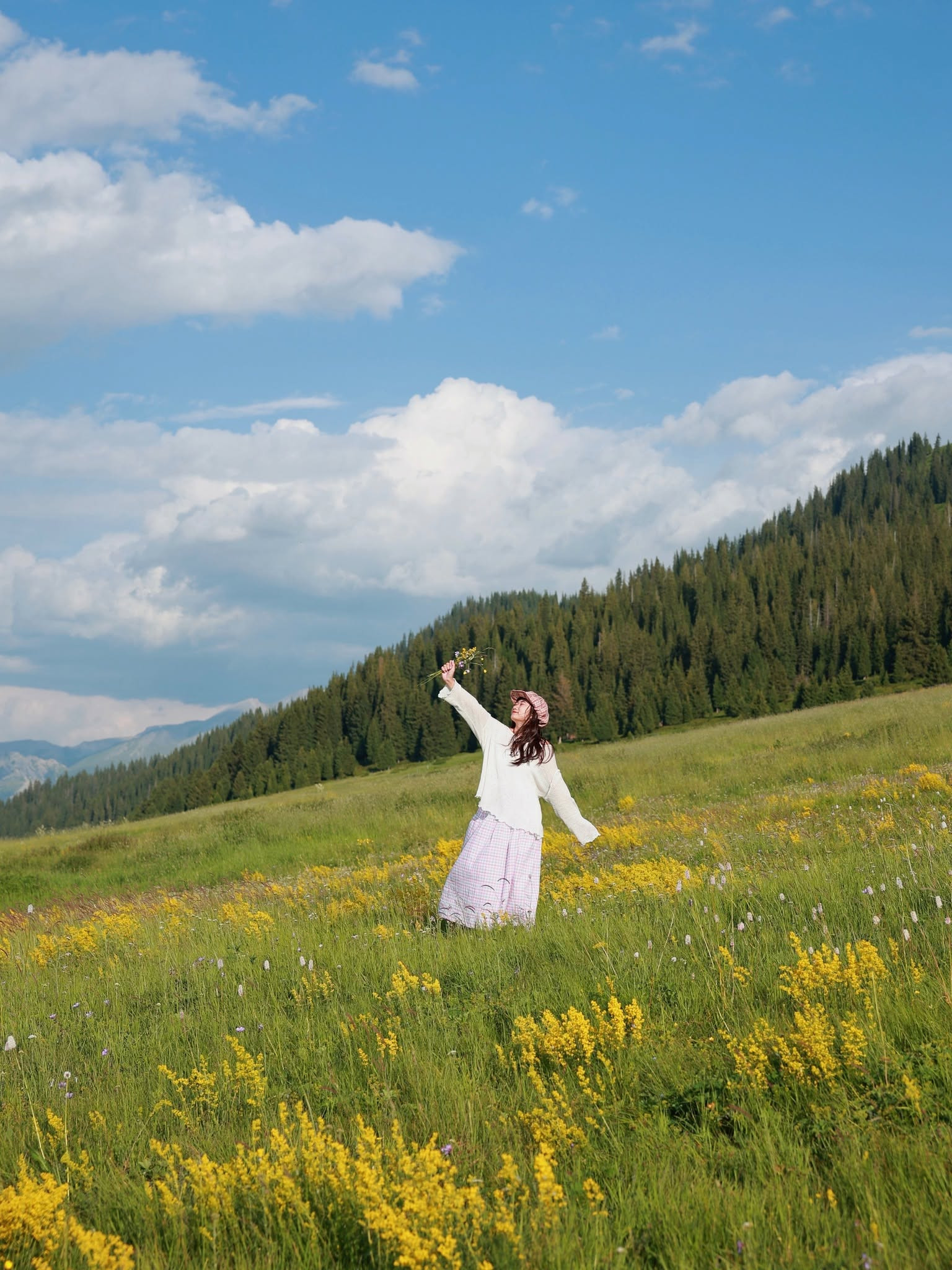
Sayram Lake’s poetic scenery captivated the Vietnamese traveler
That night, the group stayed in glass-enclosed rooms overlooking the grassland, which had the highest accommodation cost of the entire trip.
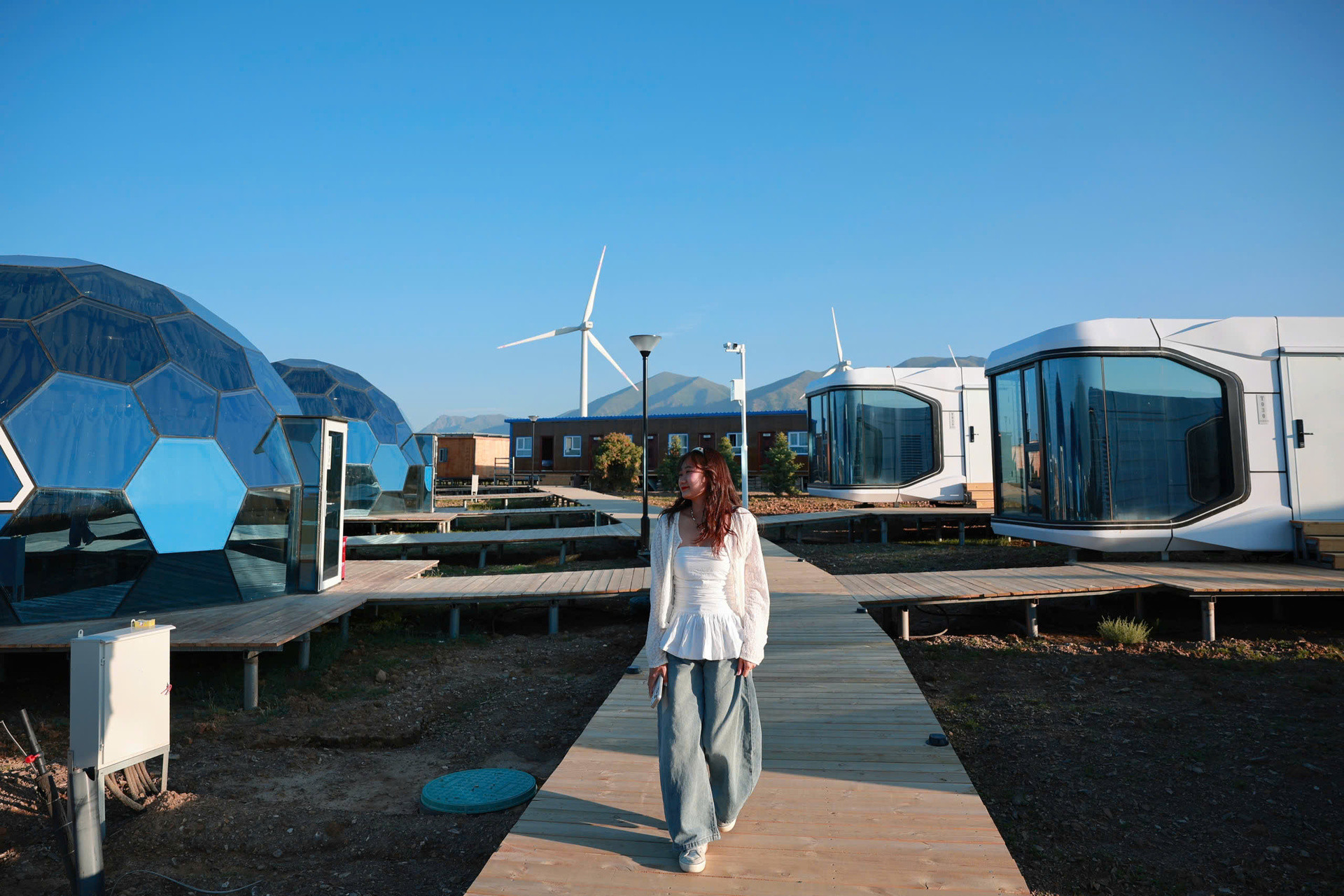
The glass-enclosed rooms
The next day, the Vietnamese group continued to Xiata. Despite a travel delay due to an incident en route, the scenery here also left Linh satisfied.
“The group continuously exclaimed upon seeing the distant snow-capped mountains, lush forests, and green meadows. Xiata is quite vast, requiring at least half a day to fully explore by trekking. If given the chance to return, I’d stay longer,” Linh shares.
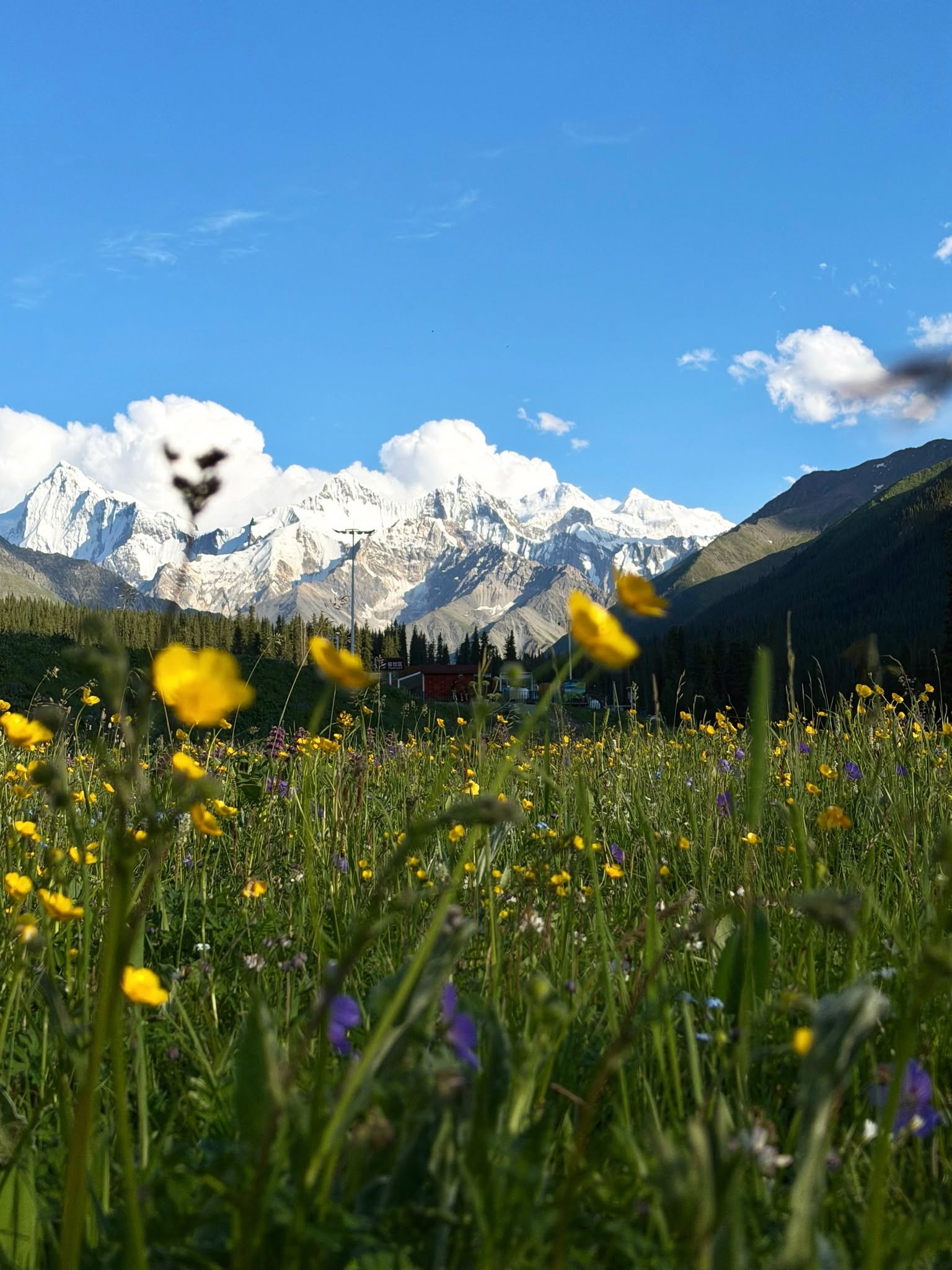
Another memorable experience for Linh was horseback riding on the Nalati Grassland, known as the “heavenly meadow.”
“In the distance were snow-capped mountains, and before me were lush green meadows and crystal-clear streams. The real-life scenery was far more majestic than online images,” Linh shares.
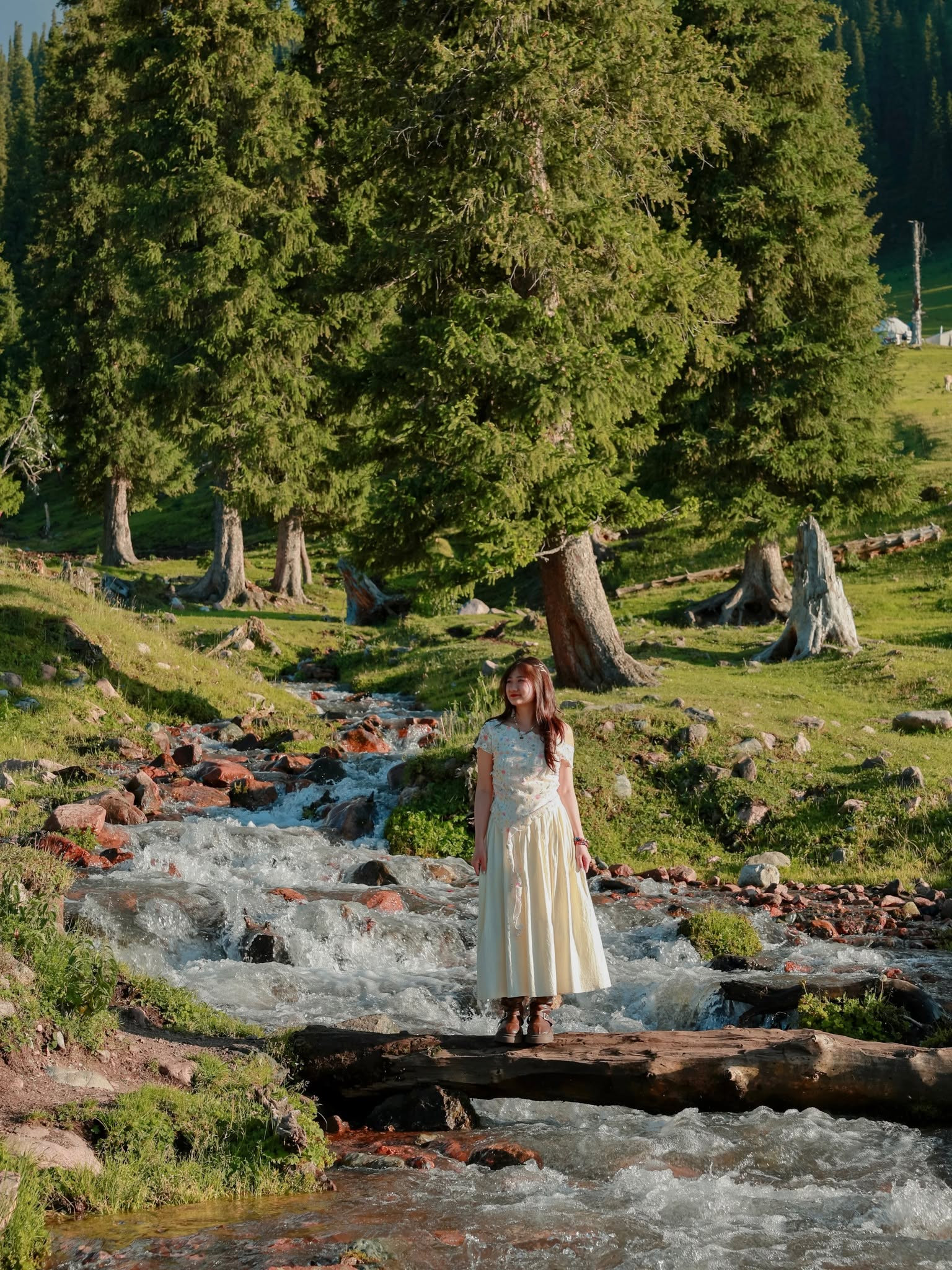
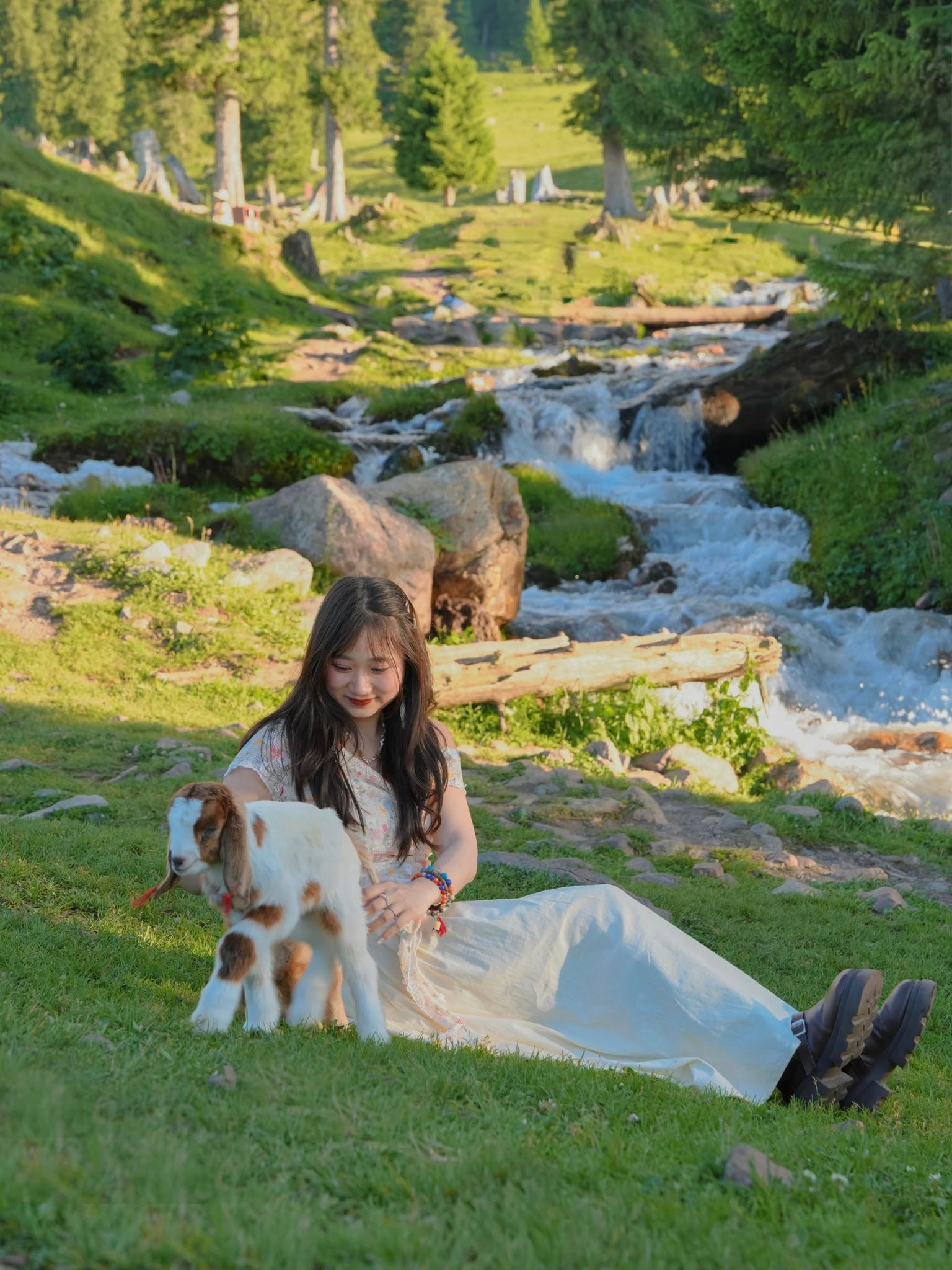
The picturesque Nalati Grassland
The final leg of Linh’s journey was experiencing the Duku Highway, a nearly 600km route that opens only a few months a year depending on weather conditions.
“I felt like experiencing all four seasons in one day on this road. In the morning, the car drove through grasslands with horses grazing leisurely, a few hours later we saw snow-capped mountains, then red gorges, glaciers, pine forests, and vast valleys appeared. Each turn revealed a completely different scene. It was the last day, and everyone was exhausted, but we were still eager to admire the views,” Linh shares.
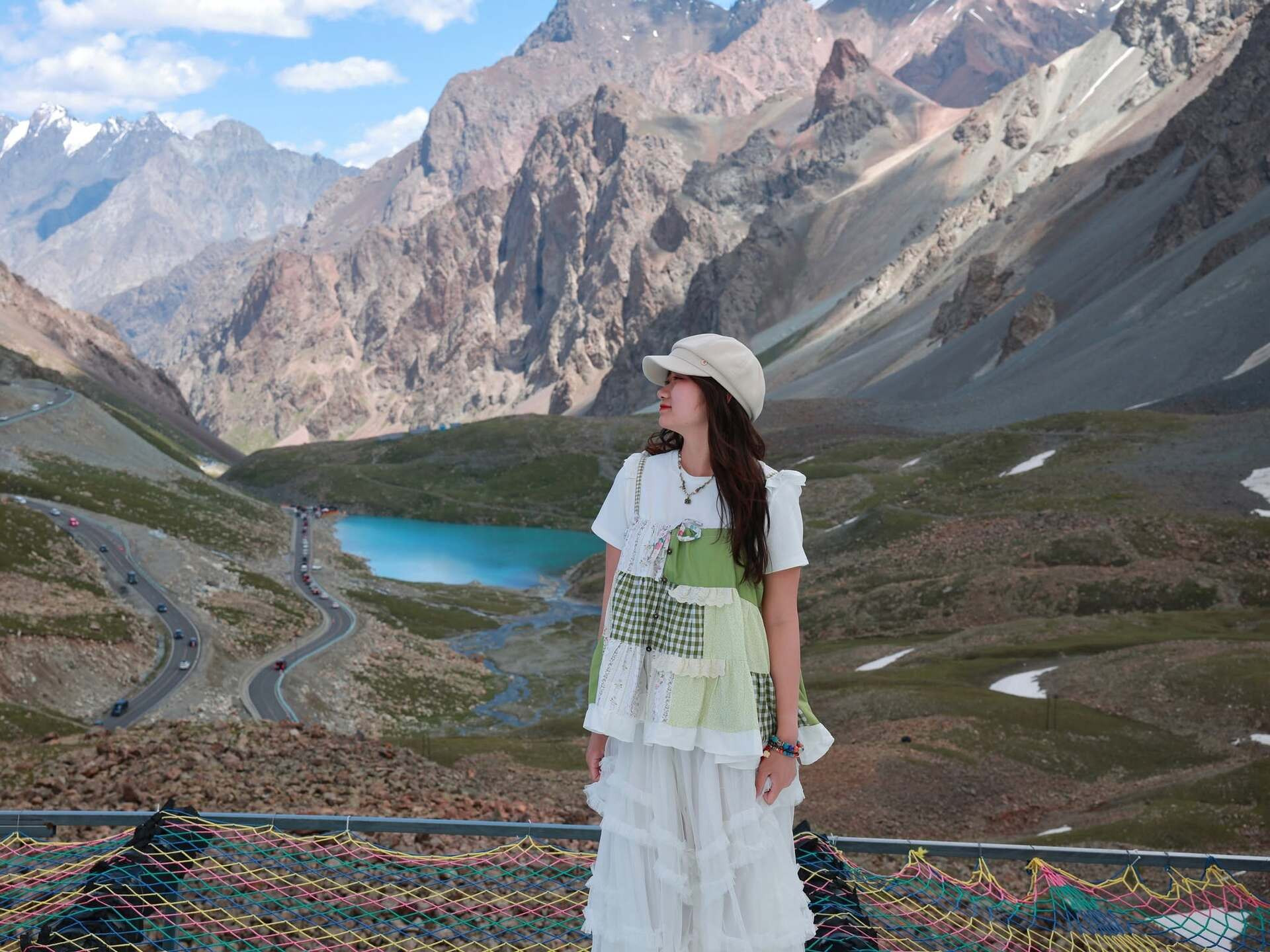
Scenery along the way
According to Linh, the biggest challenge in exploring Northern Xinjiang is the vast distances between attractions. Some days, the group spent more than half a day in the car, so those prone to motion sickness should prepare medication in advance.
“If time permits, everyone should spend more days exploring Northern Xinjiang. This place not only boasts famous landmarks but also captivates with its roads, pace of life, and a sense of tranquility unlike any other crowded tourist destination I’ve visited,” Linh says.