
This traditional banana cake is a staple during local festivals and Tet celebrations, offered to ancestors, shared with family, and served to honored guests.
“In the past, the Tay people of Na Hang (Tuyen Quang) would make banana cakes on the 15th day of the 7th lunar month.
Today, this delicacy is enjoyed year-round, catering to both locals and tourists while preserving the unique culinary heritage of the region,” shared Thu Huyen (born in 1996, of Tay ethnicity).
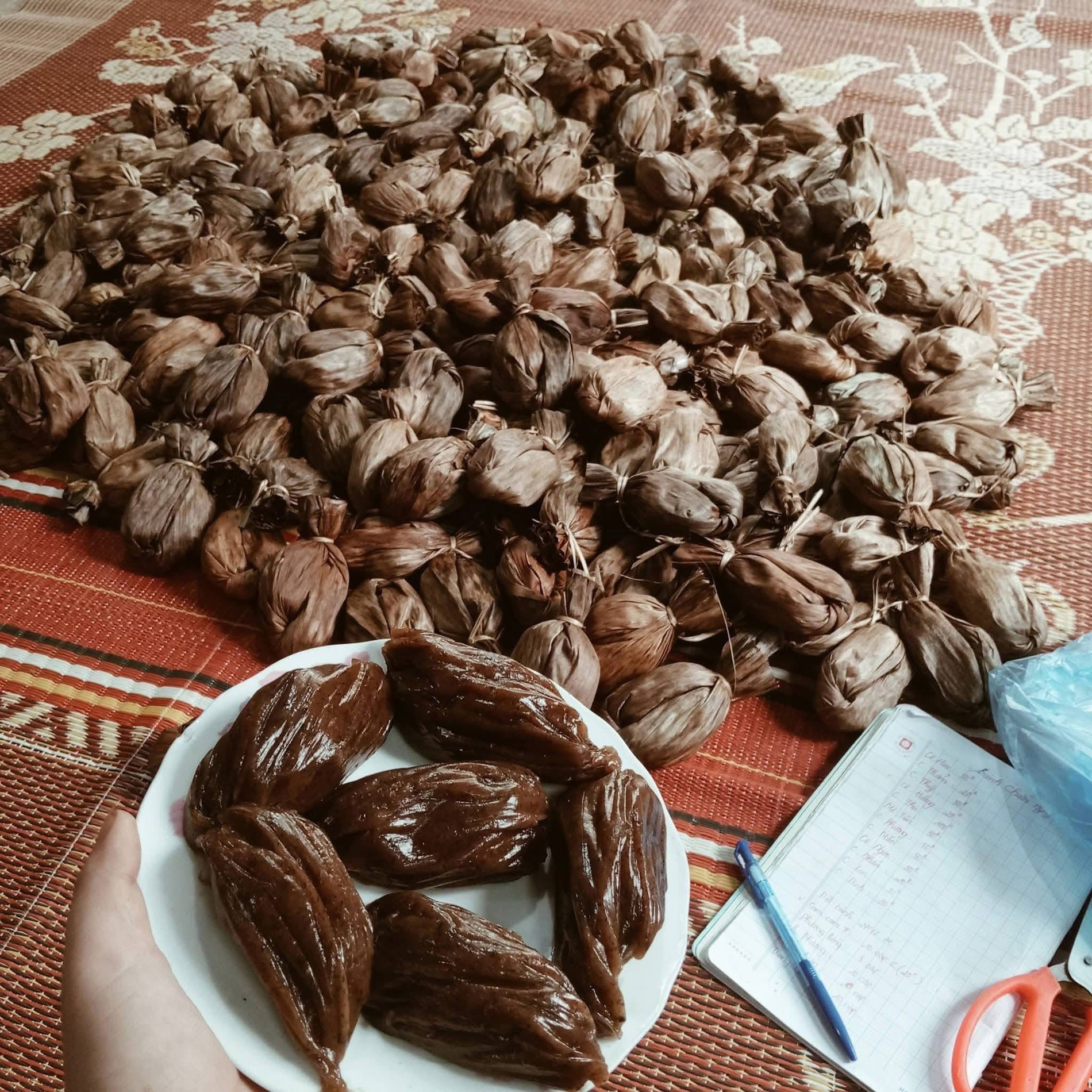
The Tay’s banana cake from Tuyen Quang
As the name suggests, the cake is made from two primary ingredients: bananas and upland sticky rice.
The Tay people carefully select high-quality upland sticky rice and use a specific type of banana called Tay banana (or Goòng banana) to achieve the perfect flavor and texture.
Around the 6th and 7th lunar months, the bananas are at their ripest and most flavorful. During this time, locals harvest and dry large quantities of bananas over the kitchen stove for cake-making and year-round storage.
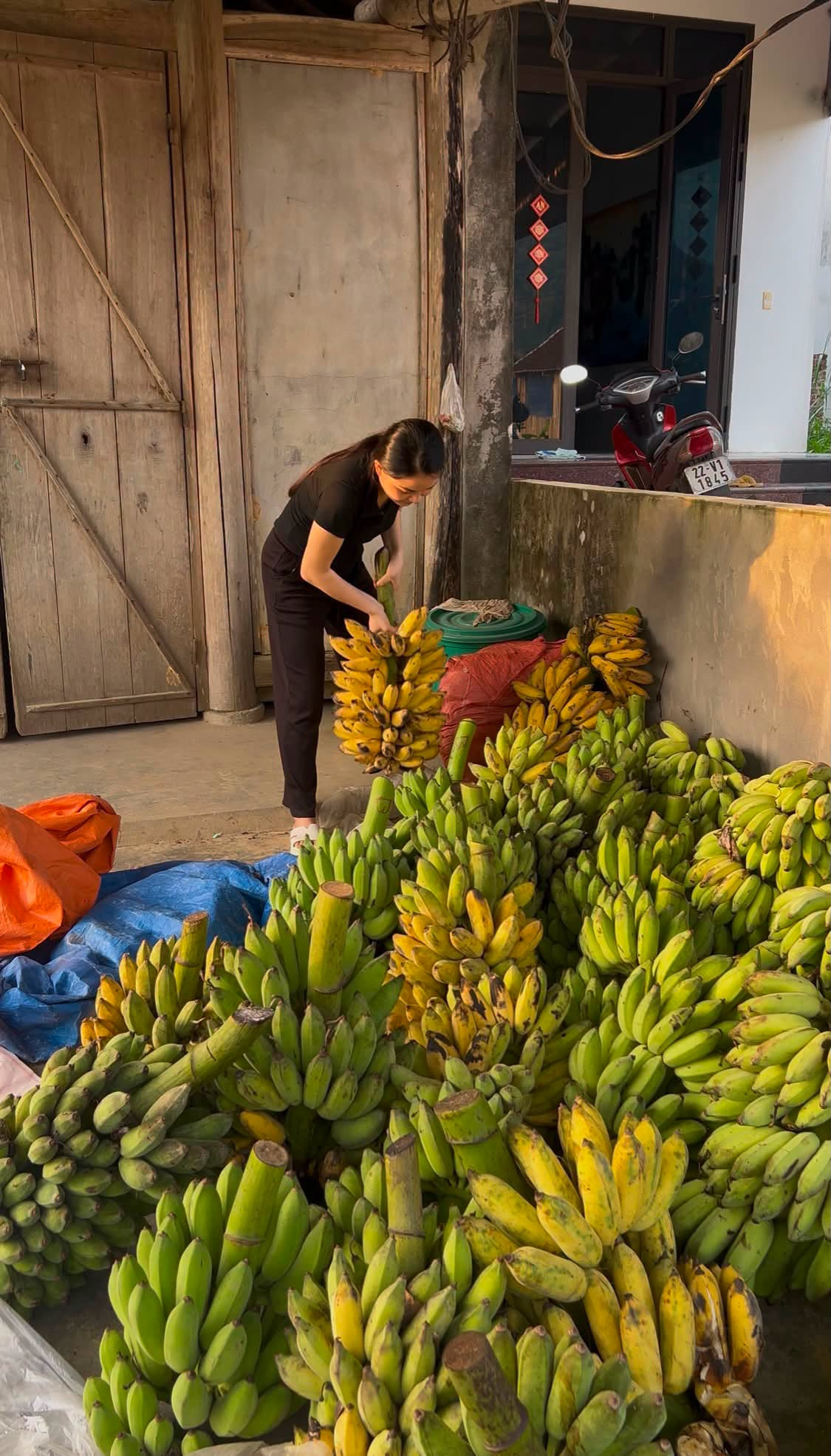
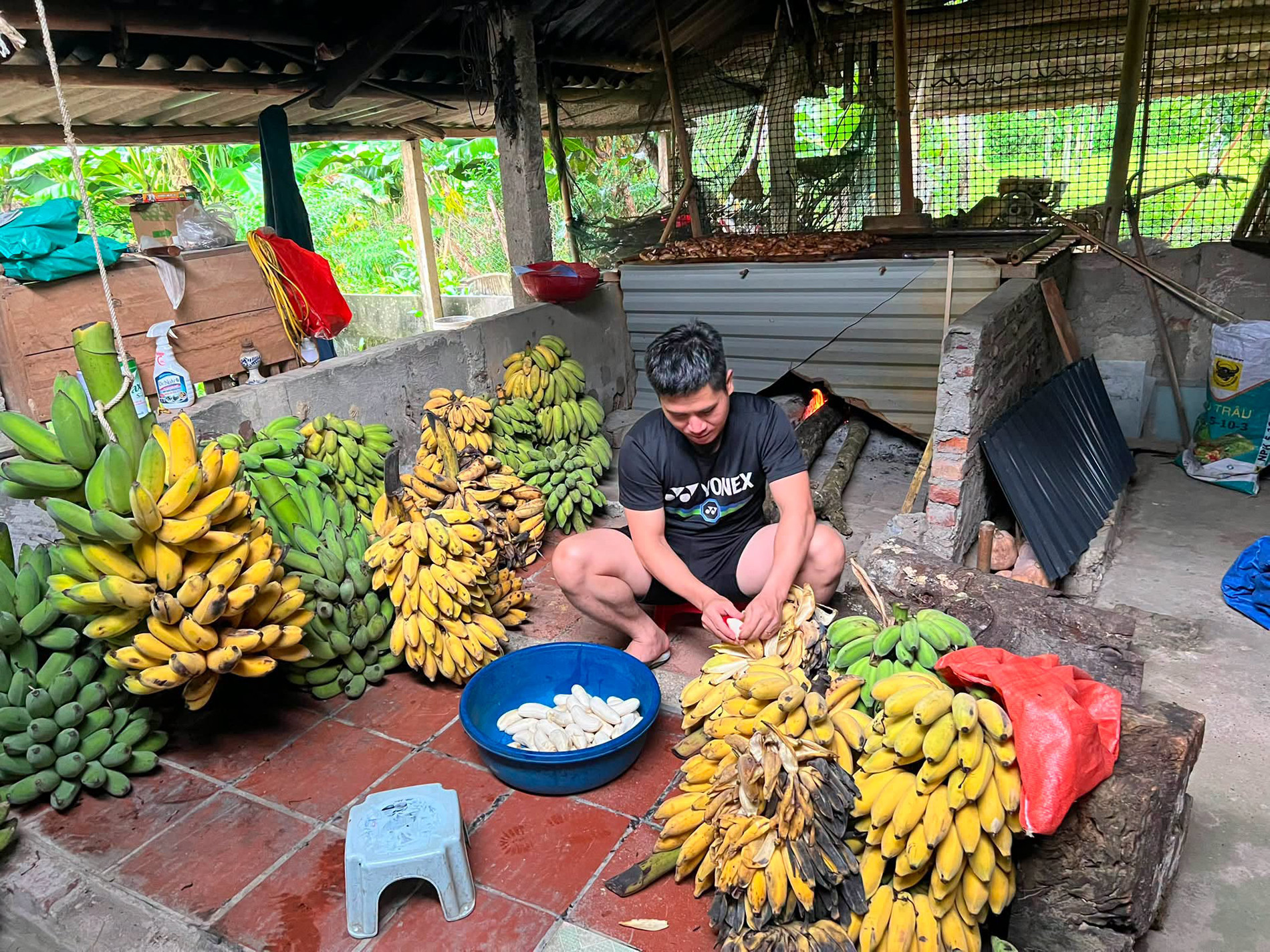
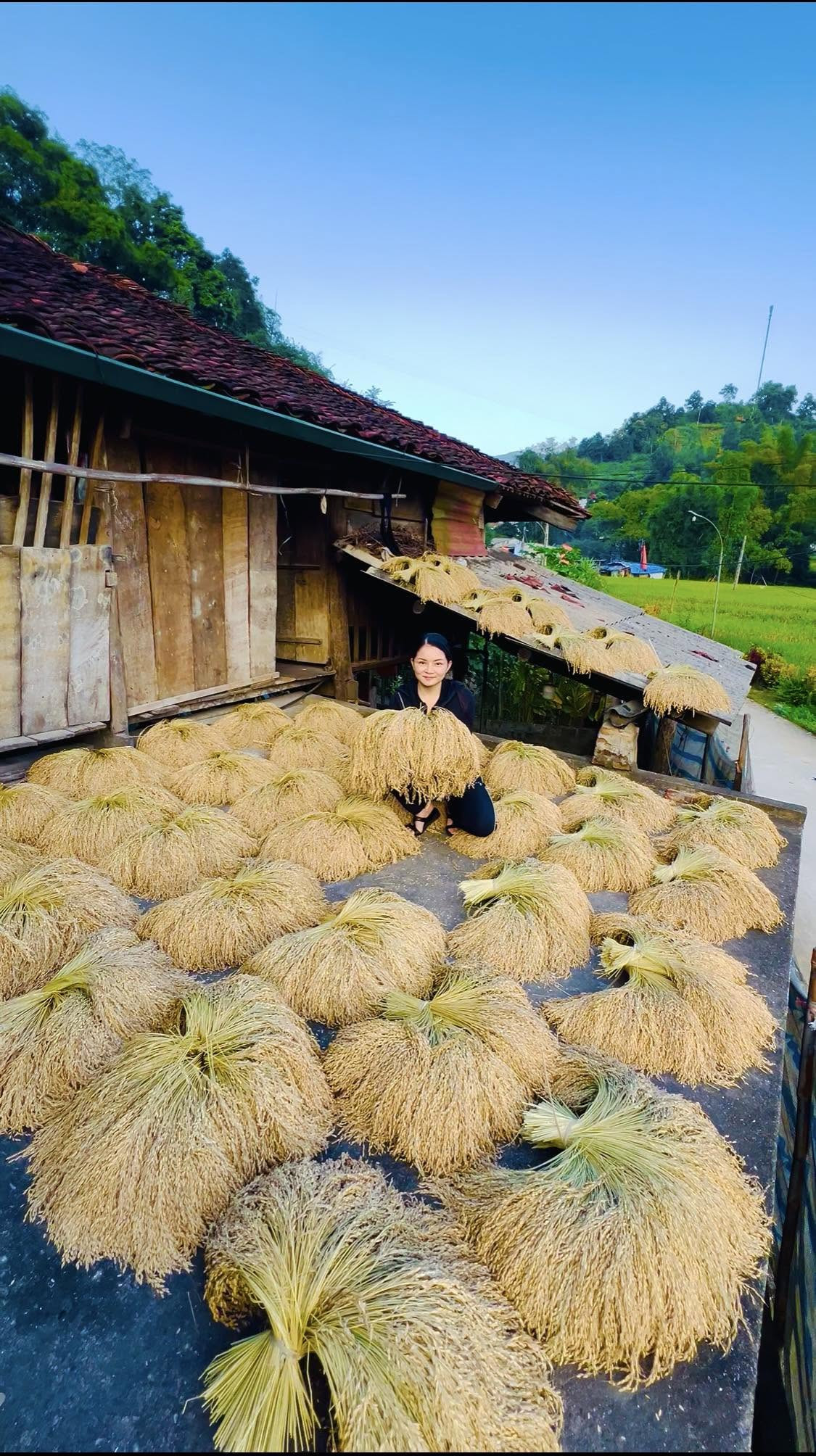
Carefully selected bananas and upland sticky rice
Huyen explains that the bananas must be fully ripe with thin skins. After peeling, they are dried over the kitchen stove for several days until they become chewy, turn a golden brown, and exude a sweet syrup.
This is the most labor-intensive and time-consuming step in the process. The bananas are continuously dried for 3 days and nights, with the fire kept constant.
The bananas must reach a deep brown color without becoming hard or dry, ensuring they remain chewy and fragrant.
“Kitchen-dried bananas are superior to sun-dried or electrically dried ones. This method enhances their color, syrup content, and overall sweetness,” Huyen notes.
Once dried, the bananas are washed to remove ash and dust, then simmered in water until soft, dark, and syrupy. They are then cooled before use.
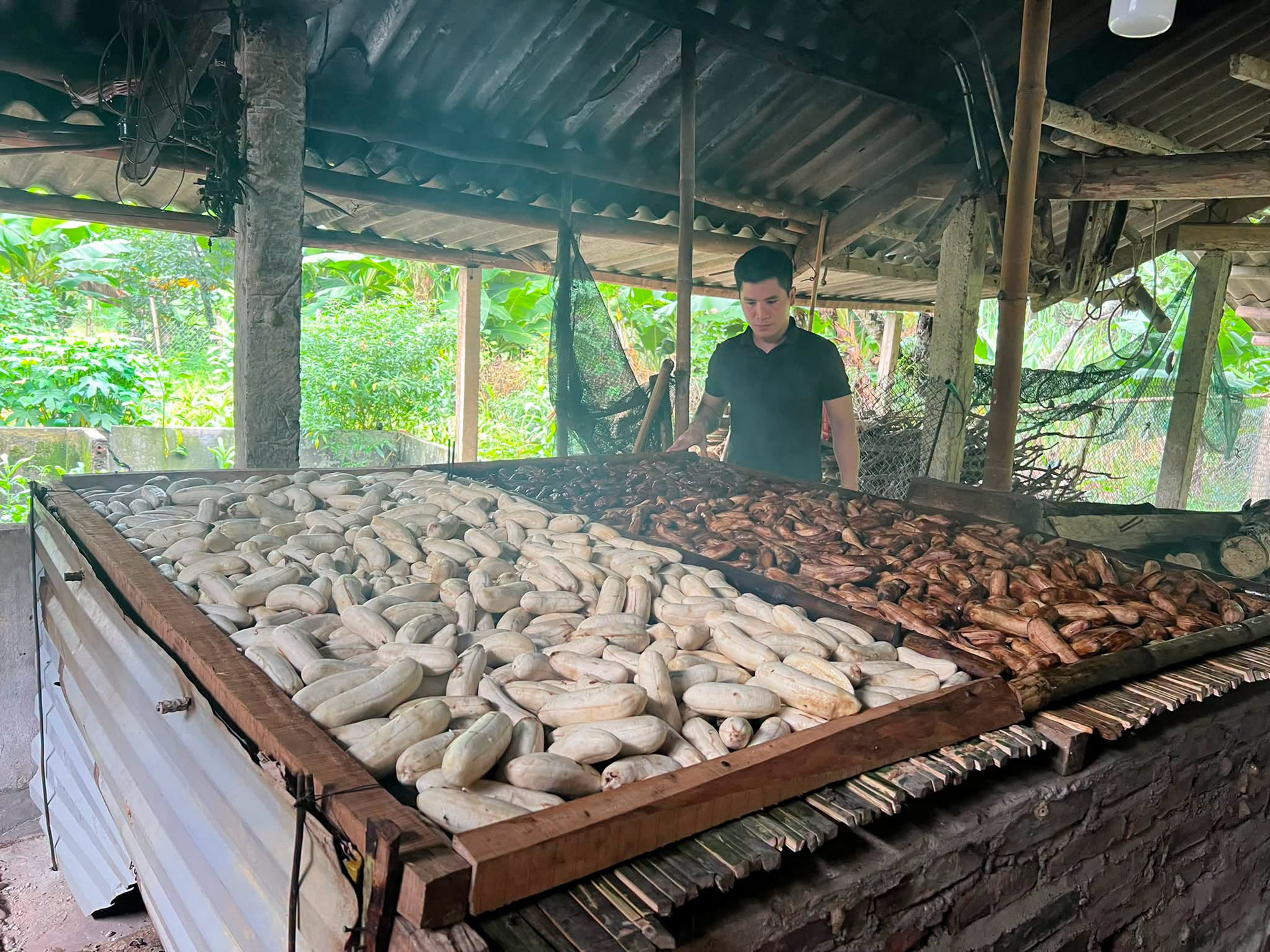
Peeling and drying bananas over the kitchen stove
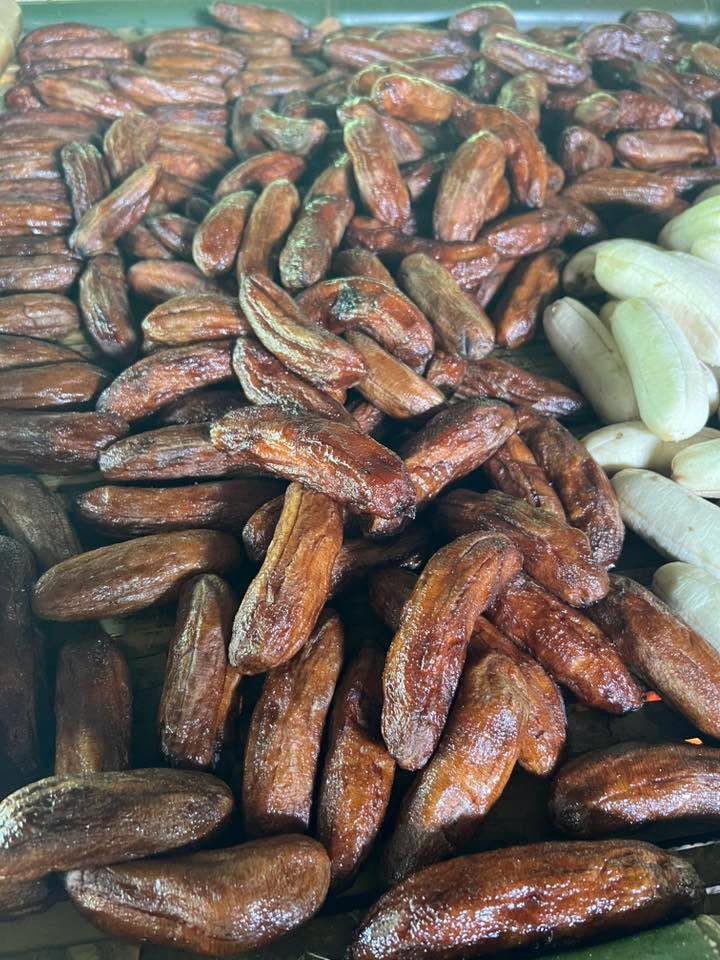
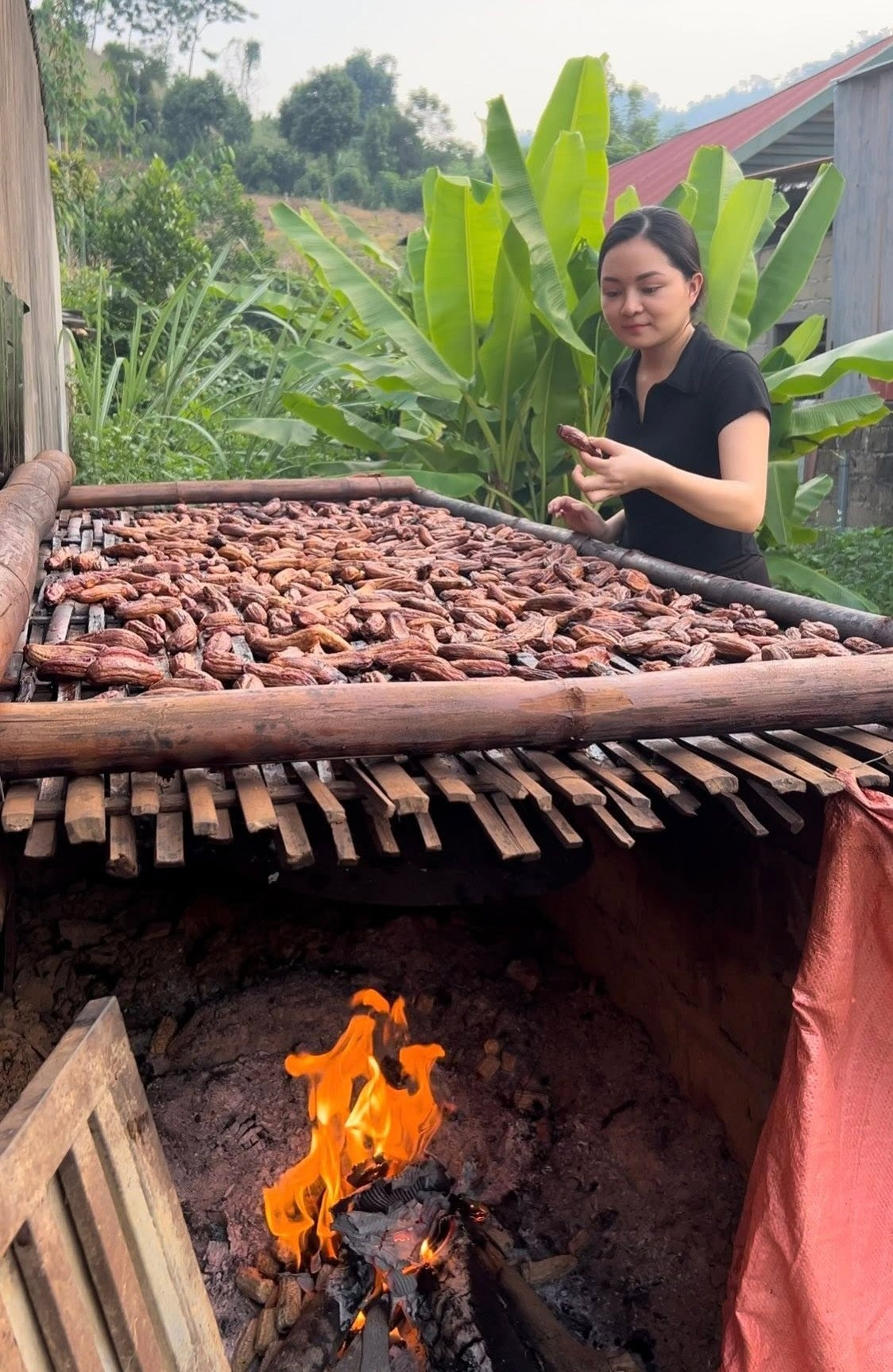
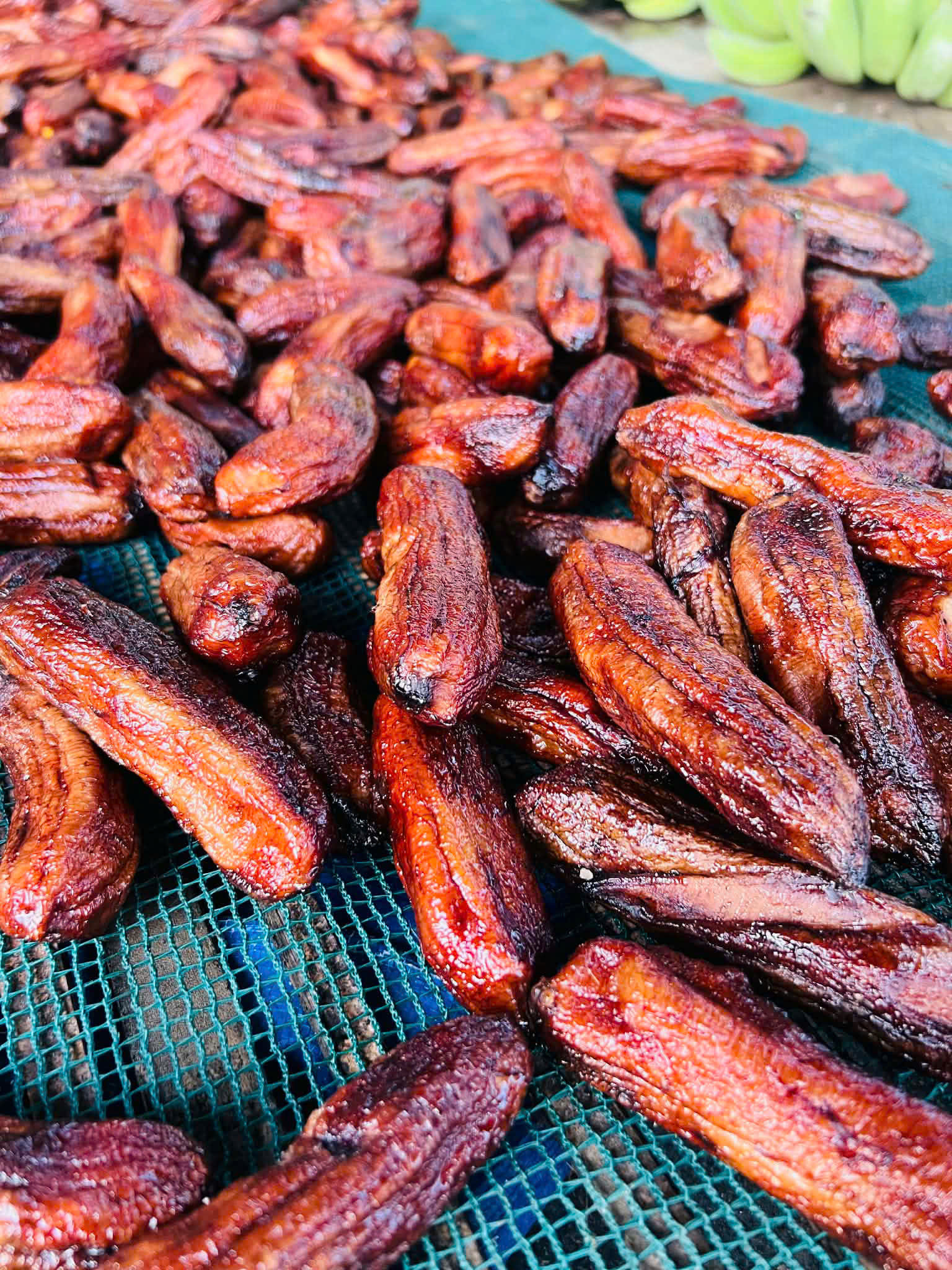
Huyen dries bananas continuously for 3 days and nights until they turn a glossy brown and exude syrup
The upland sticky rice is soaked overnight, ground wet, and drained. The rice flour is then mixed with the simmered bananas and kneaded into a smooth, pliable dough.
The dough is divided into small portions, shaped into cakes, and wrapped in forest banana leaves. The leaves must be thoroughly cleaned, dried, and flexible for wrapping.
High-quality leaves result in a smooth, non-sticky exterior with a natural aroma.
Depending on regional customs and personal preference, the cakes can be made with or without fillings (such as peanuts or mung beans). Filled cakes offer a richer flavor, while plain cakes are easier to preserve and last longer.
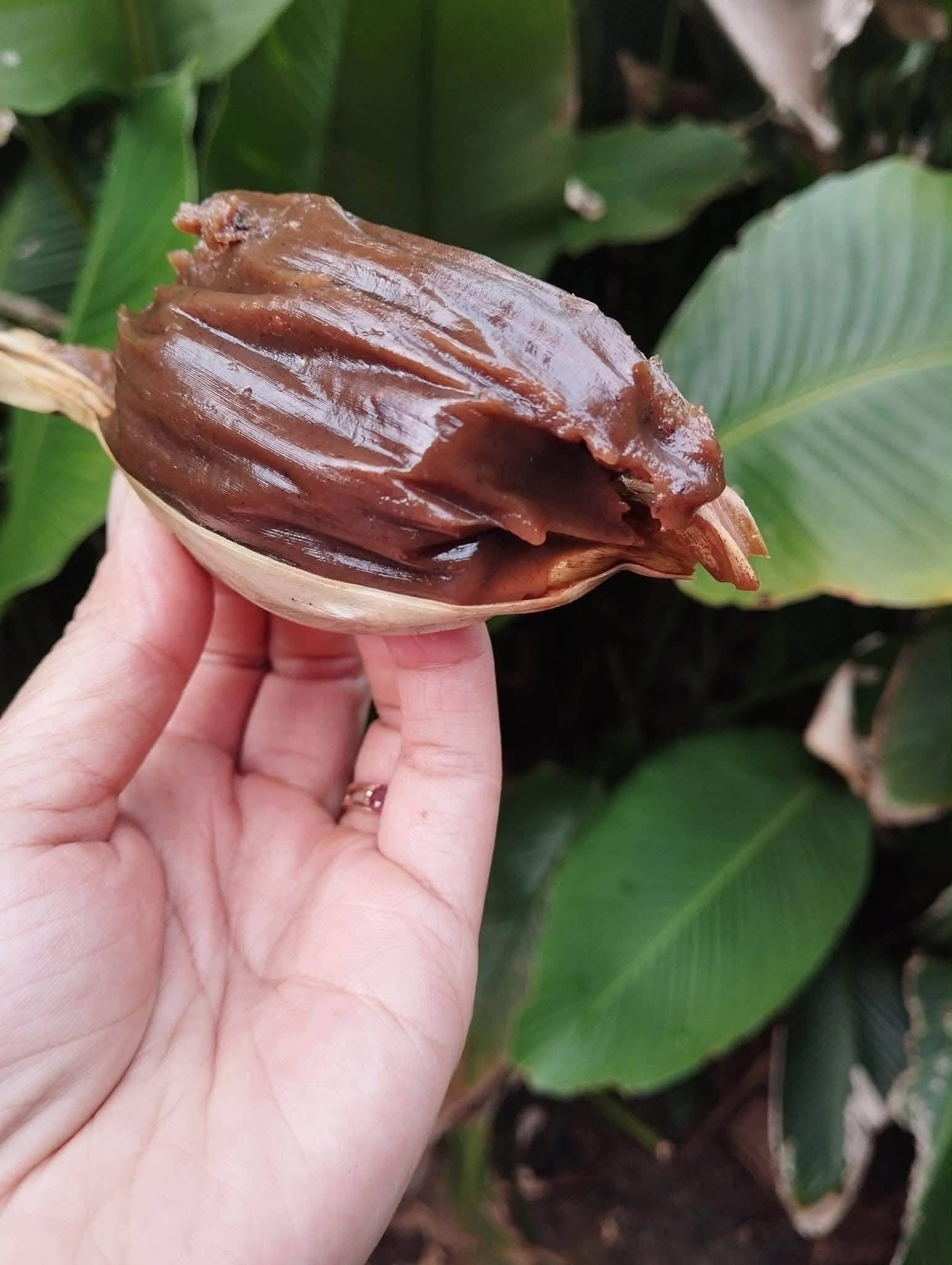
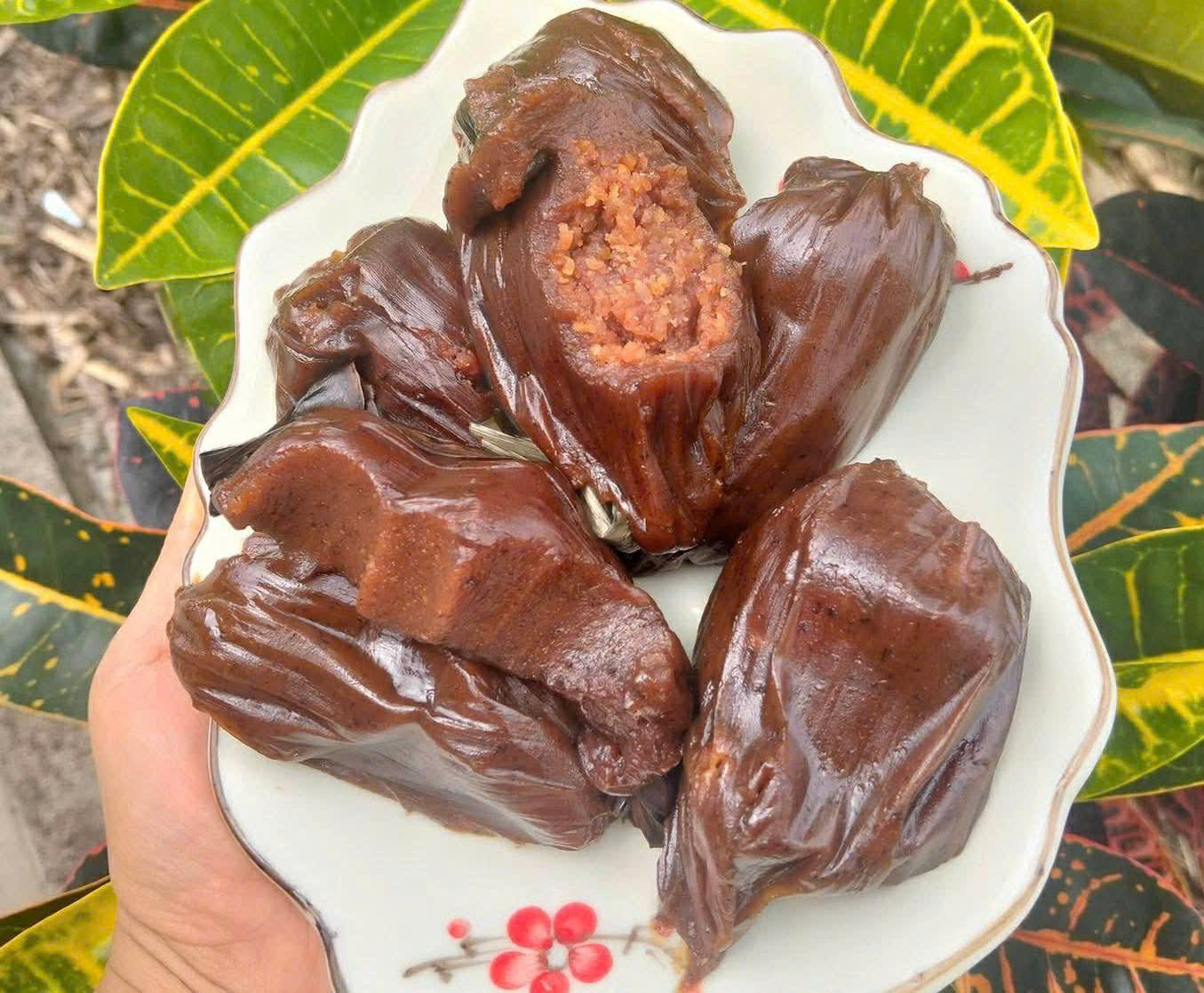
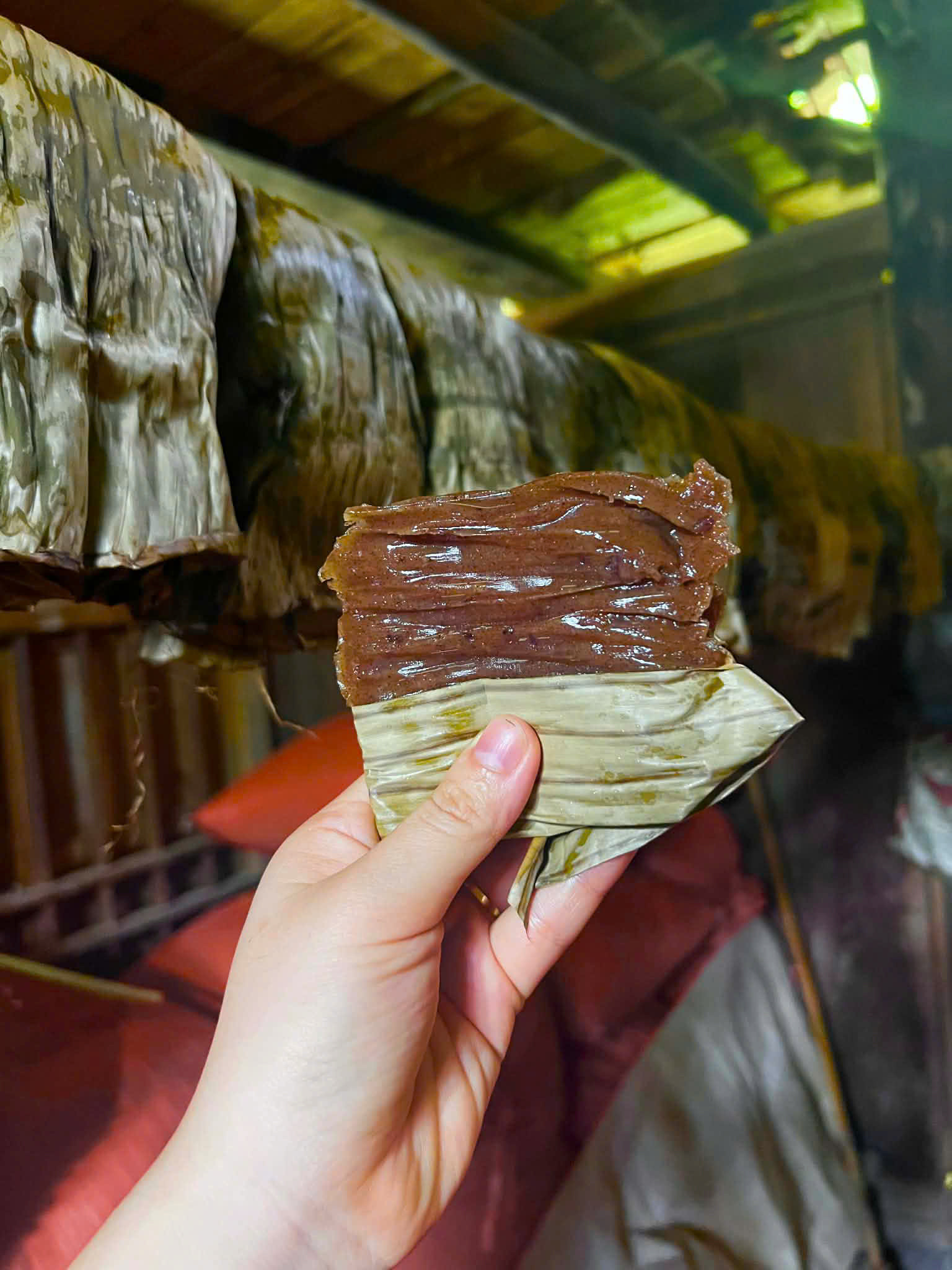
From a humble dish, banana cake has become a beloved specialty of the Tay people, embodying their unique culinary traditions
According to Huyen, the Tay typically wrap the cakes in pairs, twisting the ends and securing them with string before steaming.
After 45 minutes of steaming, the cakes turn a glossy brown and emit a fragrant banana aroma. They have a chewy texture with a mild, refreshing sweetness.
“The cake’s sweetness comes naturally from the bananas and sticky rice, making it easy to eat without being overly sugary or cloying.
Its standout feature is its ability to remain chewy and flavorful for days at room temperature, unlike many other cakes that harden or lose their taste,” Huyen observes.
Unveiling Na Hang’s Hidden Gems: 5 Unique Travel Destinations in Tuyên Quang

Discover the hidden gem of Yen Son, one of Tuyen Quang Province’s most captivating tourist destinations. Unveil the allure of its top 5 must-visit attractions, each boasting unique charm, breathtaking beauty, and renowned fame.
The Ultimate Guide to Exploring Na Hang, Tuyen Quang: Insider Travel Tips & Experiences

Na Hang stands as one of the most captivating tourist destinations, and in this feature, let’s join Bách Hóa XANH to explore the enchanting allure of Na Hang tourism.
Serene Village Retreat 250km from Hanoi: Harvest Fresh Greens, Cook Your Own Meals
Nestled approximately 250km from Hanoi, Luộc Village in Group 5, Nà Hang Commune, Tuyên Quang Province (formerly known as Na Hang Town), captivates visitors with its pristine landscapes, cool climate, and serene, refreshing atmosphere.
Uncover the Top 5 Must-Visit Destinations in Yen Son, Tuyen Quang

Discover the hidden gem of Tuyen Quang province: Yen Son. This captivating destination boasts five must-visit attractions, each offering a unique blend of beauty and charm that will leave you spellbound. From breathtaking landscapes to rich cultural experiences, Yen Son promises an unforgettable journey.
Discover Sơn Dương (Tuyên Quang): Top 5 Must-Visit Travel Destinations
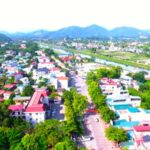
Discover the hidden gem of Tuyen Quang province: Son Duong. This captivating destination boasts five must-visit attractions, each offering a unique blend of beauty and charm that will leave you spellbound.