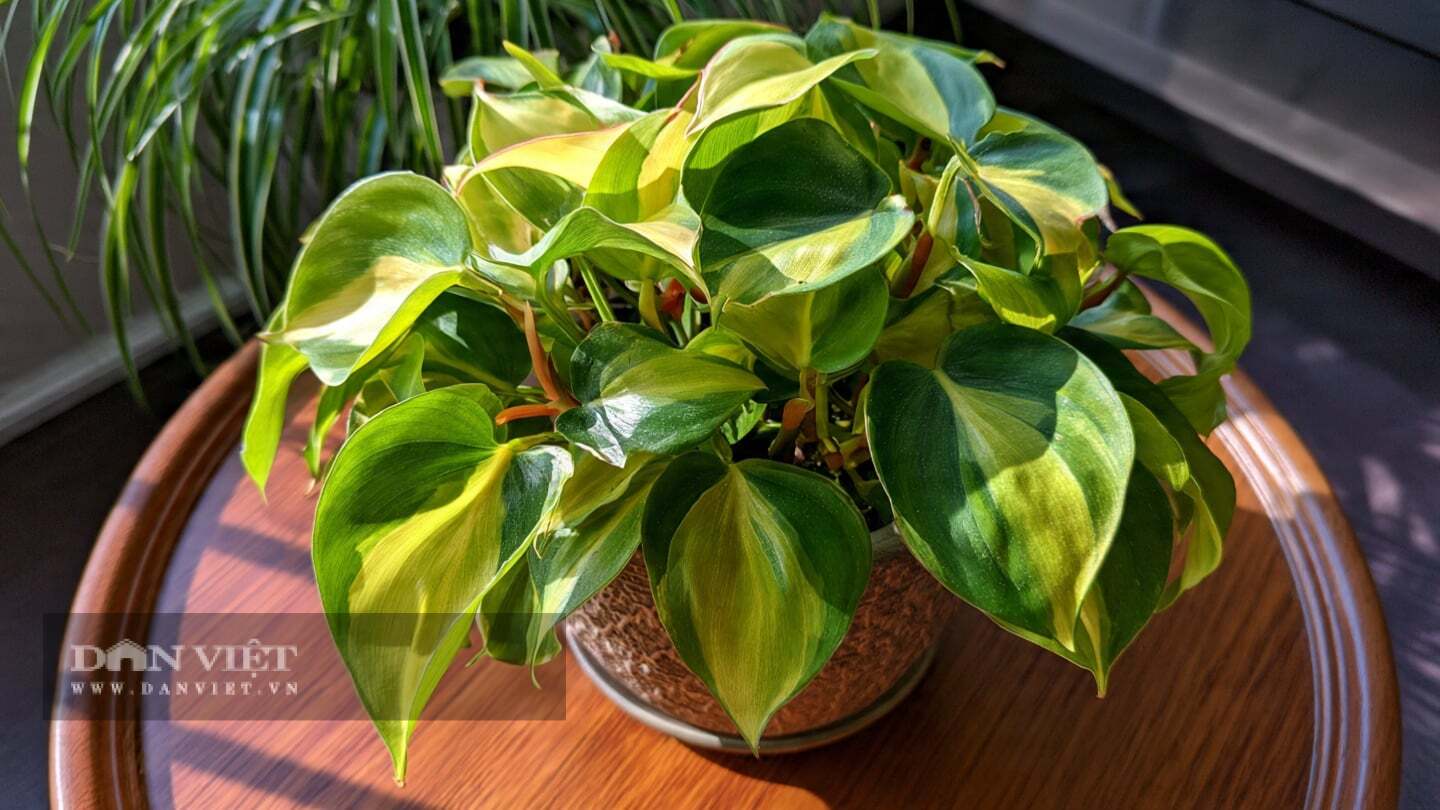
The three houseplants below are like such “beacons.” They are vines, splashes, and gentle reminders that no matter how stormy it is outside, there is still sunshine in our homes.
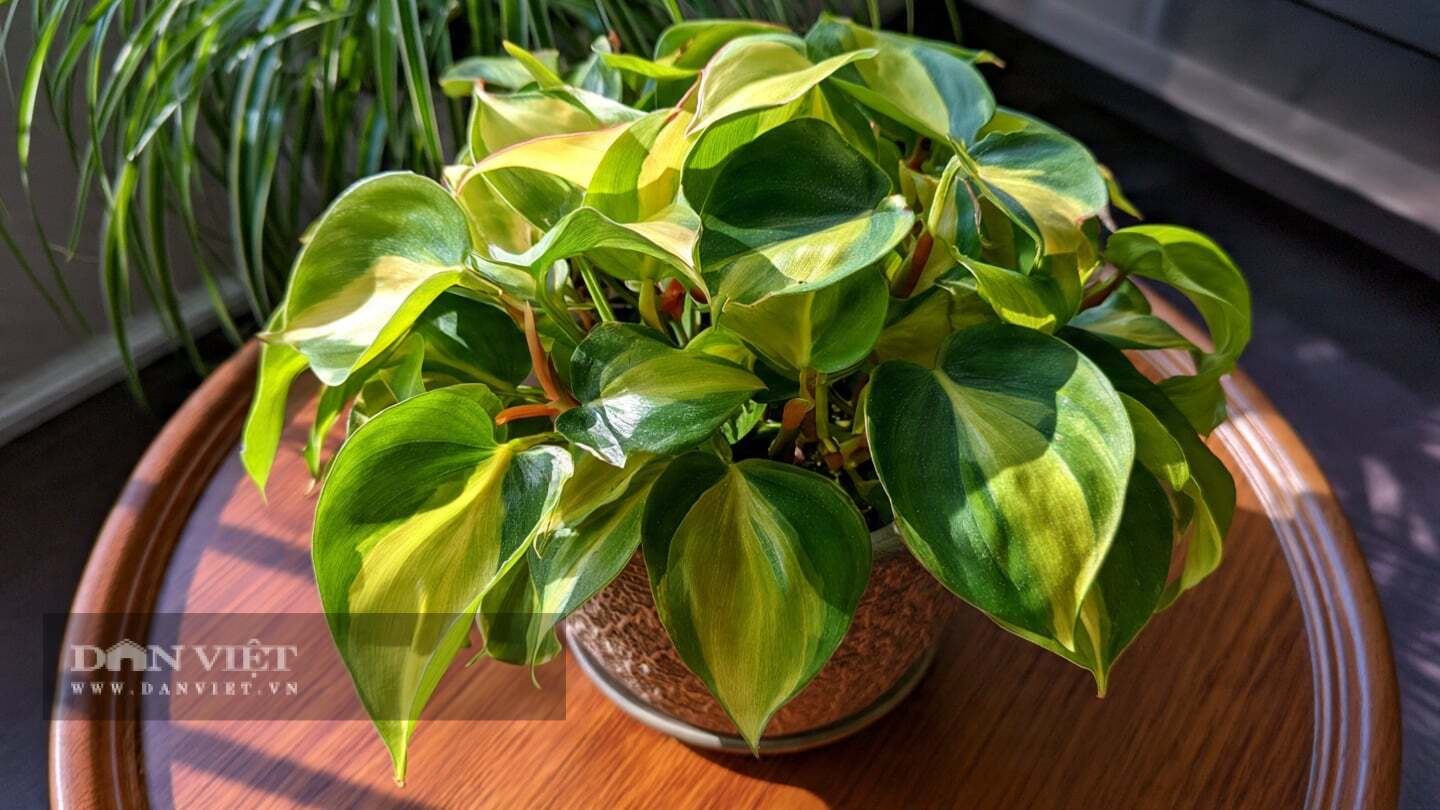
Brazilian Philodendron (Philodendron Brasil) is a climbing indoor plant species
1. Brazilian Philodendron
Brazilian Philodendron (Philodendron Brasil) is a climbing indoor plant species native to the tropical rainforests of South America.
Philodendron Brasil is the “artist” version of the familiar heart-leaf philodendron (Philodendron hederaceum).
The most distinctive feature of this plant is its heart-shaped leaves with a unique color blend of deep green, lime green, and vibrant yellow streaks in the middle, resembling the colors of the Brazilian flag.
Each 10-15cm heart-shaped leaf is like an oil painting. The deep green base serves as the backdrop, with a streak of lemon yellow, cream, or lime green running along the central vein, spreading without any particular pattern.
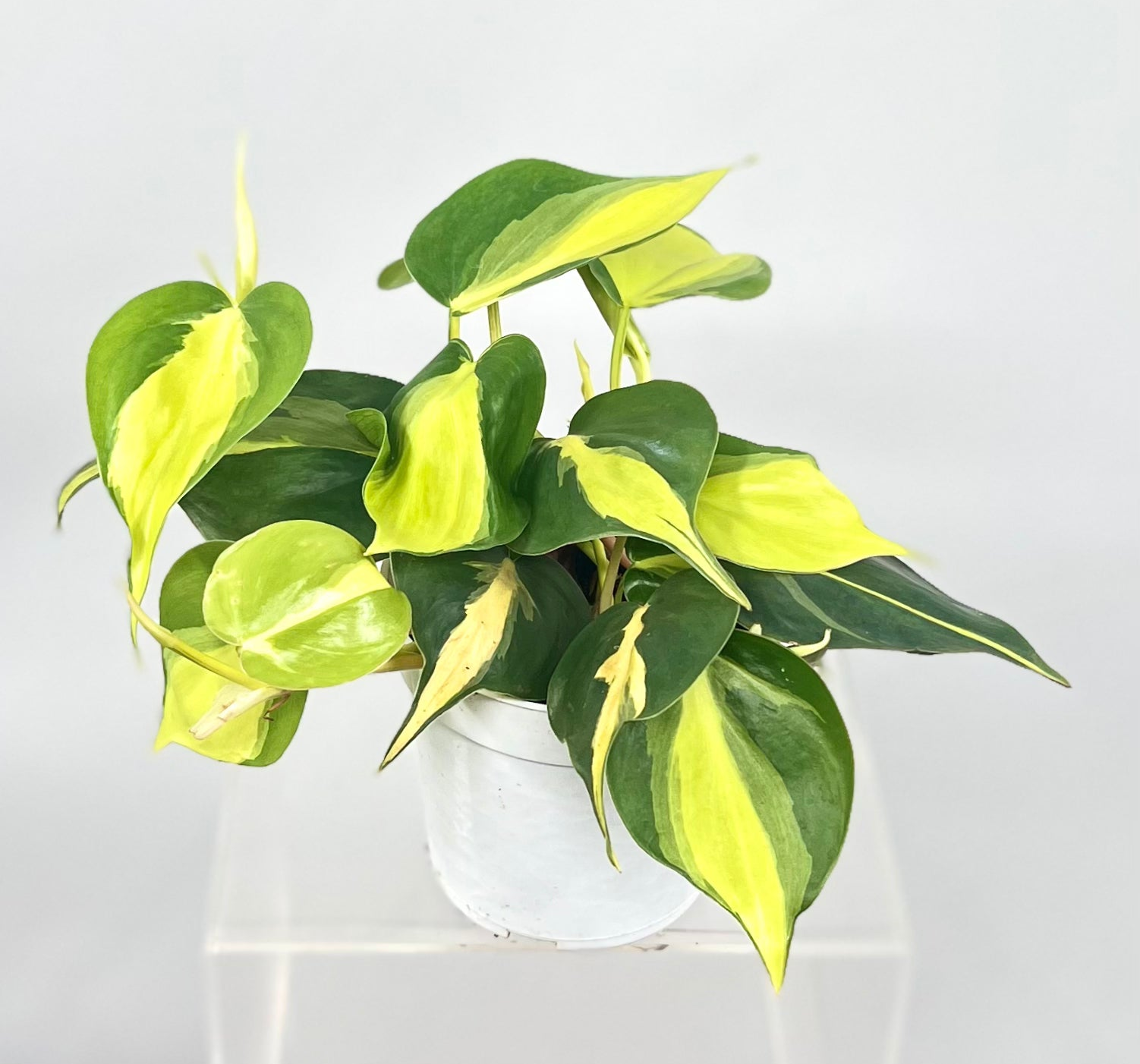
The plant’s leaves resemble the Brazilian flag
Some leaves have a splash on one side, as if someone accidentally spilled paint. Others are almost entirely yellow, with only a thin green edge. This randomness ensures no two leaves are identical.
When the plant grows long enough, its vines cascade down from bookshelves, balconies, or hanging pots, creating a colorful waterfall that glows under the morning light like gilded threads.
The plant’s stems are slender, soft, and light green, with small aerial roots emerging at each node. These roots help the plant cling to coconut coir columns to climb higher or hang freely.
More indirect light intensifies the yellow streaks. In low light, the plant responds by turning greener to photosynthesize more efficiently.
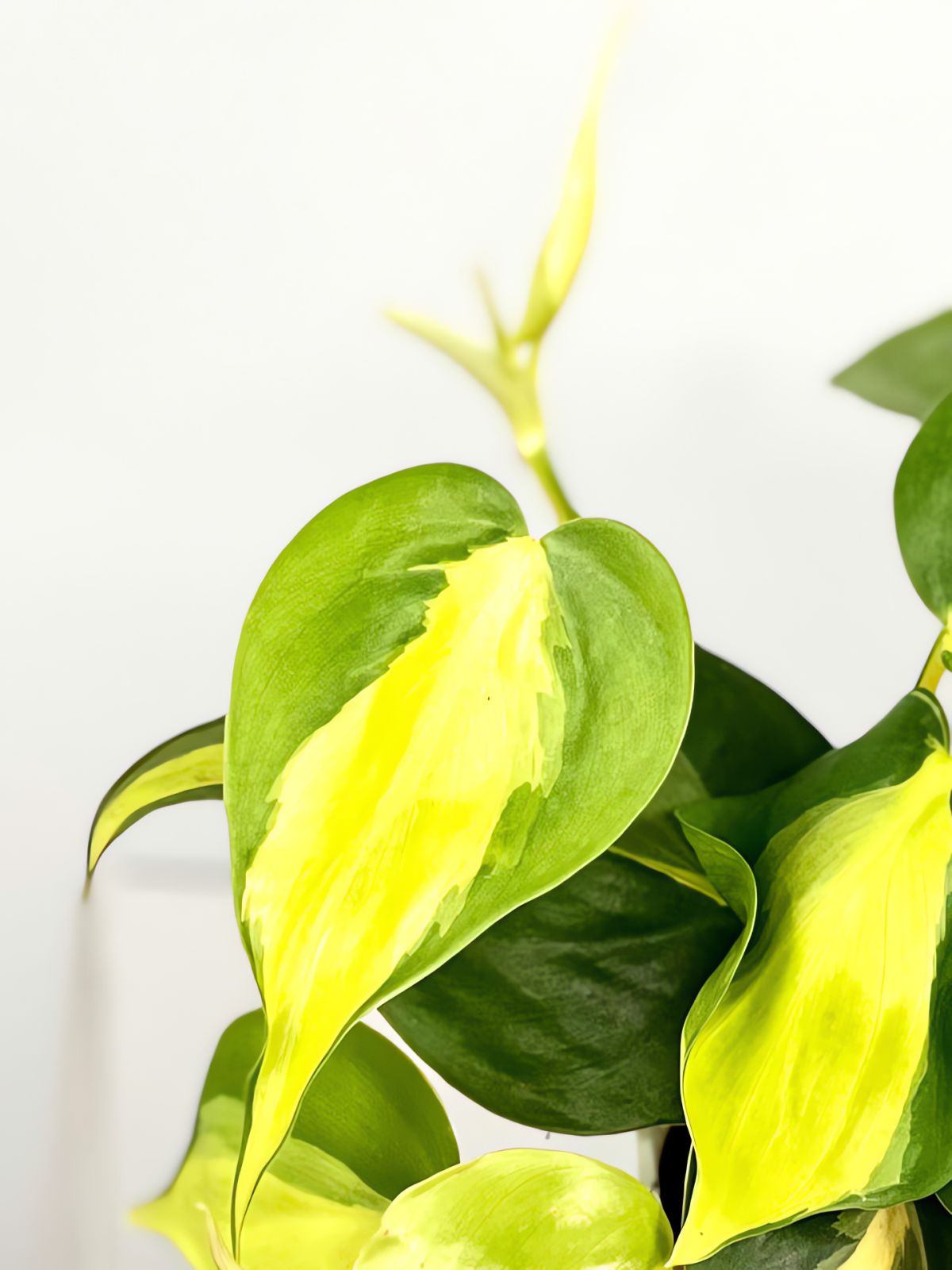
Brazilian Philodendron is an excellent air purifier
Ornamental Value
Brazilian Philodendron is the top choice for plant beginners due to its beauty and ease of care. Place it on top of a cabinet, letting it cascade like living curtains.
Train it to climb a column in the living room, and within 6 months, you’ll have a vibrant 1.5m green-yellow pillar. Hang it near an east-facing window, and the light filtering through the leaves creates a natural stained-glass effect.
Additionally, this plant is an excellent air purifier, ranked by NASA for its ability to remove formaldehyde and benzene.
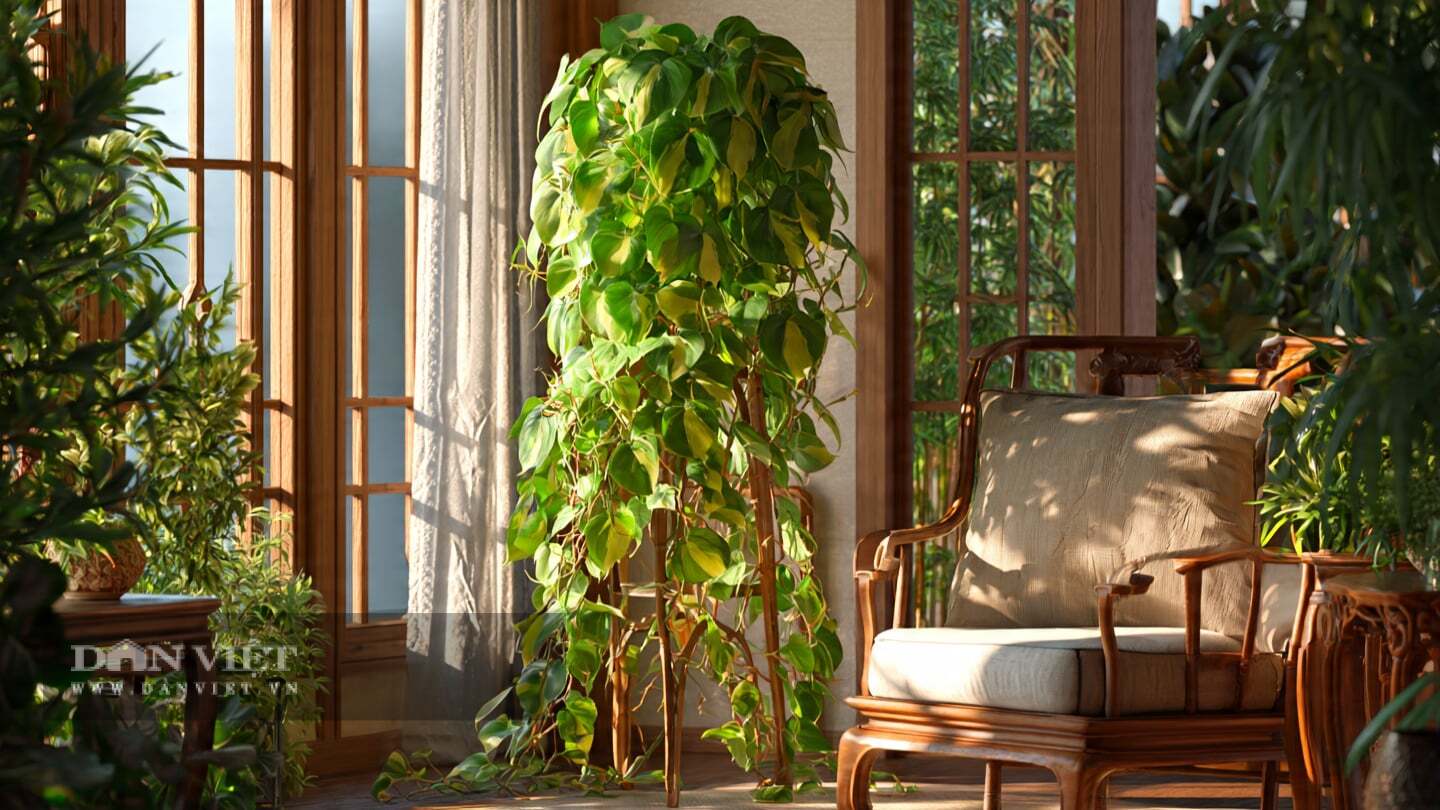
The plant is considered a wealth attractor
Feng Shui Significance
The yellow on the leaves represents the Earth and Metal elements, symbolizing the energy of sunlight and wealth. The heart-shaped leaves signify emotions and bonds.
Thus, the plant is considered a wealth attractor and a harmonizer for families. It is particularly suitable for those with Earth or Metal destinies. Place it in the southeast direction of the living room to activate the Wealth sector or on a desk to enhance creativity and reduce stress.
Care Tips
Light: The plant thrives in bright, indirect light. An east/west-facing window with sheer curtains is ideal. Direct harsh sunlight can scorch the yellow streaks.
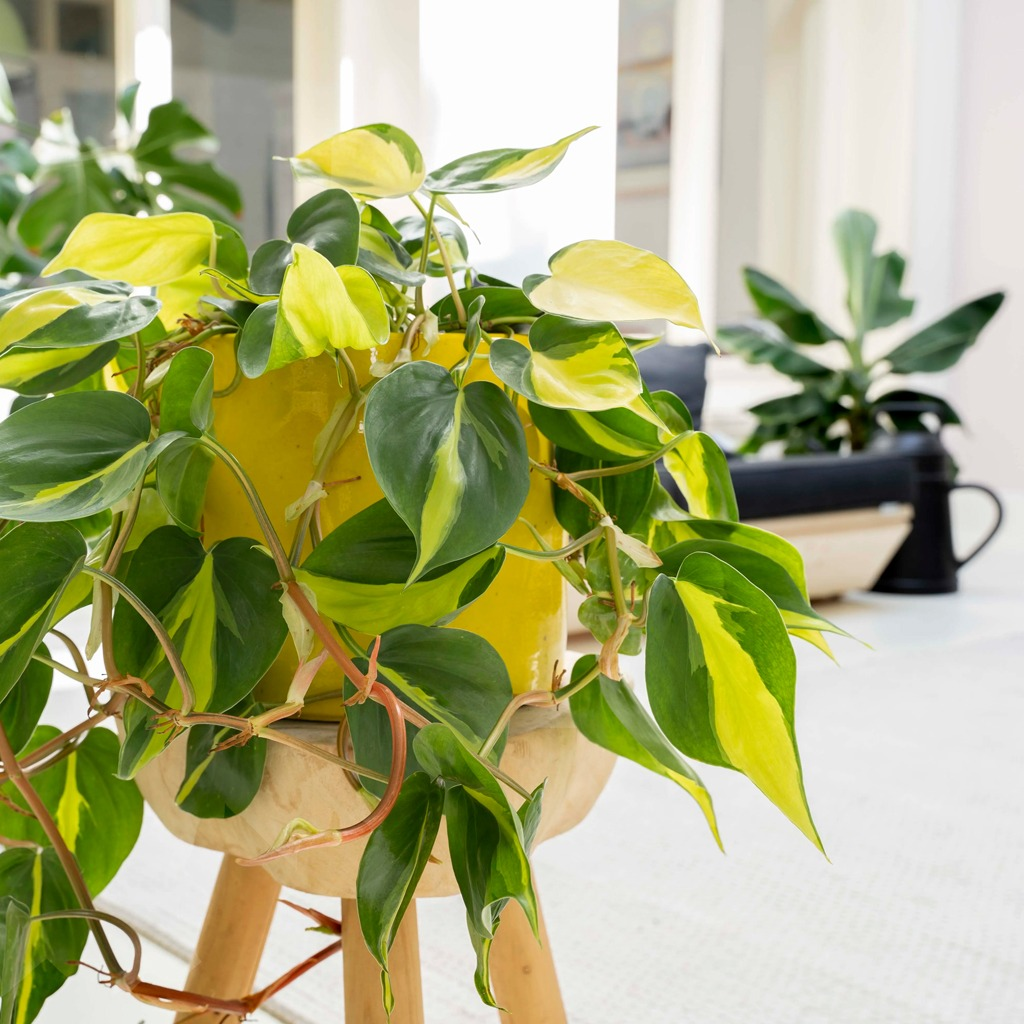
The plant prefers bright, indirect light.
Water: Water only when the top 2-3cm of soil is dry. Overwatering is the primary cause of root rot. In Hanoi’s rainy season, water once a week.
Soil: Well-draining: 40% coconut chunks, 30% perlite, 20% pine bark, 10% worm castings.
Humidity: 60% or higher keeps leaves large and glossy. Mist early in the morning.
Fertilizer: Dilute 20-20-20 NPK to half strength, apply every 2 weeks during the growing season.
Propagation: Cut a stem with 2-3 nodes, place in water or soil, roots will form in 2 weeks.
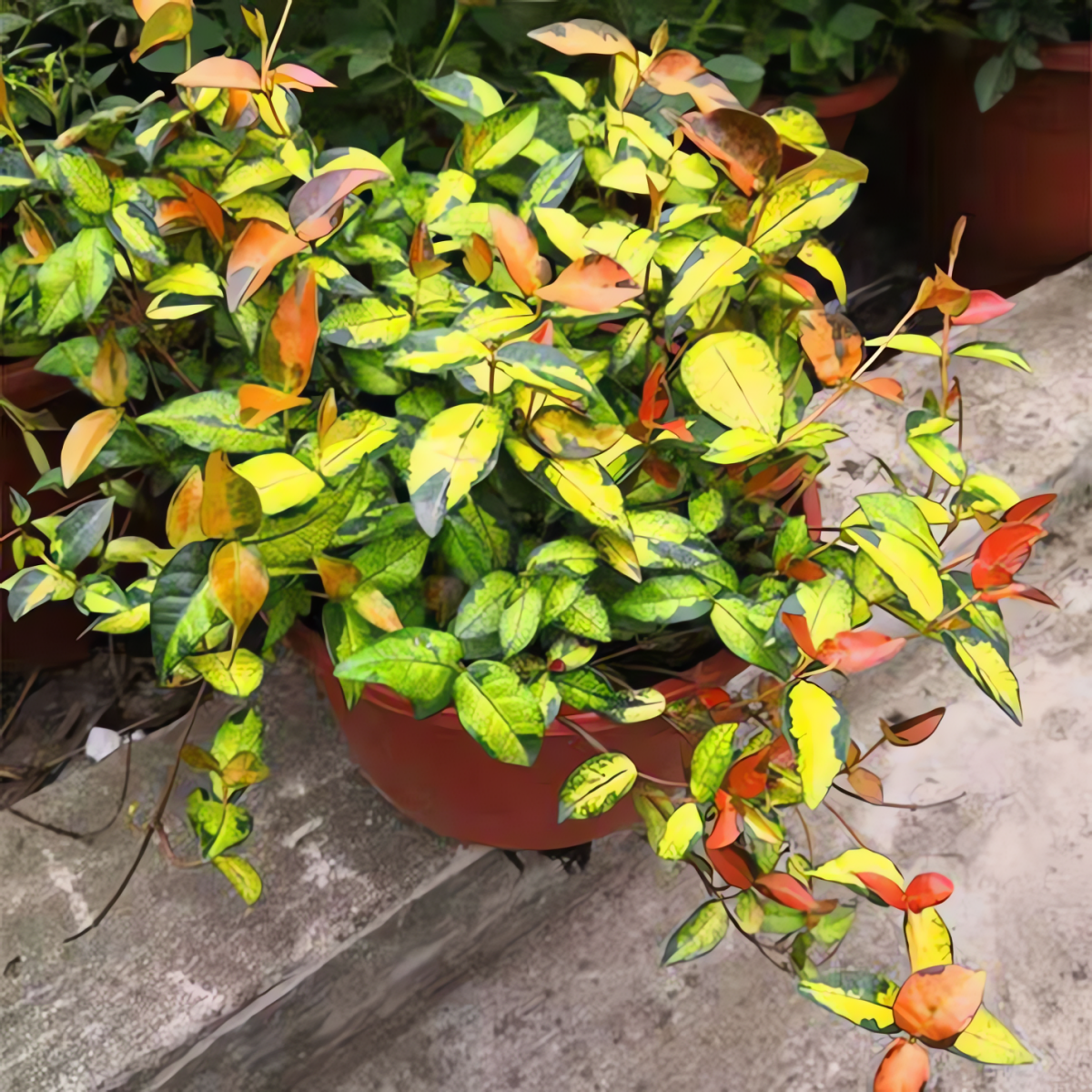
The plant is also known as golden pothos
2. Golden Pothos
If you’re looking for a plant with the most vibrant, beautiful leaves, golden pothos (Trachelospermum asiaticum ‘Ogon Nishiki’) is the perfect choice.
Also known as golden variegated pothos or golden money plant, this evergreen climbing plant belongs to the Apocynaceae family and is native to East Asia.
The most striking feature of golden pothos is its ever-changing leaf colors. The leaves transform vibrantly over time and with varying light conditions.
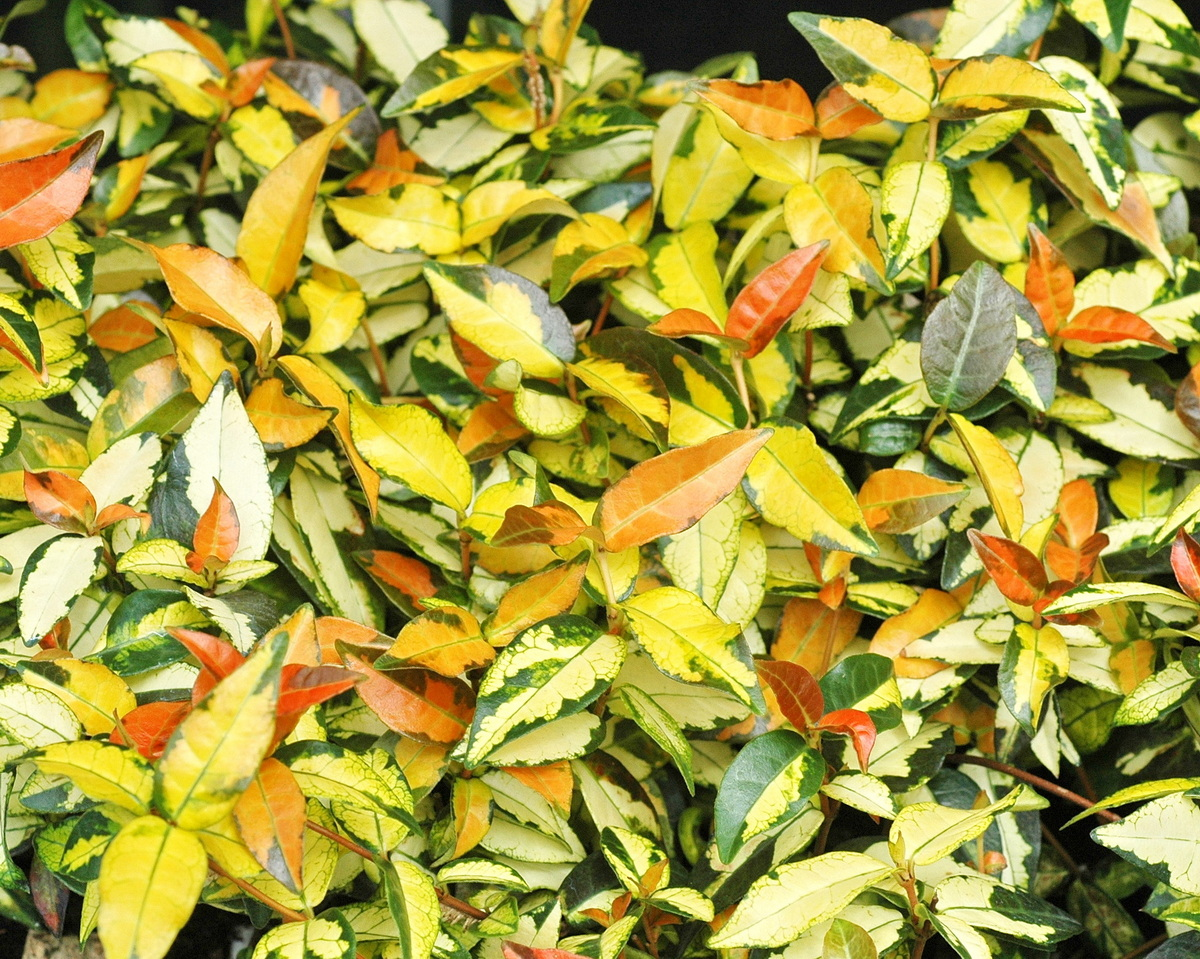
The plant is also called golden marble queen
While Brazilian Philodendron is like a stream, ‘Ogon Nishiki’ is a tapestry. ‘Ogon’ means “gold” in Japanese, and ‘Nishiki’ means “brocade.”
This plant is also known as golden marble queen, a member of the oleander family but completely non-toxic upon contact. Its small, 2-4cm oval leaves with pointed tips grow densely and symmetrically on the stem.
The plant’s magic lies in its color-changing leaves. New leaves emerge in shades of cream and butter yellow, almost glowing. As they mature, the colors shift to jade green with splashes of yellow and cream, and when exposed to cold or ample sunlight, they develop hints of orange-red.
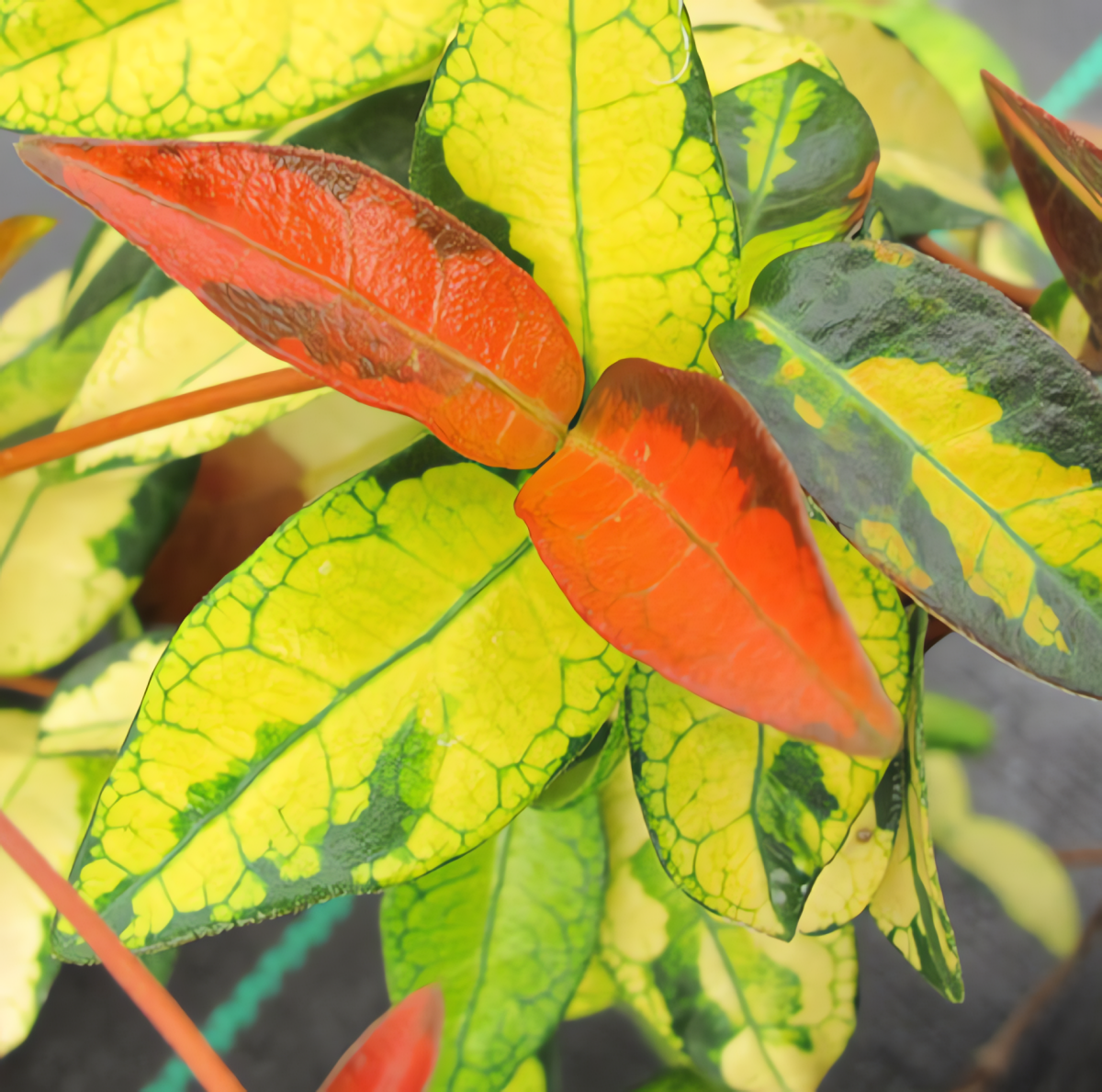
The plant is the balcony’s beauty queen
The stems become woody with age, creeping or climbing by twining. Lacking tendrils, it requires a support structure. When grown in hanging baskets, the cascading branches create a curtain of golden hair.
Remarkably, from April to June, the plant produces small cream-colored flowers with a subtle jasmine fragrance, especially at night. A balcony with golden pothos offers both year-round beautiful leaves and seasonal scents.
Ornamental Value
‘Ogon Nishiki’ is the “beauty queen” of balconies and rooftops. Its slow growth, small leaves, and seasonal color changes make it endlessly fascinating.
Grow it in a standing pot to climb artistic iron trellises, in beds to cover the ground instead of grass, or let it cascade from a second-story balcony.
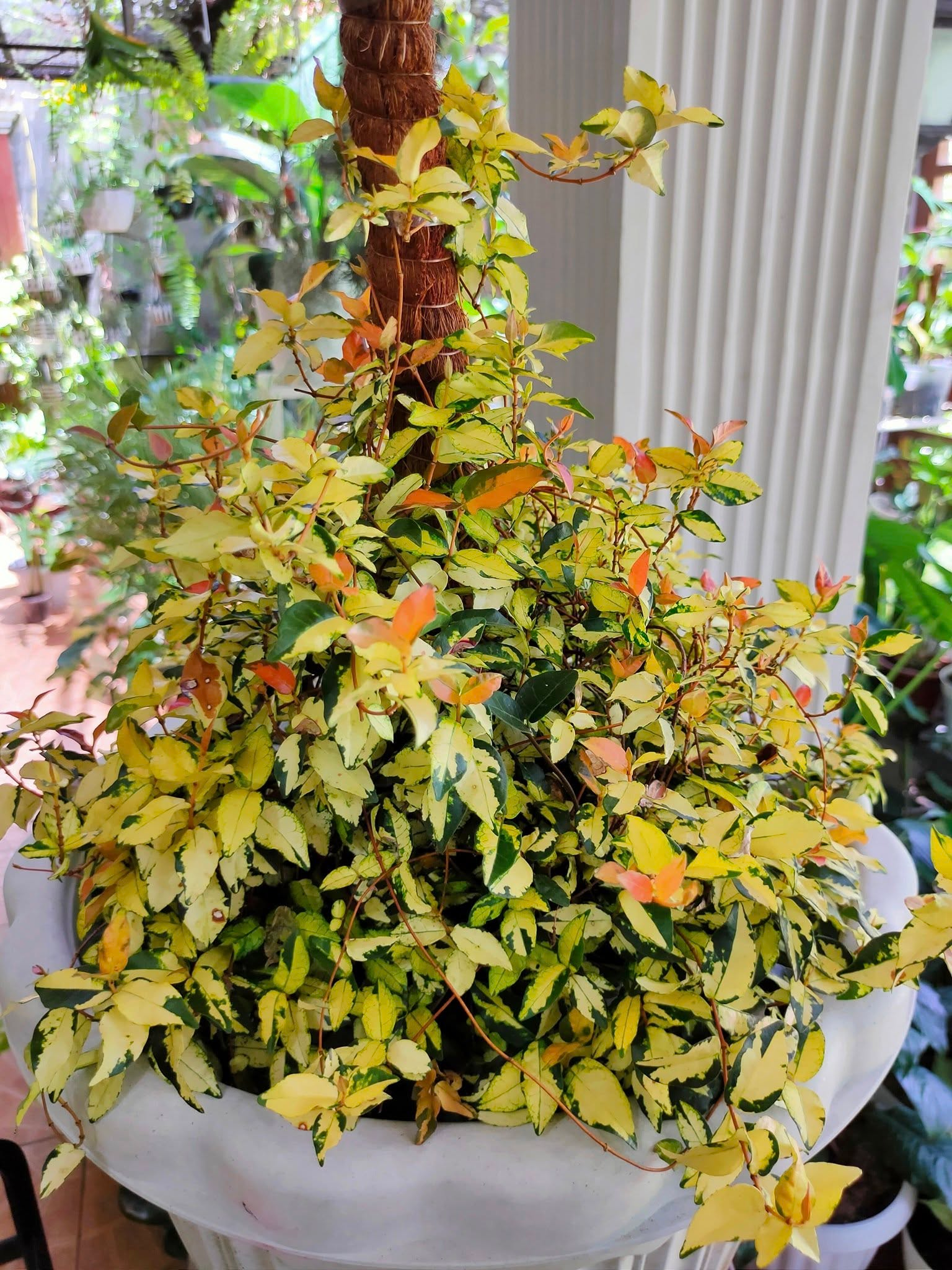
The plant’s golden hues belong to the Earth element
This plant is the perfect accent for Japanese or Mediterranean-style gardens. Paired with pebbles, driftwood, and yellow lighting, it transforms a corner of the garden into an autumnal Kyoto painting.
Feng Shui Significance
The plant’s golden hues belong to the Earth element, symbolizing the nurturing and stability of Mother Earth. Its twining stems represent strong family bonds.
Ancient beliefs suggest that planting ‘Ogon Nishiki’ in front of the house helps attract wealth, preserve assets, and maintain family harmony. Its seasonal color changes also remind us of impermanence and the importance of embracing change with serenity. It is most compatible with Earth and Metal destinies.
Place the plant in the west or northwest direction to enhance beneficial relationships.
Care Tips
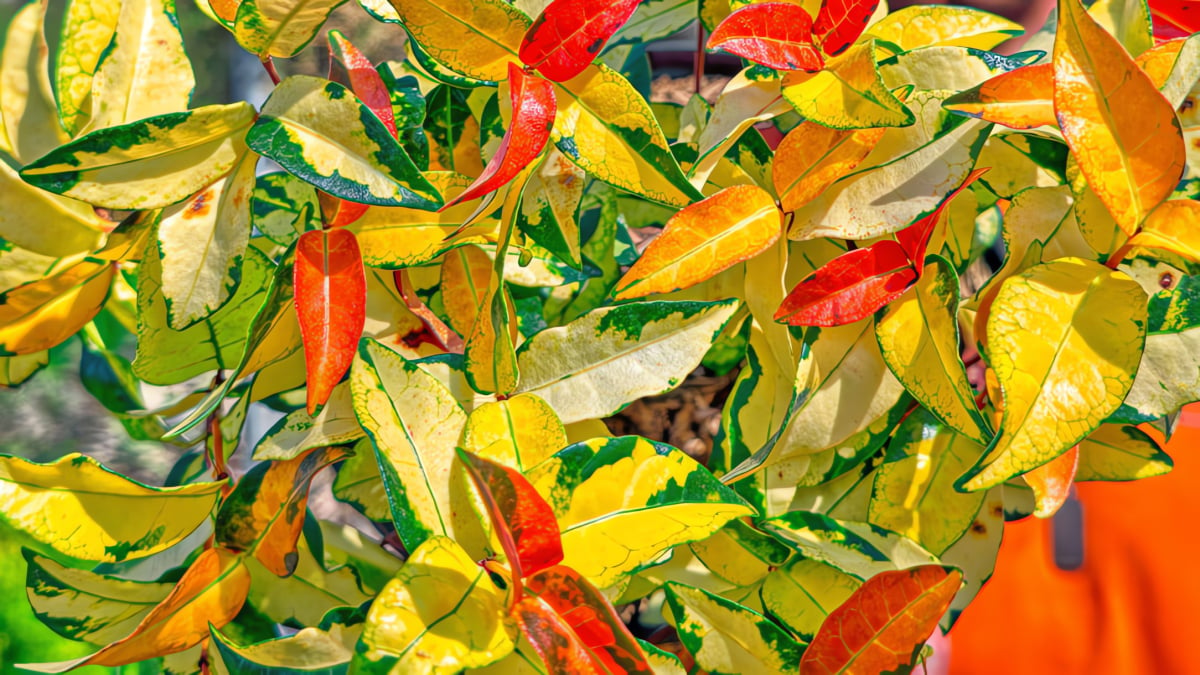
Place the plant in the west or northwest direction to enhance beneficial relationships.
Light: More sunlight intensifies the golden hues. It tolerates 4-6 hours of direct sunlight daily. Insufficient light turns leaves solid green, losing their variegation.
Water: Drought-tolerant, prefers dryness over wetness. Water thoroughly only when the soil is completely dry. Water every 3-4 days in summer, every 10 days in winter.
Soil: Requires excellent drainage: light soil + charcoal + pumice + well-rotted manure.
Pruning: Regularly pinch back tips to encourage branching and dense foliage. More pruning results in more vibrant young leaves.
Fertilizer: Low fertilizer needs. Apply slow-release 6-6-6 Japanese fertilizer every 3 months. Excess nitrogen turns leaves green.
Winter Care: Tolerates temperatures down to 5°C.
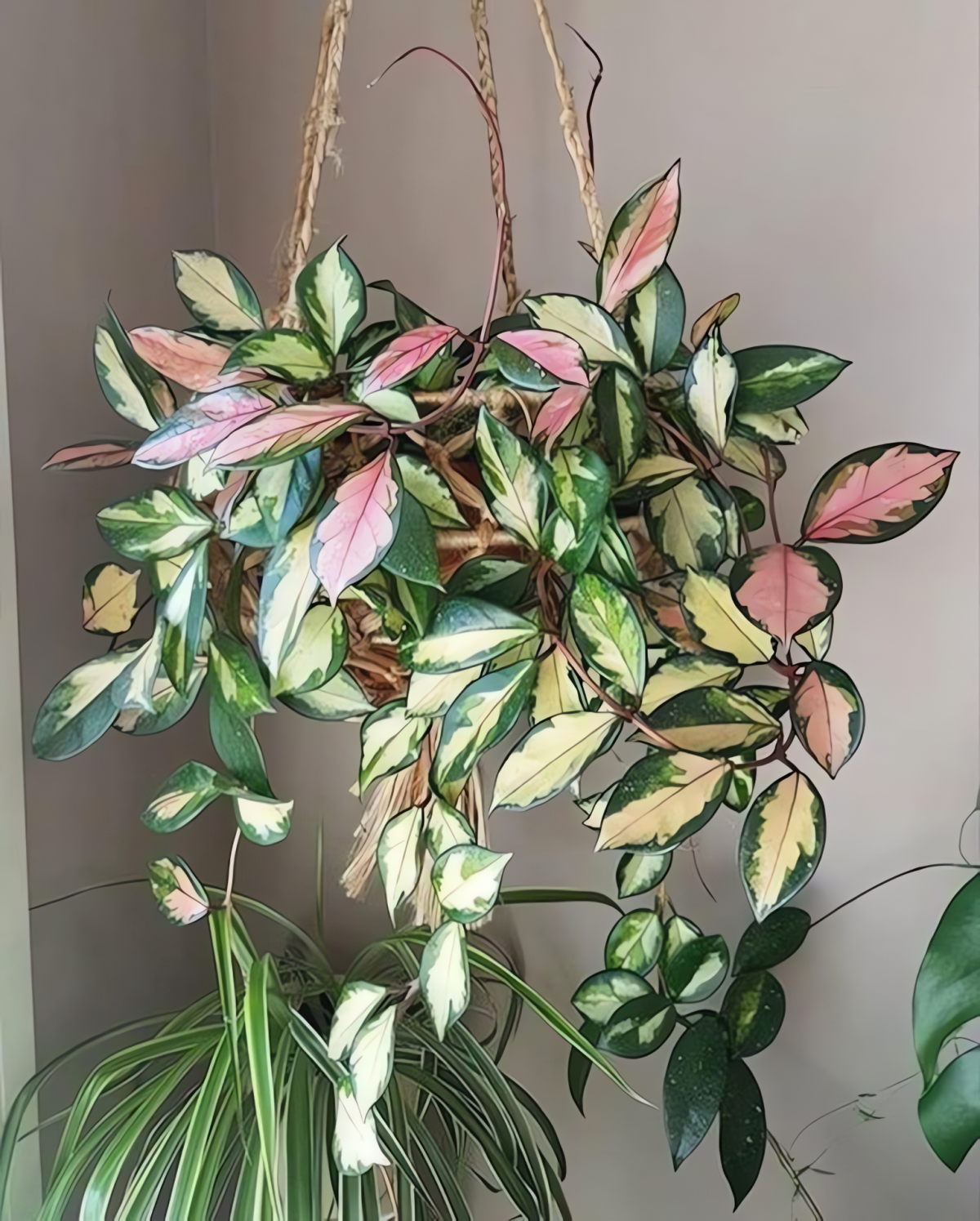
The plant is a variegated hoya
3. Variegated Hoya
Variegated hoya, also known as princess hoya (Hoya Carnosa ‘Krimson Princess’), is a genetically mutated hoya variety renowned for its uniquely marbled leaves. It is a highly sought-after cultivar of the wax plant (Hoya carnosa).
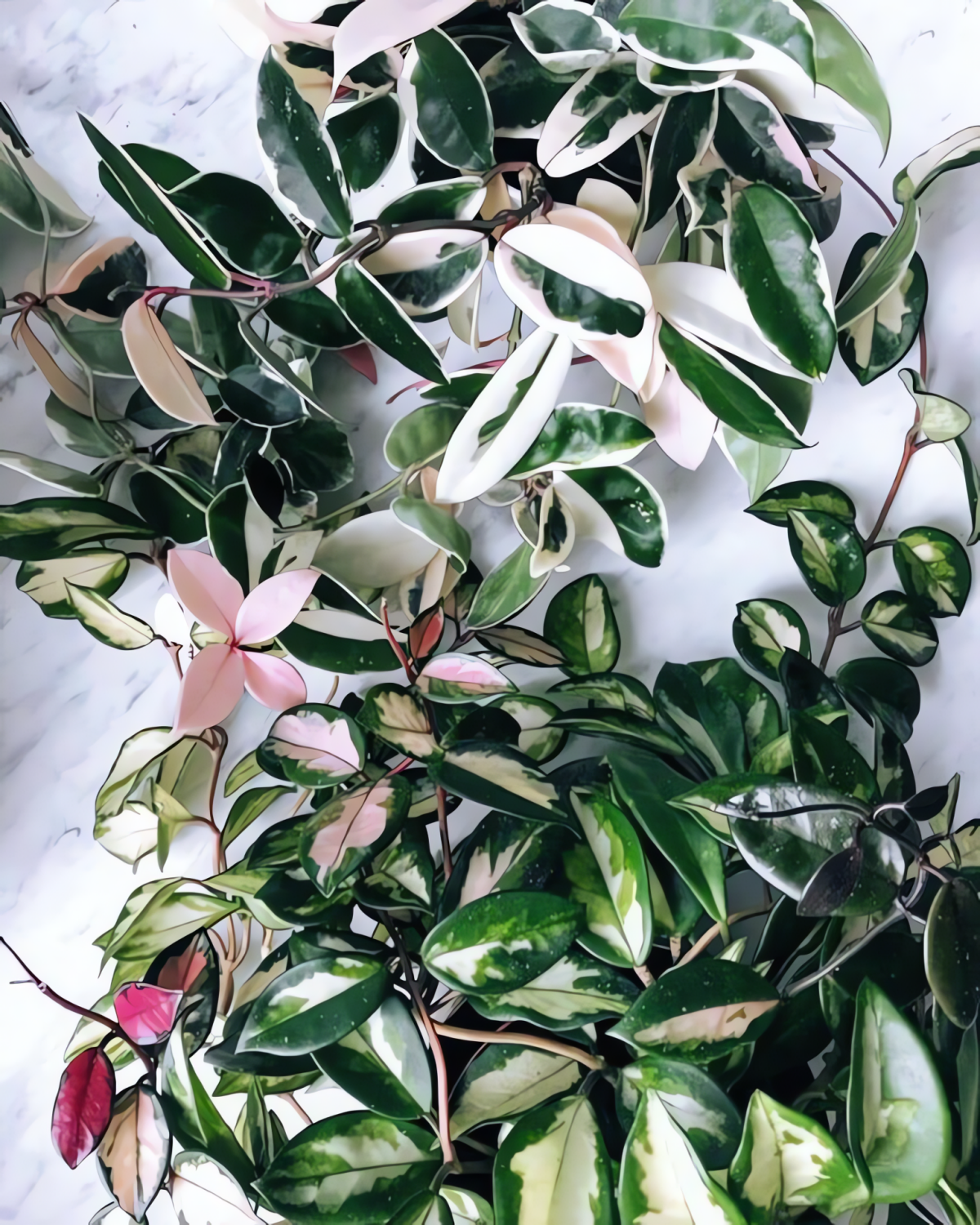
Unlike the previous two plants, this princess has variegation originating from the center of each leaf. Its thick, succulent, oval leaves have deep green edges surrounding a central splash of ivory, cream, or lemon yellow.
What captivates enthusiasts is that when exposed to sufficient sunlight, the white splashes blush into shades of pink and rose, resembling a princess’s cheeks.
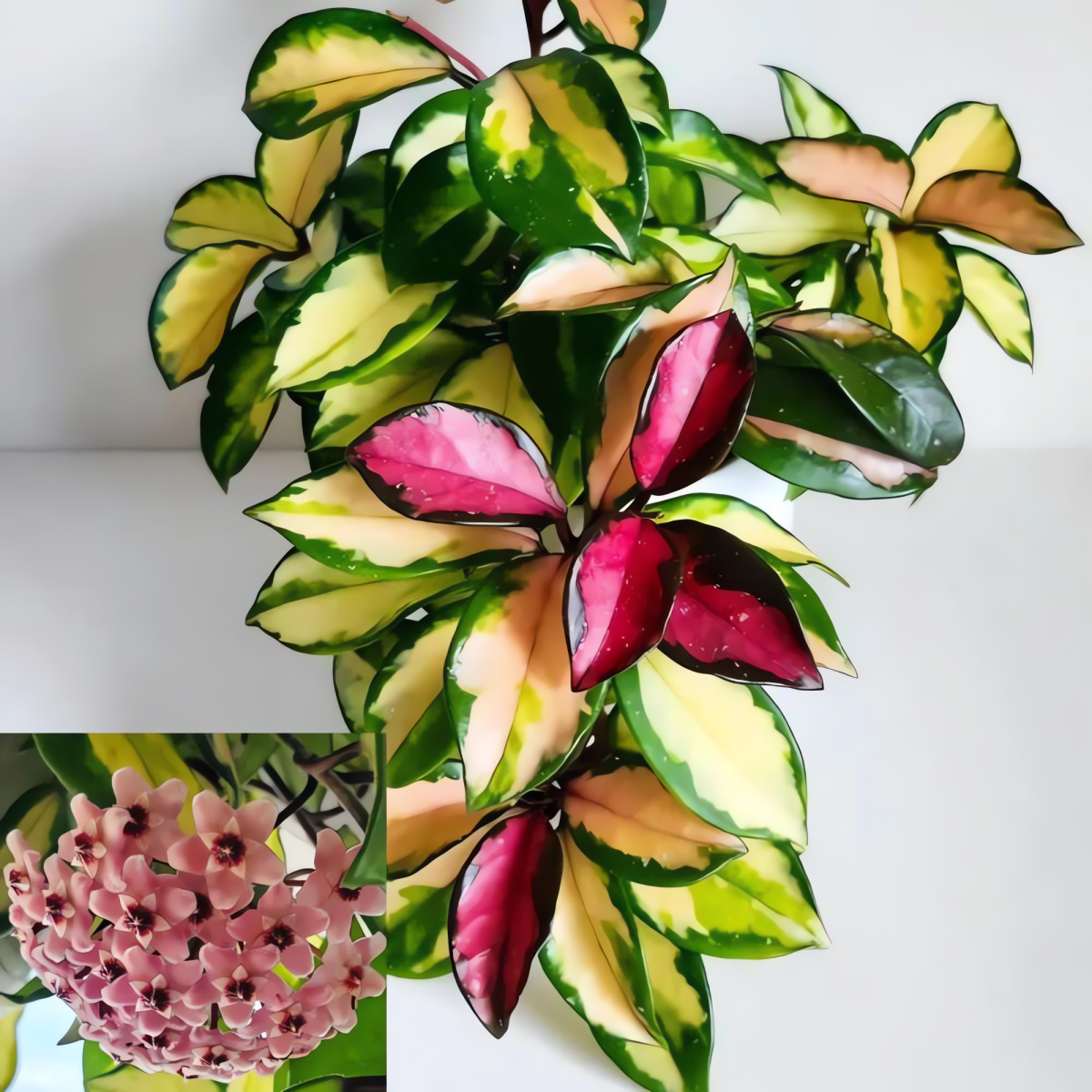
The plant’s leaves and flowers
New leaves often emerge entirely pink before gradually transitioning to white-yellow-green as they mature. In the morning light, a basket of variegated hoya displays a galaxy of colors: green, white, and pink leaves intertwining.
The plant’s succulent stems can grow 2-3m long. Characteristic of hoyas are their star-shaped, waxy flower clusters, emitting a chocolate-vanilla scent at night.
Flowers bloom from the same “flower spurs” year after year, so never cut these spurs. A mature variegated hoya with tri-colored leaves and gem-like flower clusters is a treasure for any collector.
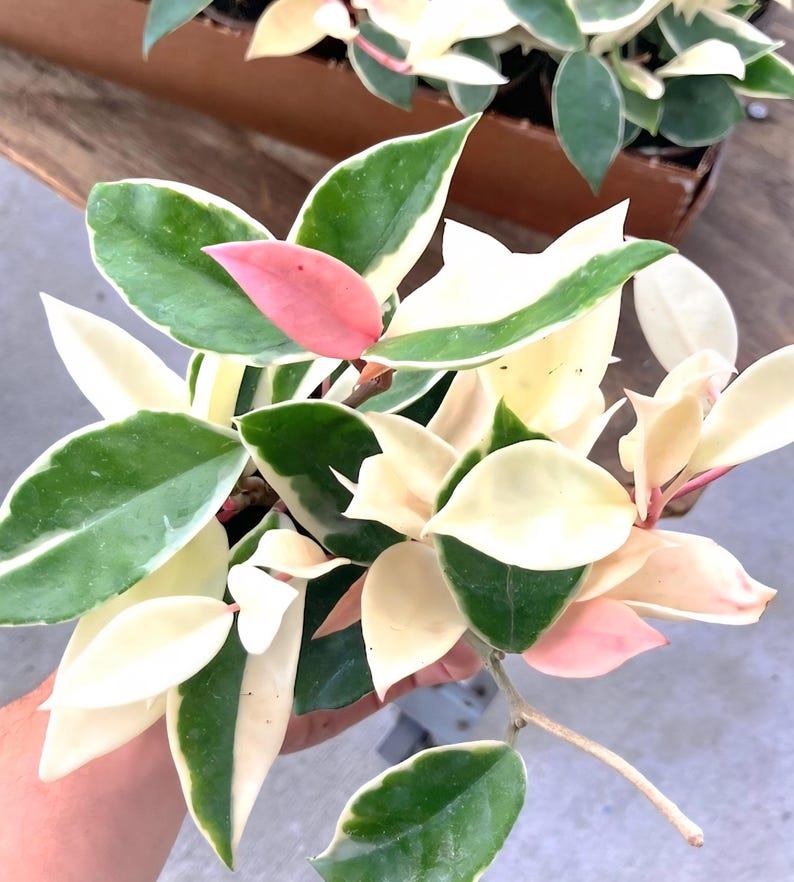
Due to its slow growth, the plant maintains its shape for a long time
Ornamental Value
This plant is a “two-in-one”: enjoying leaves year-round and flowers seasonally. Hang it in front of porches, windows, or kitchen gardens, where its cascading vines are soft yet not overgrown. Its thick leaves rarely shed, keeping the area clean.
At night, with warm string lights, the pink and white leaves glow like jewelry. Due to its slow growth, the plant maintains its shape for a long time, ideal for small apartments.
Feng Shui Significance
“Hoya” in Greek means “sweet honey.” The spherical flower clusters symbolize fullness and unity. The three leaf colors—green, white, and pink—represent Wood, Metal, and Fire, creating a balanced five-element harmony.
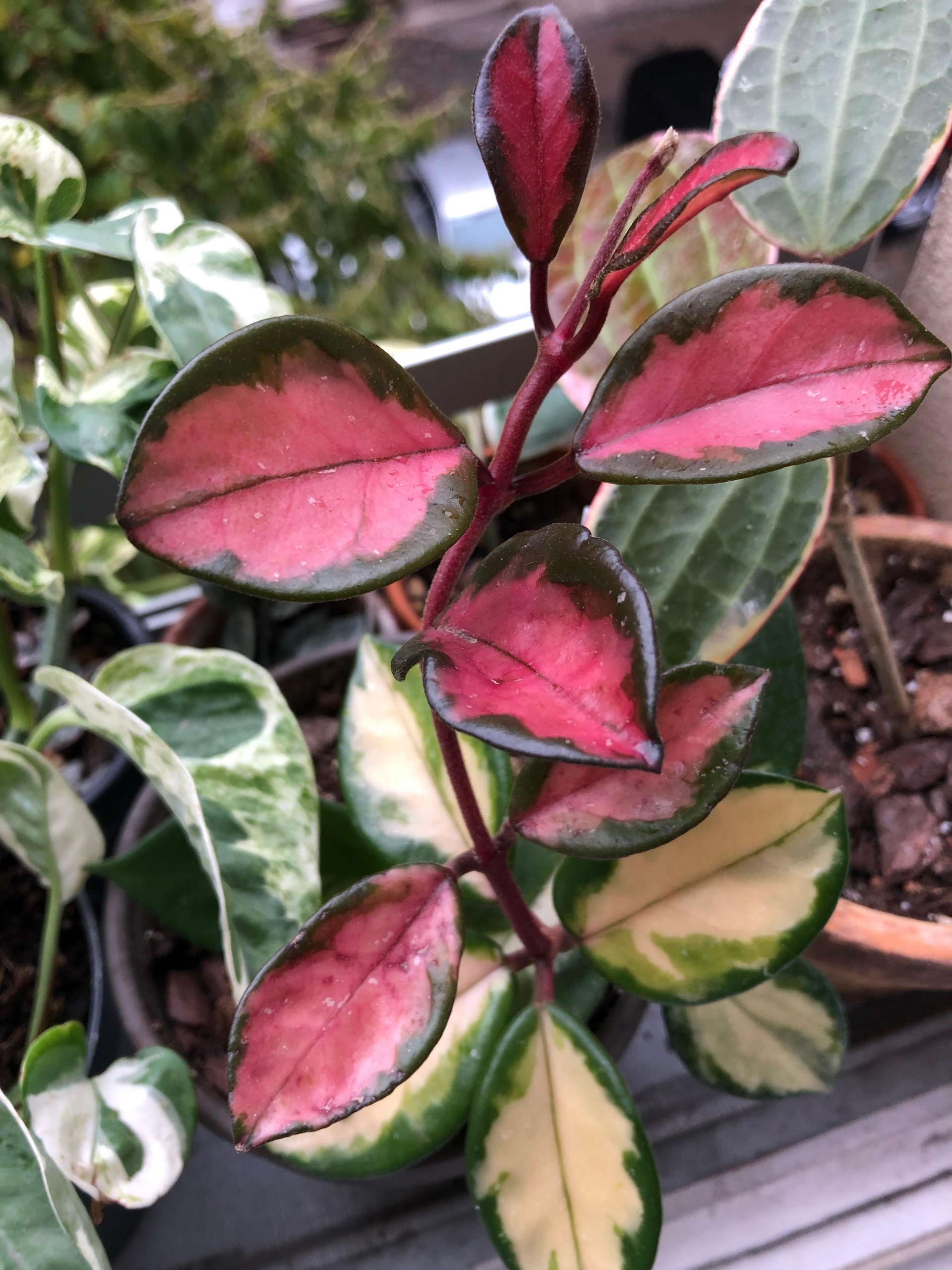
Place the plant in the south direction to enhance fame and joy.
The pink hues of young leaves signify romance and good relationships. Singles often hang ‘Krimson Princess’ by their bedroom windows to attract love.
Families display it on balconies to maintain sweetness and avoid conflicts. Most compatible with Fire and Earth destinies. Place the plant in the south direction to enhance fame and joy.
Care Tips
Light: The plant prefers bright, diffused light. Morning sun from 7-9 AM is ideal for pink coloration. Harsh midday sun burns the leaves.
Water: As a succulent, it dislikes wetness. Follow the “dry limit” rule: water only when the soil 5cm deep is dry.
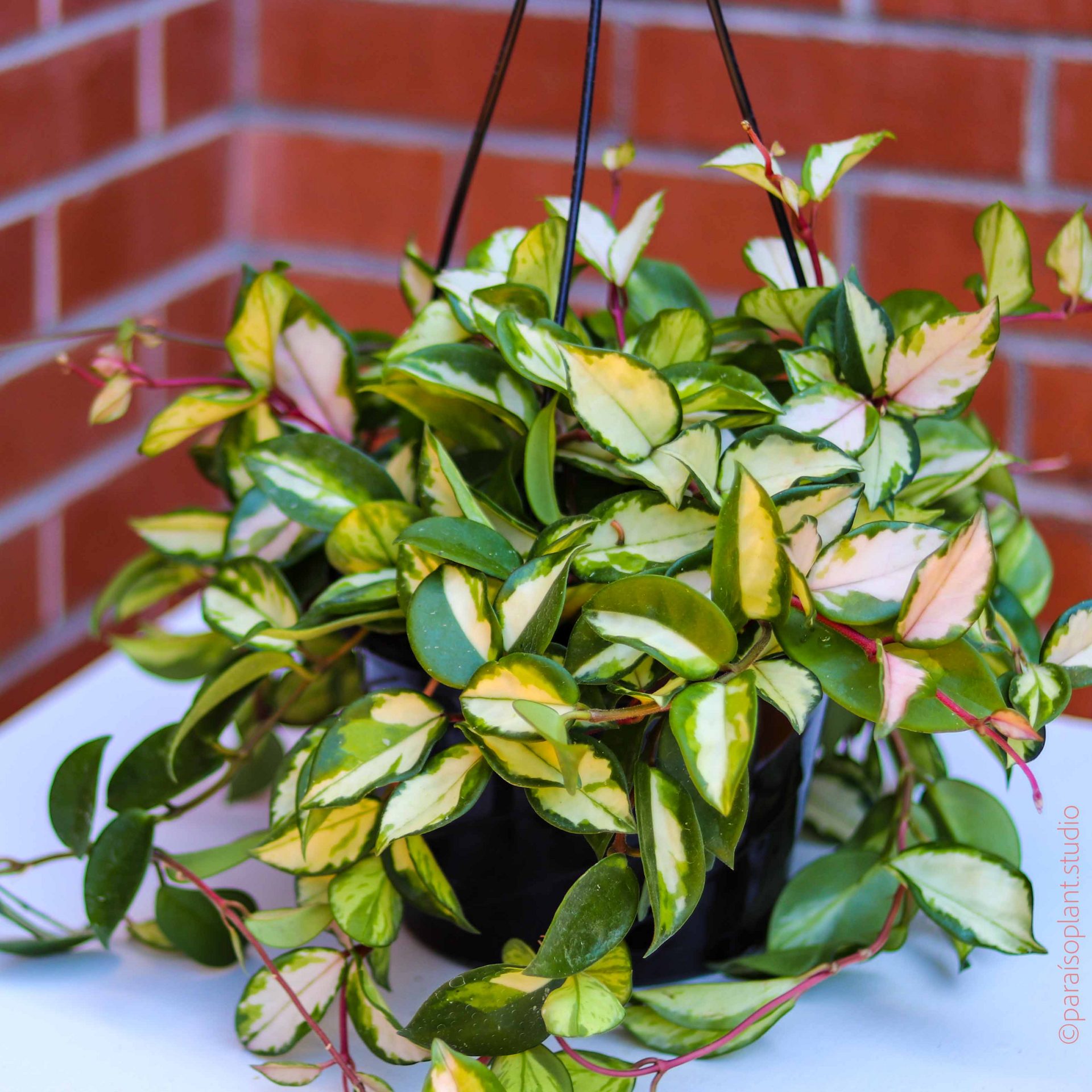
Allow the plant to experience mild drought
Soil: Must be highly porous: 60% pine bark + 20% perlite + 20% Chilean donkey. Plant in small terracotta pots; hoyas flower better when root-bound. Humidity: 50-60% is sufficient. Excess misting can cause fungal leaf diseases.
Fertilizer: Use high phosphorus and potassium fertilizers to promote flowering: 6-30, once a month in spring-summer. Stop fertilizing in winter.
Flowering Stimulation: Allow the plant to experience mild drought, maintain day-night temperature differences, and provide sufficient light. Plants typically flower after 2-3 years.
Growing one of these three plants will help you understand why it’s said that “growing plants is playing with light.” Brazilian Philodendron teaches us about spontaneity: the splashes are never uniform, just as joy comes unexpectedly.
The greatest value of these three golden climbing plants lies not in their price or rarity.
Golden pothos teaches us about transformation: leaves change with the seasons, and hearts should be flexible. Variegated hoya reminds us that to blush pink, one must embrace the sun, and to be sweet, one must endure dryness.
Ultimately, the greatest value of these three golden climbing plants lies not in their price or rarity. They are visual magic: with just a small corner, they brighten the entire room and warm the heart.
Planting a vine is planting a perpetual ray of sunshine. Planting three is keeping the golden spring sunshine indoors. And when the soul is always bathed in light, hope naturally sprouts.
“Top 3 Feng Shui Plants Beloved by Office Workers for Attracting Wealth and Prosperity”

Many office workers find themselves exhausted and stressed after long hours at their desks, but a small potted plant can be a surprisingly effective solution to bring a touch of nature and tranquility to their workspace.
5 Lucky Plants Dubbed “Wealth Flowers” to Bring Fortune and Prosperity to Your Home

Invite prosperity and abundance into your home with the “Wealth God” bonsai tree. This auspicious plant is believed to bring smooth sailing and bountiful riches, filling your days with joy and contentment.
Mastering the Art of Dust-Free Living: Proven Strategies to Eliminate Fine Particles in Your Home

Fine dust, though invisible to the naked eye, has become a significant concern for family health. Discover highly effective ways to reduce indoor fine dust levels in the insightful article below.
“Ancient Wisdom Revealed: 6 Surprising Items to Avoid in Your Bedroom for a Healthier Life”

A good night’s sleep isn’t just about a comfortable bed—it’s also about what you keep in your bedroom. Here are 6 items you should absolutely avoid, which may seem superstitious but are actually backed by science.
6 Lucky Plants to Attract Wealth and Prosperity for Those with a Wood Element Destiny

Every type of Feng Shui plant carries unique characteristics and symbolic meanings. In Feng Shui principles, the Wood element represents plants and trees, yet not all plants align harmoniously with the Wood element.