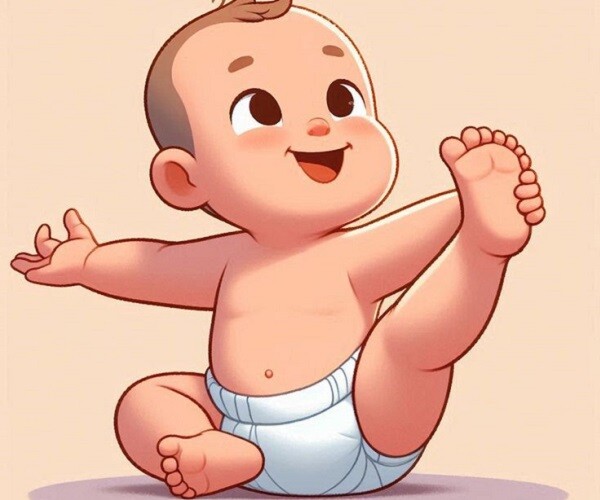
Numerous studies have shown that, after a few years, children who go barefoot appropriately tend to have better balance, foot flexibility, and overall physical strength compared to those who wear socks or shoes most of the time.

What are the differences for toddlers who prefer going barefoot during their early walking stages?
For young children in their developmental stages, going barefoot in a clean and safe environment helps them feel more comfortable during hot days, while also offering numerous benefits for their physical and cognitive development.
Sensory Stimulation and Brain Development
The soles of the feet are packed with numerous sensory nerve endings. When children walk barefoot on wooden floors, carpets, or clean surfaces, their feet directly experience variations in temperature, texture, and hardness.
These sensory signals are transmitted to the brain, enhancing the child’s ability to perceive, process information, and coordinate senses. This provides children with richer experiences of the world around them, improving their focus and reflexes.
Conversely, if feet are constantly covered in socks or shoes throughout the day, natural stimuli are reduced, limiting opportunities for sensory system development.

Supporting Healthy Foot Development
In the early years, the bones, muscles, and ligaments in a child’s feet are still very soft and developing. This is a critical period for proper foot structure formation.
Going barefoot allows the foot muscles to function naturally. Each step, run, or jump strengthens the muscles, ligaments, and supports the development of a healthy foot arch.
Improving Balance and Motor Coordination
For toddlers learning to walk or newly walking, going barefoot is an effective training method.
When feet directly contact the ground, toes naturally grip and maintain better balance. The body continuously adjusts its center of gravity to ensure stability with each step.
Running, jumping, and playing barefoot strengthen the legs, enhance muscle group coordination, and improve balance. As a result, many children who go barefoot correctly often walk more steadily, move more flexibly, and feel more confident in daily activities.
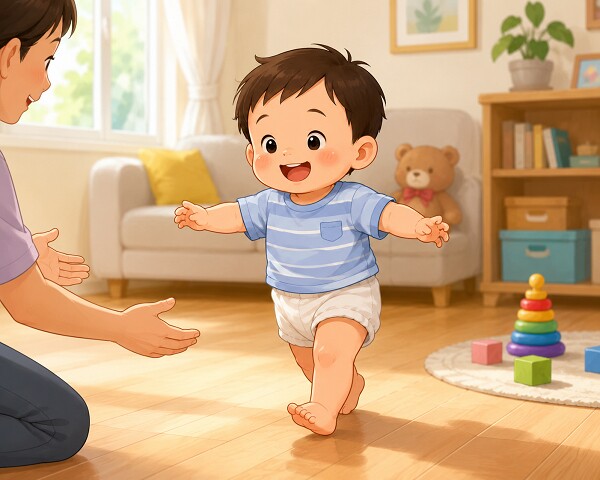

What Should Parents Keep in Mind When Letting Children Go Barefoot in Summer?
Many parents believe that whether children go barefoot or wear socks in summer is a minor detail that doesn’t significantly impact their development. However, daily habits maintained over time can create noticeable differences.
When allowed to go barefoot correctly in a clean and safe environment, children have more opportunities for natural movement, strengthening foot muscles, improving balance, and adapting to their surroundings.
Experts suggest that for barefoot walking to be truly beneficial, parents should consider the following guidelines:
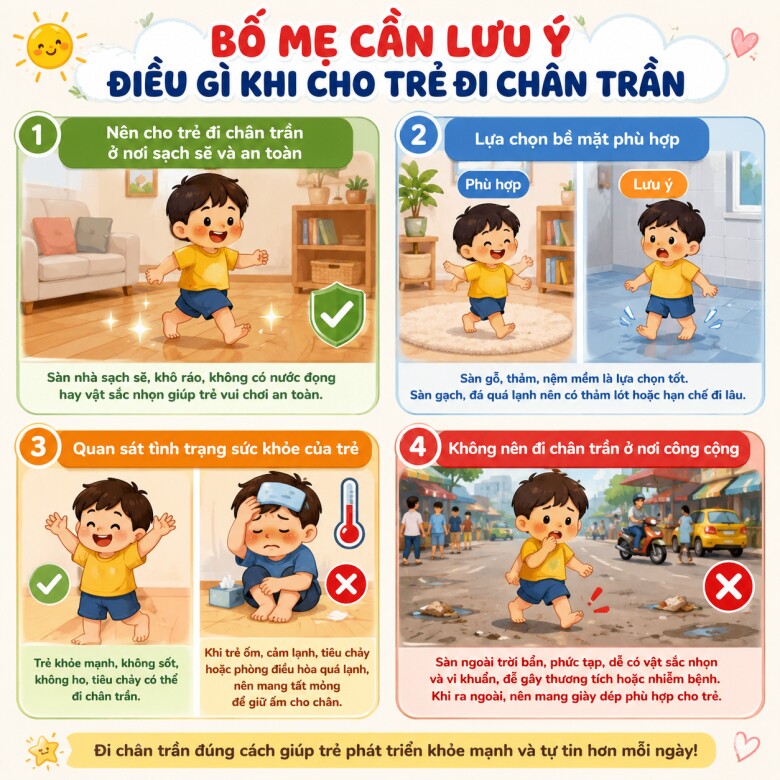
Allow Barefoot Walking in Clean and Safe Areas
Floors should be kept clean, dry, and free of standing water or sharp objects that could injure the feet. Regular house cleaning also helps minimize dust and bacteria, creating a safe environment for children to play.
Choose Suitable Surfaces
If floors are tiled or too cold, especially with air conditioning, parents can add rugs for more comfortable movement. Wooden floors or carpeted areas are ideal for barefoot play.
Monitor the Child’s Health Condition
Barefoot walking isn’t always appropriate. If a child has a fever, cold, diarrhea, feels tired, or the room is too cold, parents should have them wear thin, breathable socks to keep their feet warm.

Avoid Barefoot Walking in Public Places
Barefoot walking is best suited for safe spaces like home. When outdoors, children should wear properly fitting shoes to protect their feet from dirt, bacteria, sharp objects, and uneven or overly hot surfaces.
It’s not about going barefoot as much as possible, nor is it always right to wear socks. Parents need to create conditions for children to move naturally in a safe environment, while adjusting flexibly based on weather and health conditions.
With proper care, children’s feet will develop healthily, enabling them to move flexibly, confidently explore the world, and build a strong physical foundation in their early years.

“3 ‘Bad Habits’ in Children That Often Predict Future Success—And Why Parents Should Think Twice Before Correcting Them”

Many children are often labeled as stubborn, talkative, or headstrong by their parents. However, research reveals that these very traits frequently characterize successful adults in their childhood. The key lies not in eliminating these qualities but in understanding how to guide and nurture them effectively.
Soaring Electricity Bill After Hiring a New Maid? Camera Footage Reveals the Shocking Truth—and Why I Gave Her a Raise

That evening, after my child had fallen asleep, I revisited the camera footage to review the past month’s events. About 10 minutes in, a wave of joy washed over me once again.
How Your Child Grows Up Confident or Insecure: 3 Key Ways Mothers Shape Their Self-Esteem

Empowering Parenting: Unlocking Your Child’s Potential
According to education experts, mothers who consciously refrain from three specific behaviors can significantly foster their child’s confidence, happiness, and future success. Discover the transformative power of mindful parenting in shaping a brighter tomorrow for your little one.
Summer Transformation: A Month in the Countryside Changes a Fair-Skinned, Big-Eyed Girl Beyond Recognition

A mother was left speechless upon returning to her hometown to pick up her child.
Unlocking Genius: 4 Common Traits of High-IQ, Academically Gifted Children

Children with a thirst for knowledge and a promising future often exhibit the following positive habits, which parents can easily observe in their daily lives.