























On special occasions like March 8th, October 20th, or November 20th, many parents seize the opportunity to express gratitude to teachers for their dedication to their children’s education and care. A small gift or a beautiful flower is a sincere way to honor their contributions.
Recently, a social media post from a fruit shop went viral, sparking widespread discussion among netizens. The post featured a photo of a fruit basket ordered by a parent for a teacher, with the caption: “The teacher might laugh out loud.” The basket, adorned in green, looked charming, but it was the appearance of the mangoes that caught everyone’s attention.
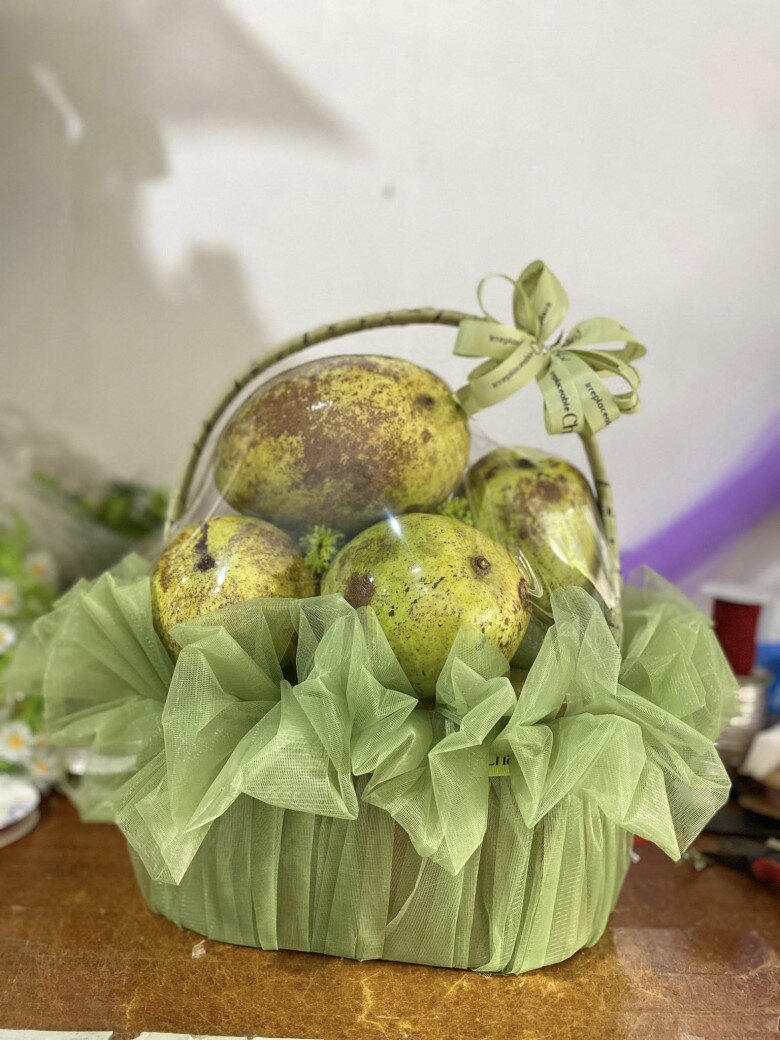
The controversial fruit basket gifted to a teacher (Photo: Ngân Hoa Quả Sạch).
Specifically, the shop shared an image of a basket containing 5-6 mangoes, accompanied by the caption: “The teacher might laugh out loud.” While the basket was beautifully decorated in green, it was the mangoes’ appearance that sparked online debate.
Many criticized the parent for lacking thoughtfulness, noting that November 20th comes only once a year, yet the gifted mangoes were blemished rather than fresh and smooth. However, others quickly pointed out that the mangoes likely came from the parent’s own garden, suggesting the parent had simply asked the shop to package them. They argued that the parent’s effort to present homegrown fruits in a thoughtful package was heartfelt, and many teachers would appreciate such authenticity over store-bought fruits of uncertain quality.
Notable comments included:
– As a teacher, I’m happy with any gift from parents. I’ve received oranges, mangoes, bunches of bananas, durians, and jackfruits… Since I’m from the countryside, parents often give whatever their gardens yield. I cherish their thoughtfulness—it’s the gesture that counts!
– I believe it’s the thought that matters. These slightly blemished mangoes are likely sweeter, and the parent took the time to have them packaged. Not everyone can afford luxury gifts. For some, even 100-200 thousand VND is a significant expense.
– From my 30 years of eating mangoes, I can tell these will taste amazing!
– If these mangoes are truly homegrown and fresh, I’d be overjoyed as a teacher!
– It’s a kind gesture. Even a flower picked from the garden is precious because the parent thought of the teacher.


The online debate continues to draw significant attention and engagement from parents.
In reality, students and parents gifting teachers is a common practice, not limited to special occasions like March 8th or November 20th. Depending on their circumstances, families express gratitude and appreciation for teachers in various ways. While there’s no universal standard, these gestures undoubtedly stem from genuine sincerity.
This also serves as a practical lesson for parents to teach children the value of “when you eat a fruit, think of the person who planted the tree.” By doing so, children learn to become empathetic, grateful, and respectful individuals.
How can parents effectively teach children to express gratitude and respect to their teachers?
Teaching children to show gratitude and respect to teachers goes beyond mere gestures—it’s a profound educational process. Parents should start by helping children understand the vital role teachers play in their growth and development. Sharing positive memories about teachers can deepen children’s appreciation for their efforts.
Encouraging children to write thank-you letters is an effective way to foster gratitude. This not only enhances their writing skills but also strengthens their emotional connection with teachers. Additionally, small, heartfelt gifts like flowers or handmade items can convey sincere appreciation, making teachers feel valued and cherished.
Participating in class activities, such as Teacher Appreciation Day, provides children with opportunities to bond with their teachers. Parents should also encourage daily respectful behaviors, such as greeting teachers and actively listening to them. Teaching children to express thanks when receiving help fosters a habit of gratitude—a valuable trait in life.
To nurture this value, parents can encourage children to share their achievements with teachers, acknowledging their contributions. This not only cultivates gratitude but also strengthens the connection between children and their mentors. From practicing gratitude in daily life to engaging in volunteer activities, children gradually develop humanitarian values and positive attitudes.
The Car Gift That Sparked a Lesson in Filial Piety: My Adoptive Father’s Unexpected Reaction

I’m not sure if I should call this a sad story, as it begins with gratitude and ends in lingering regret. Perhaps, it’s the depth of love that gives rise to wounds too profound to put into words.
Unveiling a Life-Changing Decision: A Daughter’s Unexpected Journey Home

On my way back to my hometown, I stopped to withdraw 30 million, thinking that if my stepfather’s stay in the hospital prolonged, I could hire someone to take care of him, easing the burden on my mother and sister.
The Master Builder: A Story of Sacrifice and Dedication

“As the graduation ceremony drew to a close, the instructor approached to congratulate me and my family. When it was my father’s turn to shake hands, the instructor paused, scrutinizing him closely. His expression suddenly shifted, and a fleeting moment of recognition passed between them.”
Nurturing Nature: Unveiling the 4 Personality Traits That Reveal a Child’s Future Filial Piety

Many children, from a young age, exhibit innate filial piety and a profound capacity for love and respect towards their parents.
The Brilliant Child: 6 Early Lessons from Exceptional Parents

Every family has its own unique story to tell, with invaluable lessons learned from both failures and successes that shape the way they raise their children.