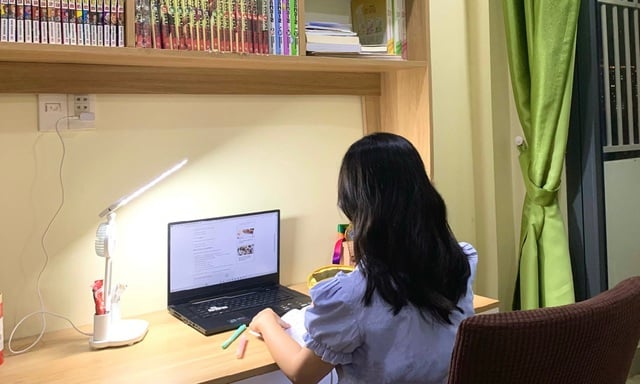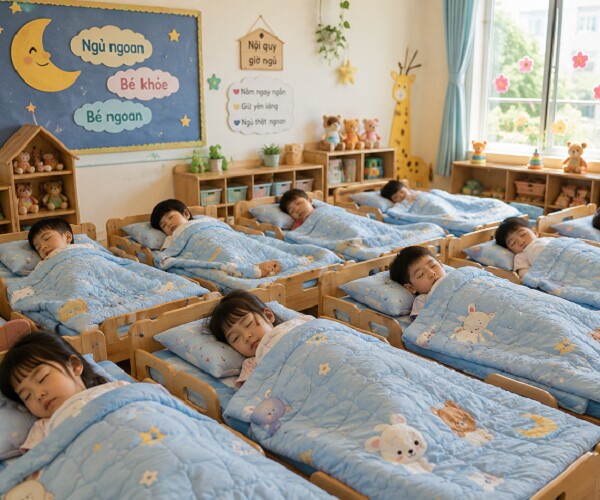
Shortly after, the group conversation became incredibly lively. One parent said, “My child rarely takes naps, always full of energy. Fortunately, the teacher hasn’t complained, and their studies are fine.”
Another shared: “Children with regular napping habits are noticeably different. Just look at my two grandchildren—it’s clear.”
A more practical parent calculated: “Evenings are packed with studying, eating, and playtime, leaving little room for rest. Without daytime naps, total sleep time becomes hard to ensure.”
At first glance, napping seems like a simple “sleep or don’t sleep” choice. But over time, the differences between children with healthy rest habits and those who consistently lack sleep become strikingly clear.
Thus, children who enjoy napping versus those who resist daytime sleep often show distinct differences in focus, emotional regulation, and academic performance as they grow.
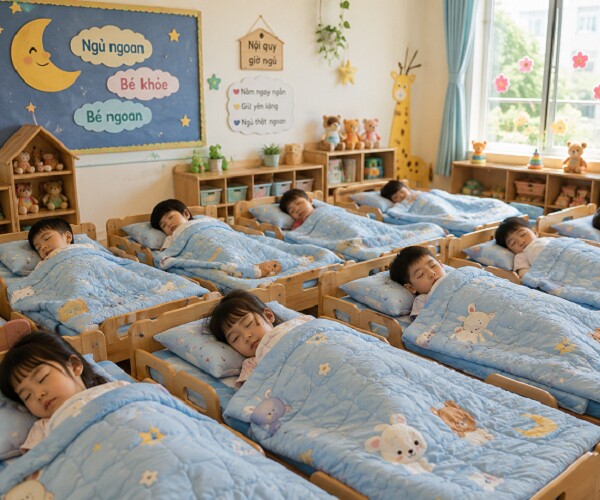

What benefits do naps offer for a child’s health and development?
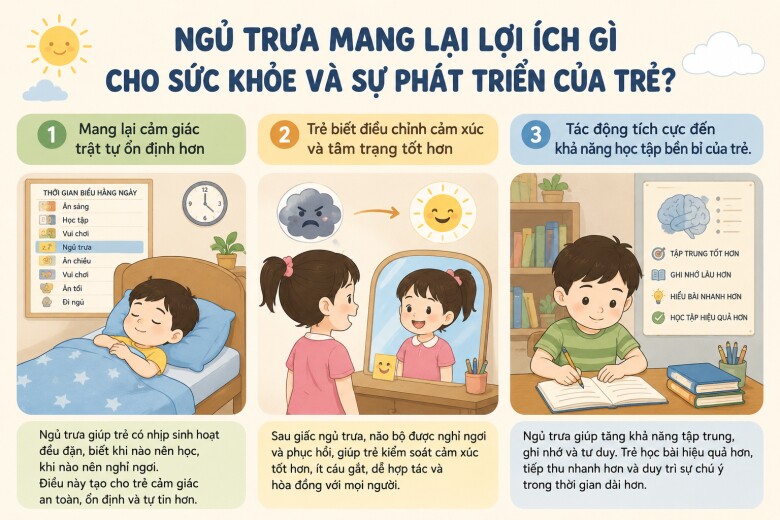
Fosters a sense of stability and order
Many assume naps are just for rest or catching up on sleep. However, for young children, naps are crucial for establishing stability, balance, and self-regulation.
One parent shared that her older daughter, who napped regularly from a young age, grew up more focused, less fatigued, and better at time management. In contrast, her younger son, who often skipped naps to watch cartoons or play, struggled with concentration, procrastination, and academic initiative.
Neuroscientific studies confirm that consistent routines help children transition smoothly between rest and focus. Regular napping trains the brain to “pause and restart,” enhancing emotional control, time management, and sustained attention.
Self-discipline isn’t innate—it’s cultivated through daily habits. Consistent napping is a simple yet powerful way to instill a sense of order and rhythm in children from an early age.
This sense of order, when established in middle school, high school, or even the workplace, quietly evolves into healthy self-discipline—knowing when to pause and when to recharge.

Improves emotional regulation and mood
Many parents overlook how naps influence not just physical health, but also emotional well-being and social skills.
Children who frequently miss naps often become irritable, impulsive, and struggle with behavior control. In school, they may disrupt class, fight over toys, or find it hard to cooperate, leading to social isolation.
Experts link this to insufficient brain rest. Sleep deprivation impairs the brain’s emotional and behavioral control centers, making children more prone to anger, impatience, and impulsivity.
Conversely, well-rested children tend to regulate emotions better, control impulses, and socialize more easily. Neurological research also shows that sleep, including short naps, directly stabilizes mood.
Naps act as a “recharge station” for the brain, helping children process emotions, empathize, and connect with others. REM sleep processes emotional memories and reduces amygdala reactivity to negative emotions.
Impacts long-term academic resilience
A survey of nearly 3,000 Chinese elementary students revealed a strong link between regular napping and academic success.
Children napping three or more times weekly scored 7.6% higher in sixth grade, showed better self-control, and reported greater happiness.
Memory consolidation theory explains that new knowledge transfers from the hippocampus’s “temporary storage” to the cortex’s “permanent storage” primarily during sleep.
During slow-wave sleep in naps, the brain reactivates learned neural patterns, integrating and storing fragmented information.
Naps are like a “data cleanup and storage” process for a child’s learning system. Morning lessons become long-term memories only after nap-time processing.
Children who skip naps are like overworked computers, slowing down until they “crash” by afternoon.


How can parents help children establish healthy daytime rest habits?
For toddlers (ages 1–6)
Recognize tiredness cues and seize napping opportunities
When children rub their eyes, daydream, or yawn, adenosine levels peak, signaling the ideal napping window.
Missing this window may delay sleepiness by over an hour.
Don’t stress if they resist—start with a sleep routine
Daily, dim the lights, play soft music, and change into comfy clothes.
Repeating sensory cues creates conditioned responses. After a few times, hearing the music or entering a dark room will trigger “rest mode.”
Even if they love naps, keep them moderate
Ideal nap duration for preschoolers is 30–90 minutes. Naps over two hours can disrupt nighttime sleep.
Nap about an hour after lunch, avoiding post-3 PM naps to preserve nighttime sleep.

For older children (ages 6+)
Rename “naps”
Older kids may resist “napping,” so reframe it. Try, “Mom’s resting—why don’t you lie down, close your eyes, or listen to music?”
Start small with short breaks
Explain napping’s benefits. Begin with 3-minute deep breathing, gradually increasing to 5, then 10 minutes.
They’ll soon realize even brief pauses refresh the mind better than constant screen time or gaming.
Don’t force it if they truly resist
Offer relaxing alternatives: music, reading, or simple puzzles.
The key is understanding their body’s rhythm and managing their energy.
Napping is a microcosm of life’s bigger plan. This small habit reveals future lifestyle tendencies.
Sensing this rhythm lays the foundation for self-awareness and emotional stability through daily “pause-restart” cycles.

The Impact of a Glamorous vs. Casual Mom on a Child’s Confidence and Charisma

A mother’s aesthetic subtly shapes her child’s emotional landscape and worldview.
“Born in the 3 ‘Smart Months’: Unlocking Success and Career Advancement Beyond Superstition”

Scientific studies reveal that the month of birth can have a significant impact on a child’s IQ.
Unlocking the Secret: How a Mother’s Unique Trait Ensures a Healthy, Brilliant Child

Groundbreaking research from Stanford University reveals a fascinating connection between a mother’s blood type and her child’s intelligence. This study sheds new light on the intricate factors influencing cognitive development.
3 Types of Children Who, When Praised as ‘Smart,’ Struggle to Succeed as Adults

Early childhood intelligence doesn’t always guarantee adult success.
“Children Born During This Period Are ‘Lucky Charms’ from the God of Wealth, Bringing Fortune to the Entire Family”

In the realm of folklore, it is believed that babies born during extraordinary moments are blessed by the heavens, destined for a life filled with prosperity and ease.