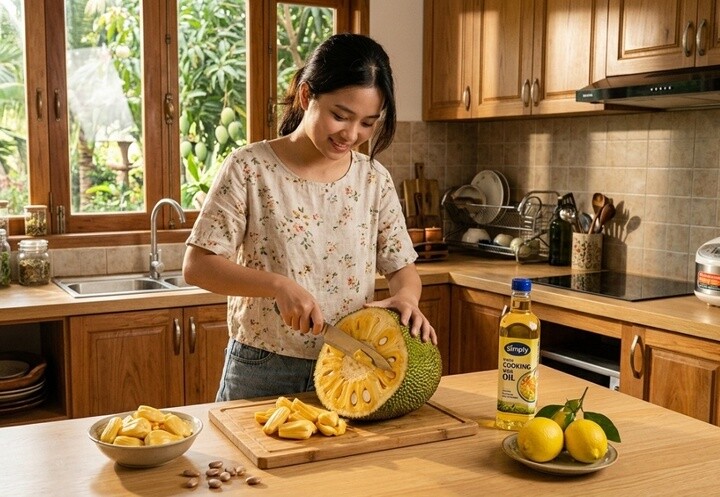
Jackfruit is one of the most beloved tropical fruits in Vietnam, cherished for its delicious flavor and high nutritional value. However, the biggest barrier that makes many people hesitant to buy whole jackfruits is the thick, sticky latex that stubbornly clings to knives, cutting boards, and hands.
Jackfruit latex is a natural polymer with a composition similar to rubber. It has extremely strong hydrophobic properties. This explains why rinsing a knife under strong water or using regular dish soap initially is completely ineffective in removing the latex—it even causes the latex to spread further.
Secrets to Cutting Jackfruit Without Latex Sticking to Your Knife
To thoroughly address this sticky issue, we need to apply principles of solubility, thermal structure alteration, and friction. Here are some handy tips to help you cut jackfruit smoothly and cleanly.
Create a Protective Oil Barrier
In chemistry, there’s a classic principle: “Like dissolves like.” Jackfruit latex is a non-polar organic compound, and cooking oil (fat/lipid) is as well. This is the most proactive and effective preventive method before cutting the jackfruit.
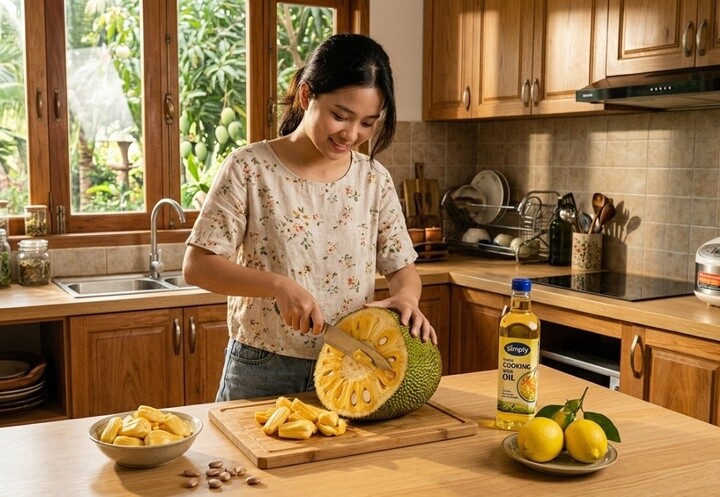

Cooking oil and lemon help keep your knife latex-free while cutting jackfruit. (Photo: BNC)
When you apply a thin layer of cooking oil to the knife’s blade, the oil creates a lipid film that acts as a physical barrier. This slippery shield prevents the latex from adhering directly to the metal’s microscopic pores. Instead, the latex slides off or partially dissolves into the oil.
How to do it: Before cutting the jackfruit, pour a small amount of cooking oil (soybean, palm, or sunflower oil works well) onto a paper towel or cotton pad. Wipe both sides of the knife blade evenly. Don’t forget to rub a little oil on your palms to protect your skin. After cutting, simply wipe off the oil (which will have picked up the latex) with a paper towel, then wash the knife with regular dish soap.
Use Fresh Lemon
If you dislike the slippery feel of oil on your knife, using the natural acidity of fresh lemon is a fantastic alternative. It leaves a clean feel and a pleasant aroma.
Lemon juice is rich in citric acid, which alters the pH of the jackfruit latex, weakening the adhesive bonds of its polymer molecules. Additionally, the essential oils from the lemon peel act as a mild biological solvent, further inhibiting latex adhesion to metal.
How to do it: Cut a fresh lemon in half. Rub one half vigorously over the entire knife blade. If the knife starts to drag while cutting, reapply lemon juice to keep the blade smooth and easily slice through the thick jackfruit skin.
Apply Cold or Heat
Temperature significantly affects the viscosity and adhesiveness of natural polymers. We can manipulate temperature to alter the state of jackfruit latex.
Cold intervention (before cutting): Lowering the temperature causes the latex to contract, harden, and lose its stickiness. Place the jackfruit in the refrigerator for a few hours before cutting. The chilled fruit not only tastes better but also releases less latex, making cleanup easier.
Heat intervention (after cutting): If you forget to apply oil and the latex sticks to your knife, use this method. Hold the knife blade over a small gas flame for 3 to 5 seconds. At temperatures above 100°C, the latex’s polymer structure denatures, dries, and loses its adhesiveness. Simply wipe the dried latex off with a paper towel or dry cloth.

After cutting jackfruit, use rice or flour to clean a latex-covered knife. (Photo: IG)
Use Plastic Bags and Rice
If latex accidentally sticks to your knife and you prefer not to use heat, leverage materials with high friction and absorbency.
Plastic bags: Interestingly, jackfruit latex adheres more strongly to plastic than to cool metal. Wrap a plastic bag or food wrap around your finger and rub the latex off the knife. The friction and static electricity will lift the latex from the knife and transfer it to the plastic.
Flour, rice, or ash: This method relies on capillary absorption. Sprinkle flour, rice, or ash on the latex-covered knife. The fine particles will bind to the latex, reducing its adhesiveness. Gently rub the area, and the latex will clump into small balls that easily fall off.
Achieve Glowing Hands in 1 Week: Natural Home Remedies for Skin Whitening

Sun-kissed, darkened, and aging hands are a common concern for many women. Discover effective methods to brighten and rejuvenate your hands, ensuring you step out with confidence and radiant skin.
Lightning-Fast & Easy Shrimp Peeling Hack

Discover the ultimate time-saving hack for peeling shrimp, one of the most nutritious and beloved seafood choices. Master this super-fast technique and streamline your cooking process effortlessly.
“Women Over 35 Experiencing Severe Hair Loss Every Morning: Your Body’s Silent Alarm and Effective Solutions”

Awakening to a pillow scattered with shed hair is a common yet often overlooked alarm bell from your body. Beyond its aesthetic appeal, your hair serves as a mirror to your overall health, reflecting everything from nutritional intake and hormonal balance to lifestyle choices.
All-Day Lunar New Year Fun, Flawless Hair: Simple, Affordable Secrets for Voluminous, Non-Greasy Locks

As the Lunar New Year arrives, a packed schedule of spring outings, New Year greetings, and parties can leave your hair feeling greasy and flat, despite your best styling efforts. Don’t let limp locks ruin your look – with a few simple tricks, you can keep your hair fresh, voluminous, and bouncy all day long.
Revitalize Your Skin: Ultimate Exfoliation with Homemade Red Bean Powder Scrub

Red bean powder is not only a nutritional powerhouse for your body but also a remarkable exfoliant for your skin. Join us as we explore the art of using red bean powder for effective skin exfoliation in this insightful article!