
























Stir-fried vegetables are a quintessential dish on the family dining table, especially appealing during the chilly weather transitions. A perfectly cooked plate of vegetables should boast a vibrant green color, a crisp texture, and a savory flavor. However, many home cooks struggle with vegetables that turn soggy and lose their appealing color, no matter how quickly they stir-fry.
According to culinary experts, the most common mistake is tossing vegetables directly into a hot pan right after washing. To elevate your stir-fry game to restaurant-level quality, mastering the “2-step rule” is essential.
Soaking Technique: The Antioxidant Shield
Typically, we rinse the vegetables, let them dry, and then proceed with cooking. However, soaking vegetables in a diluted saltwater or lemon juice solution before stir-frying is a crucial step.

This step not only ensures thorough cleaning and disinfection but also prevents the oxidation of chlorophyll. The protective layer formed by the saltwater or lemon juice helps the vegetables retain their natural green color, minimizing discoloration when exposed to high heat.
Blanching: The Secret to Perfect Crispness
Many are hesitant to blanch vegetables, fearing it might strip them of nutrients or take up too much time. However, blanching is a key technique to ensure cleaner, crisper vegetables. It helps remove oxalic acid (found in some greens), eliminates any remaining insect eggs and bacteria, and enhances the overall texture.
Proper Blanching Method:
Bring water to a rolling boil and add a pinch of salt to help retain the color.
Quickly blanch the vegetables for about 20 seconds.
Immediately remove them and plunge into cold water to maintain crispness before stir-frying.
Blanching partially cooks the vegetables, significantly reducing the stir-frying time on the pan, which is crucial to prevent overcooking and nutrient loss.
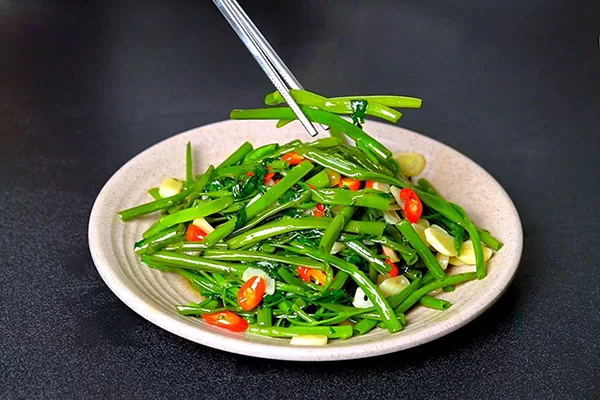
Golden Rules for Stir-Frying Vegetables
After completing the two preparatory steps, follow these three essential tips for the perfect stir-fry:
High Heat: Ensure the pan is scorching hot and maintain high heat throughout the cooking process. Low heat is the culprit behind soggy, limp, and discolored vegetables.
Quick Stirring: Since the vegetables are already blanched, a quick stir is all it takes to evenly distribute the seasonings. This preserves their glossy appearance and crisp texture.
Avoid Overcrowding: Do not overload the pan with too many vegetables at once. Overcrowding leads to uneven cooking, resulting in mushy and inconsistently cooked vegetables.

With these simple adjustments to your cooking routine, you’ll undoubtedly impress your family with a plate of stir-fried vegetables that are as vibrant, flavorful, and professionally executed as those from a top chef.
Stir-Fried Rice Noodles: 3 Chef-Approved Tips for Perfectly Fluffy, Non-Sticky Results Every Time

Glass noodles, a beloved staple in many cuisines, are a delight to savor. Elevate your stir-fry game with these expert tips, ensuring each bite is perfectly cooked, never clumpy or sticky.
Sauté Any Greens to Perfection: 2 Simple Steps for Vibrant, Sweet, and Tender Results

Unlock the secret to perfectly stir-fried vegetables with these simple yet powerful tips. Achieve crisp, vibrant, and beautifully colored dishes every time, without any discoloration or sogginess. Elevate your cooking game and impress with restaurant-quality results.
The Secret to Perfectly Stir-fried Vegetables: 5 Tips for Crisp, Delicious Greens That Will Impress Even the Restaurant Chef

Stir-fried vegetables are a delicious and familiar dish, but not everyone knows the art of stir-frying to perfection – keeping the vegetables a vibrant green, avoiding any unsightly discoloration, and ensuring they remain crisp and tender.
The Ultimate Summer Superfood: Transforming a Simple Soup Vegetable into a Delicious Stir-fry.

For sure, many will be surprised by the unique and exotic flavor of this dish.
The Ultimate Guide to Washing and Chopping Veggies: Are You Doing it Wrong?

Washing vegetables seems like a simple task, but many people are doing it wrong because they don’t understand the right way to do it.