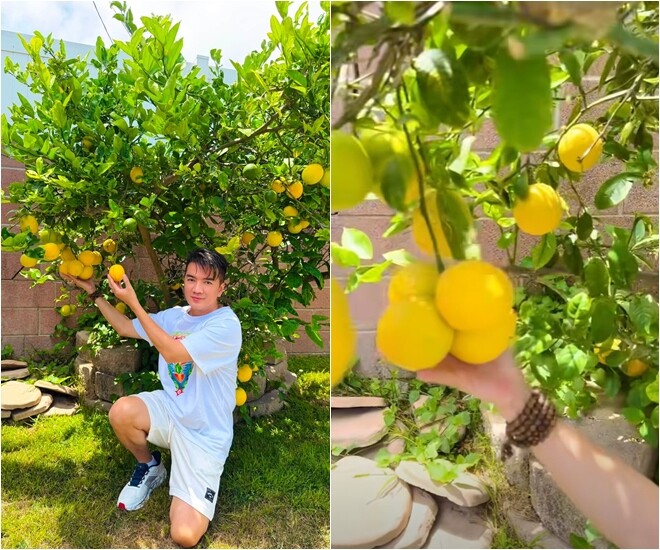
It’s well-known that when purchasing a home, Mr. Đàm prioritized a large garden area to grow various fruit trees. Despite the trees being very small initially, after just a few years of care, the lush garden corner has yielded a bountiful harvest. Sharing his family’s achievement, Mr. Đàm excitedly remarked, “My mom planted all these adorable trees—lemons, pomegranates, oranges, and apples…”
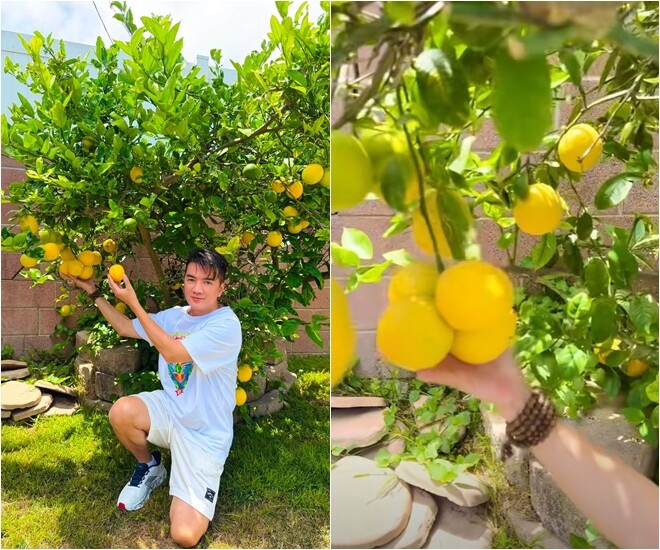
The first highlight in this vibrant summer garden is the lemon tree, heavily laden with fruit. Some lemon clusters have grown so large that the singer, Đàm Vĩnh Hưng, exclaimed in amazement that the lemons are “as big as his face.”
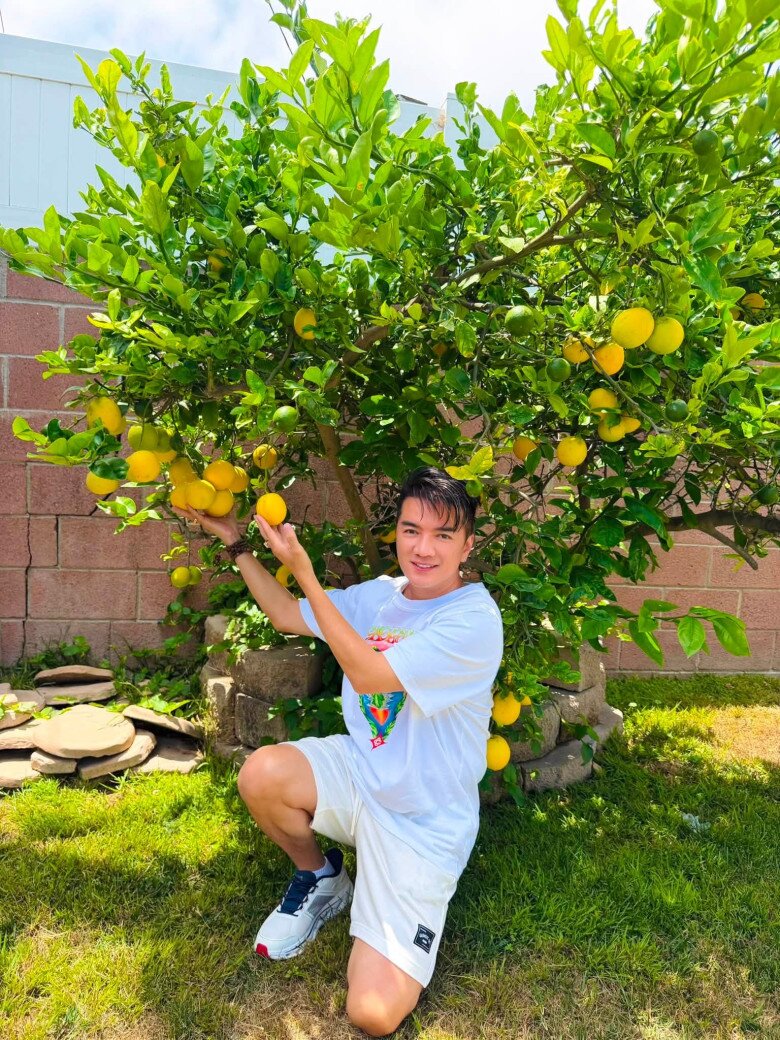
This lemon tree was planted about 6-7 years ago and has now become one of the most productive trees in the garden.
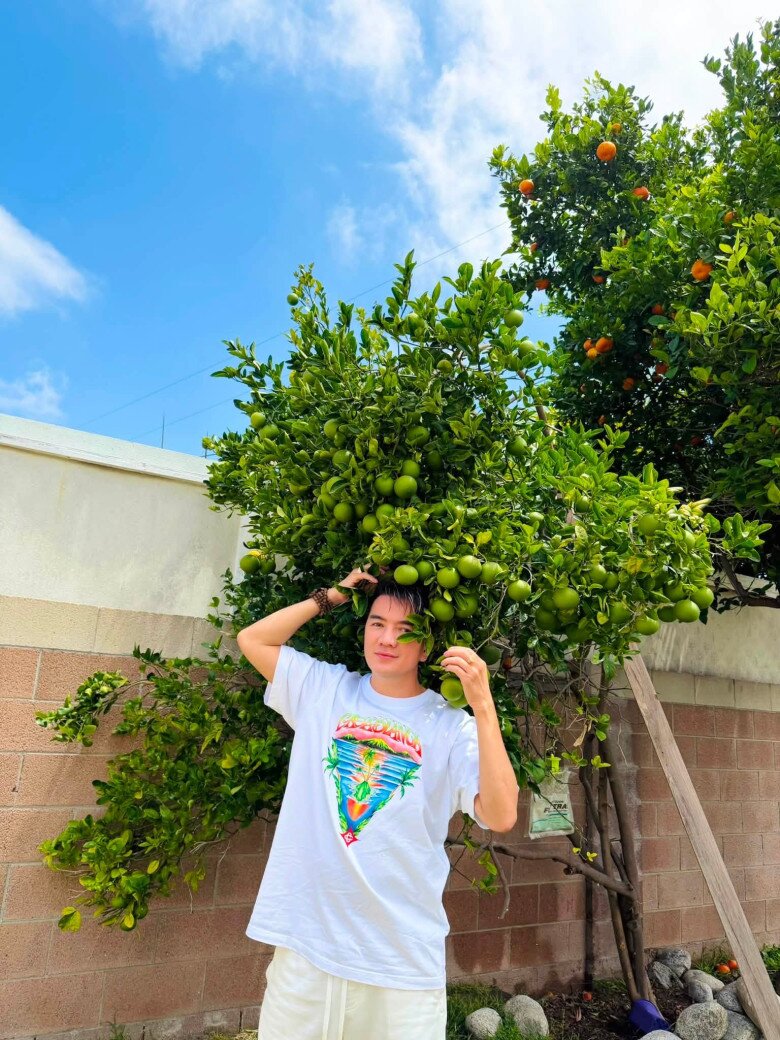
Not only lemons, but the summer garden also features a lush green orange tree with abundant fruit. The famous singer stands peeking out from under the canopy of green leaves, surrounded by sweet fruits.
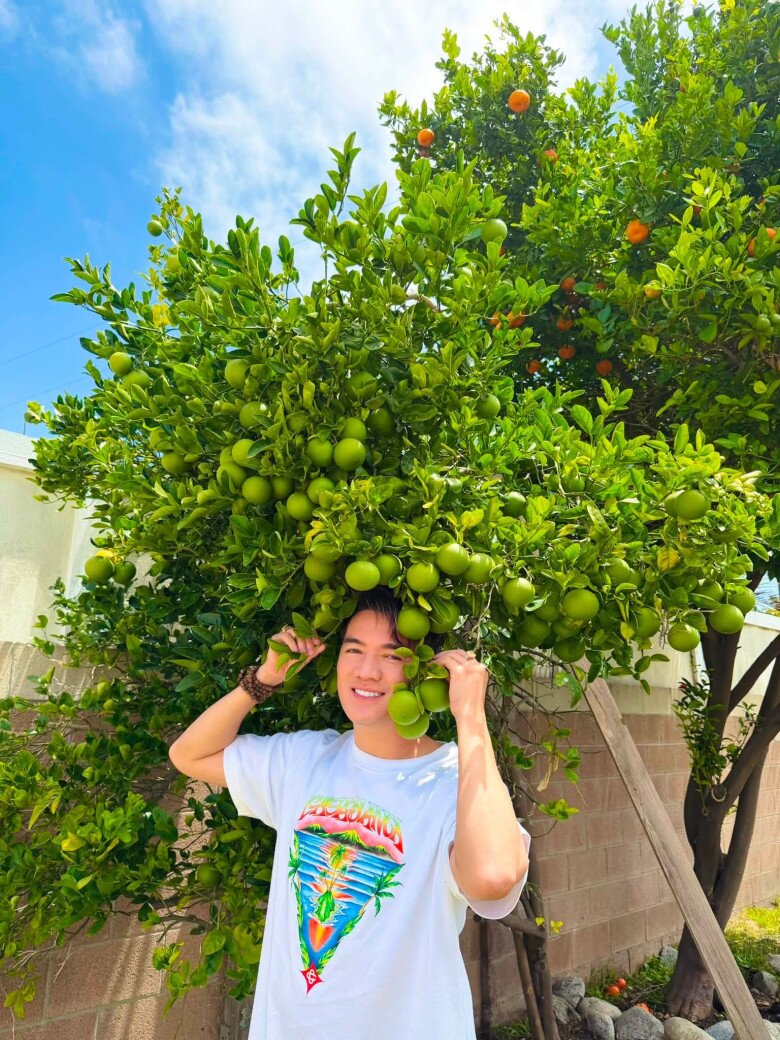
He humorously poses under the heavy clusters of green oranges. The singer is a huge fan of plants and has dedicated most of his property to the garden.
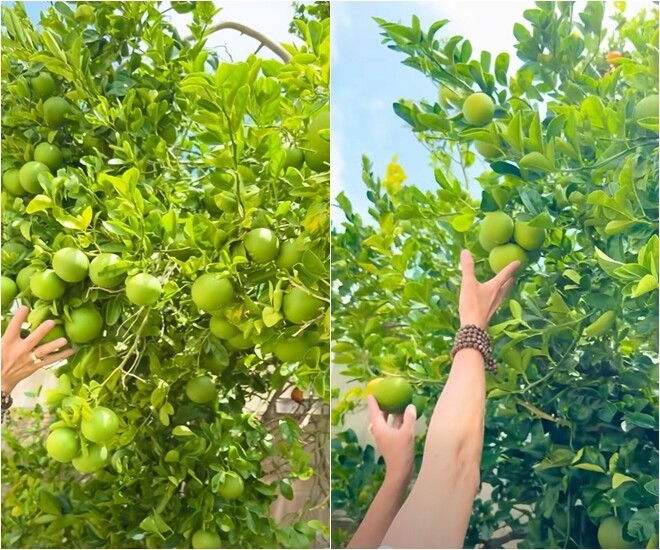
Round, glossy oranges appear on every branch. Since buying the house, he has personally transformed and planted various flowers and grasses to enhance the aesthetic appeal of his living space.
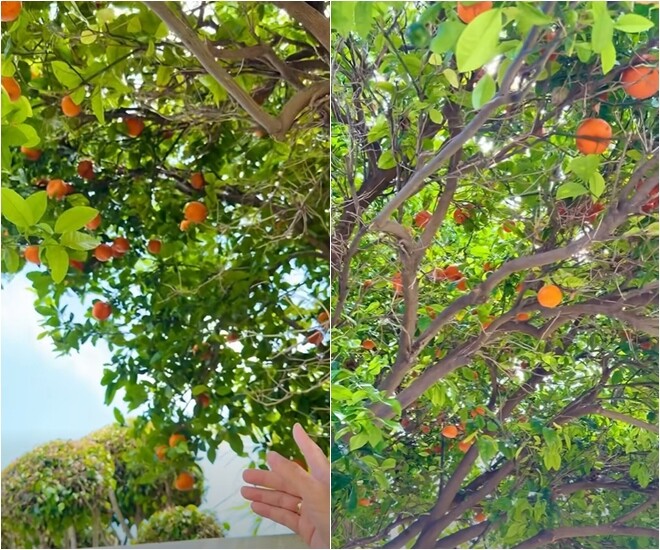
Additionally, the singer is particularly fond of the orange tree with its vibrant orange rind: “I’ve liked this orange tree for a long time. Having a tree with such vibrant orange fruit in the house is wonderful. I’m glad I finally found one.”
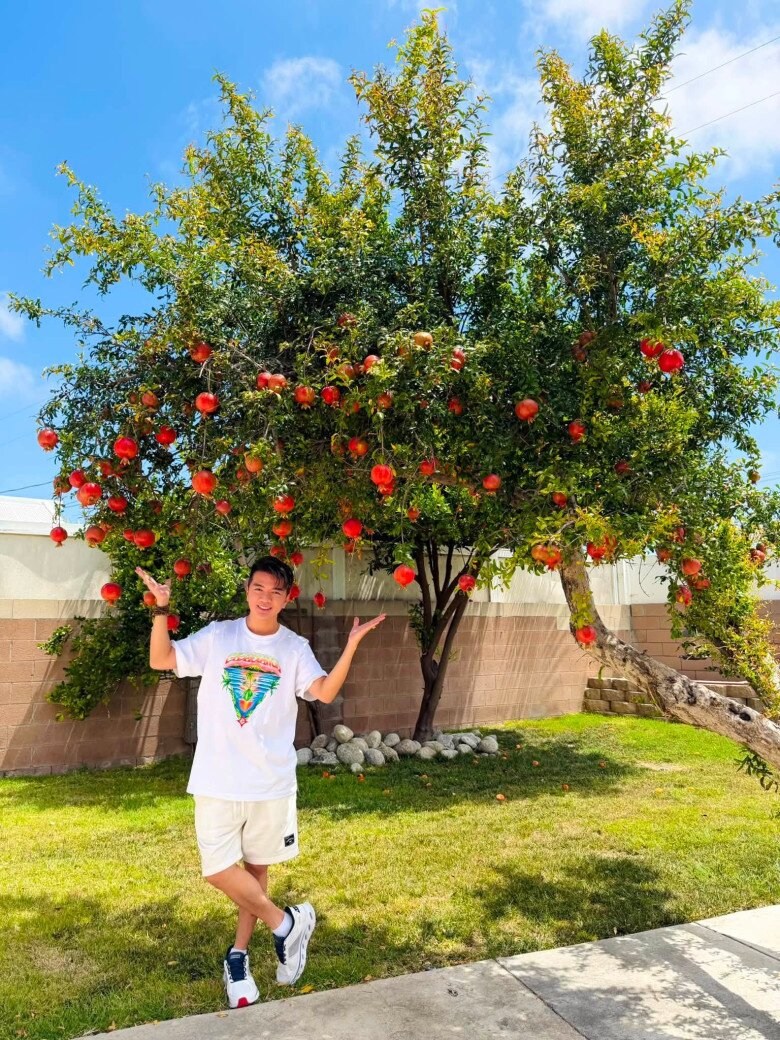
Especially, taking center stage in the garden is the pomegranate tree by the fence. It splits into two large branches, casting shade over a corner of the yard and bearing hundreds of ripe, red fruits.
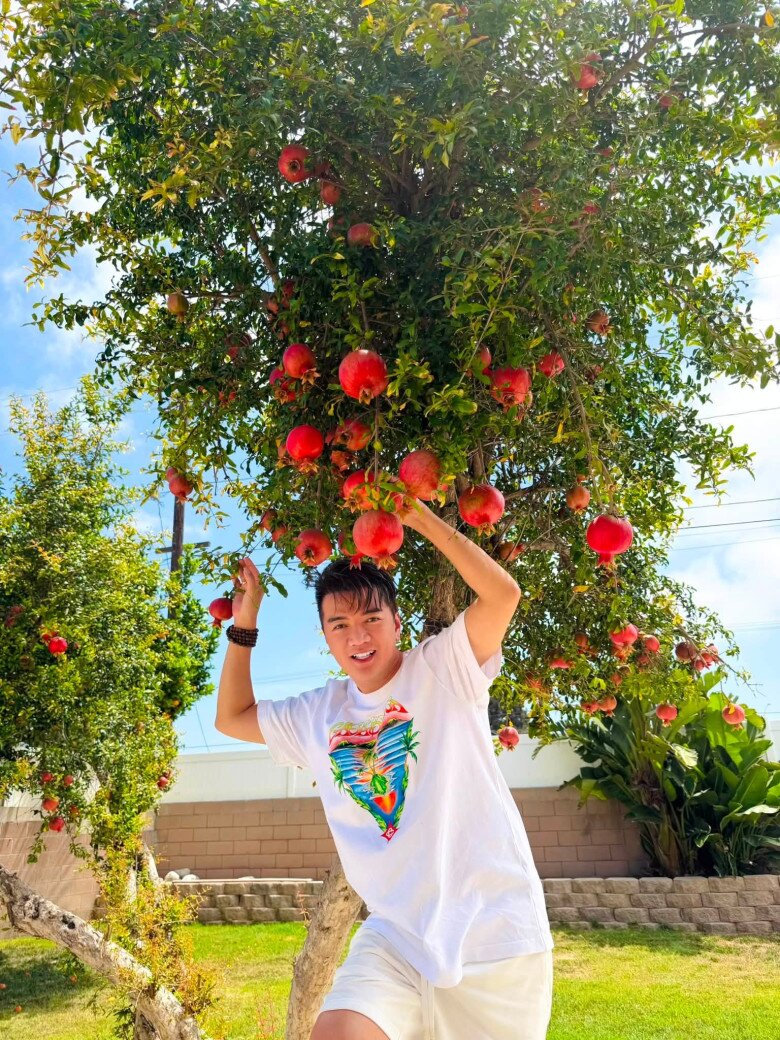
Gazing at the pomegranate tree, Đàm Vĩnh Hưng is captivated, comparing the fruits to “Christmas lights” and repeatedly exclaiming, “It’s like a painting, absolutely stunning.”
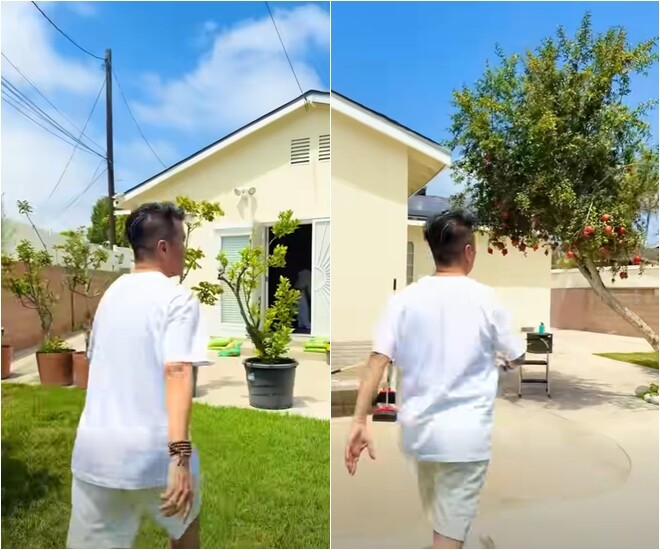
The combination of green lawns, vibrant fruit trees, and sunlight has transformed Đàm Vĩnh Hưng’s garden in his American villa into an ideal relaxation spot, close to nature after his busy performance schedule.
Tips for Growing Pomegranates with Abundant Fruits and Vibrant Red Color, Just Like Đàm Vĩnh Hưng’s Garden:
1. Choosing the Right Variety and Planting Location Determines 50% of Success
Full Sunlight Location: Pomegranates are extremely “sun-loving.” For the tree to bear sweet, glossy red fruits, it must be planted in a location with 6-8 hours of sunlight daily. Insufficient sunlight will cause the tree to focus on leaf growth, resulting in very low flower set rates.
Well-Draining Soil: Pomegranate roots are highly susceptible to waterlogging. Mix loamy soil with organic matter like coconut coir, rice husk, and compost (cow manure, vermicompost). If planting in a pot, choose one with a minimum diameter of 40-50cm and ensure it has multiple drainage holes.
2. Fertilization Secrets for Each Growth Stage
To ensure the pomegranate produces many flowers and supports large fruits without dropping, apply fertilizer “at the right time and in the right amount”:
Establishment Stage (Canopy Development): Regularly apply organic fertilizer combined with high-Nitrogen (N) NPK fertilizer to promote branching and a strong canopy framework.
Flowering Stage: Once the tree reaches maturity, switch to fertilizers high in Phosphorus (P) and Potassium (K) (e.g., NPK 10-55-10 or banana peel extract, eggshell powder). Phosphorus helps the tree develop flower buds vigorously.
Fruit Set Stage: Supplement with Calcium-Boron to increase the flexibility of the fruit stems, minimizing fruit drop and cracking when ripe.
3. Pruning Techniques to Stimulate Fruit Buds
Pomegranates typically flower and fruit on new spring/summer branches. If branches grow too long, the tree will weaken and produce fewer fruits.
Pinching for Branching: When the main branch reaches about 40-50cm, pinch the tip. This forces the tree to produce secondary and tertiary branches. These shorter, thicker branches are where most flowers will form.
Removing Water Sprouts and Weak Branches: Regularly prune dense branches, withered branches, or water sprouts (upright branches from the base) to redirect nutrients to fruit-bearing branches and improve air circulation, preventing pests and diseases.
4. The Art of “Water Stress” to Induce Simultaneous Flowering
If your pomegranate tree has lush foliage but refuses to flower, apply the water stress technique:
Completely withhold water for 7-10 days (or until leaves show slight wilting and a light yellow color).
This sudden water deprivation creates a “growth shock,” prompting the tree to transition from the vegetative (leaf-growing) stage to the reproductive (flowering) stage.
After the stress period, resume thorough watering and apply flowering fertilizer (rich in Phosphorus and Potassium). Within 1-2 weeks, the tree will produce new growth accompanied by abundant flower buds.
5. Fruit Care During the Ripening Stage
Stable Watering: Once the tree has set fruit, maintaining consistent moisture is crucial. Avoid letting the soil dry out completely or overwatering suddenly, as drastic changes in water pressure are the primary cause of fruit cracking.
Pest and Disease Control: Ripe pomegranates are highly susceptible to scale insects and fruit flies. When fruits reach the size of a lemon, use specialized fabric bags to cover them. This protects the fruits from pests and ensures even, glossy red coloration without the need for chemical pesticides.
“Top 4 Edible Houseplants: Beautify Your Home and Harvest Fresh, Healthy Food”
Elevate your living space with a touch of elegance and functionality. Our versatile plants not only serve as stunning decorative accents but also offer a bountiful harvest of leaves, flowers, and fruits, perfect for crafting culinary delights. Embrace a sophisticated lifestyle while ensuring your family enjoys fresh, safe, and homegrown produce right at your fingertips.
“The World’s Best Fruit”: Vietnam Successfully Cultivates in 2 Years, Becoming a Renowned Specialty Everywhere
Nestled among the world’s most nutritious fruits, kiwi is gaining popularity in Vietnam. While many local gardeners have successfully cultivated this versatile plant, both for its ornamental beauty and bountiful harvest, widespread cultivation remains a challenge due to Vietnam’s unique climate.
“Once a Forgotten Fruit Falling from Trees, Now a Sought-After Delicacy at 75,000 VND/kg – Plant Once, Harvest for Years”
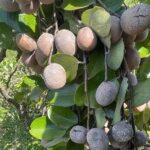
When ripe, the West’s cám fruit exudes an irresistible aroma, its golden, creamy flesh offering a delicately sweet flavor that has captivated urban dwellers in recent years.
3 Types of “Luck-Attracting” Trees: Chop Them Down and You’ll Lose Your Fortune, Keep Them and You’ll Prosper

“Planting trees brings fortune, and keeping them brings prosperity.” This ancient wisdom highlights the importance of greenery in our lives, and for good reason. There are three types of trees in particular that are believed to bring not only good fortune but also harmony and prosperity to your home. These trees are considered sacred and are believed to possess the power to influence the energy flow and bring positive vibes. Do not chop them down; instead, embrace their presence and the blessings they bestow upon your abode.
The Bare Yard is a Bare Fortune: Plant These 5 Trees for Prosperity and Blessings.
The art of gardening is not just about aesthetics; it’s about creating a harmonious balance with nature that can positively influence your destiny. Each plant and tree carries its own unique spiritual energy and choosing the right ones for your garden can bring prosperity and good fortune to your household. It’s not just about the plants themselves, but also the care and attention you give them that can enhance their spiritual power.