






















Among all household appliances, gas stoves are the most critical to prioritize for energy efficiency. This is not only because they save more gas but, more importantly, because of the quality of the flame they produce.
According to standards, a gas stove with a Tier 1 energy efficiency rating must achieve a thermal efficiency of over 63%. To reach this level, a key factor—the flame—must be optimized.
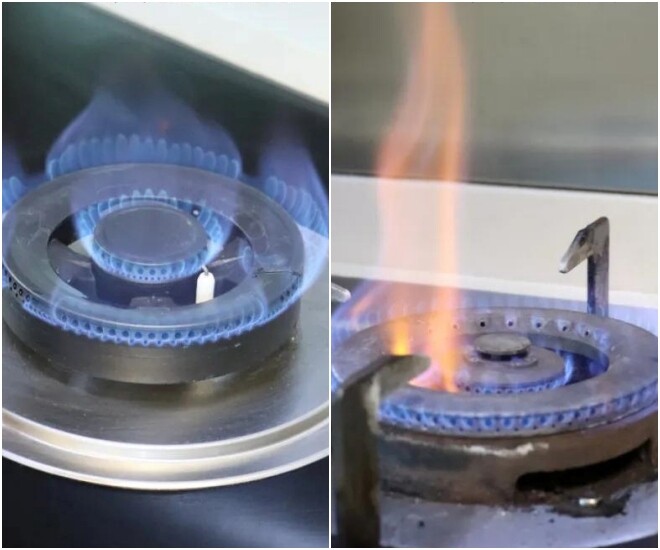
Tier 1 gas stoves produce a more stable, lower, and beautifully blue flame. In contrast, stoves that don’t meet this tier often have high, erratic flames that envelop both the bottom and sides of the pot.
As a result, the pot’s bottom only contacts the lower-temperature inner flame, slowing down cooking. Meanwhile, the outer flame licks the sides of the pot, easily blackening it and potentially damaging the handles.

2. Insufficient Burner Power
When purchasing a gas stove, pay close attention to the burner power. The maximum power for a household gas stove should not exceed 5.23 kW to ensure safety and prevent gas wastage. If your stove’s power is below 4.5 kW, replace it as soon as possible.
Higher-power stoves offer numerous benefits, such as faster heating for quicker cooking and better searing when stir-frying, achieving a crispy exterior while keeping the interior tender. Additionally, powerful flames can be adjusted to lower settings, meaning a high-power stove can handle all cooking modes of a low-power stove, whereas the reverse is not true.
3. Cast Iron Burners
If your gas stove still uses cast iron burners, replace them immediately. Anyone who’s used these knows the issue: a slight blow can cause iron residue to fall from the burner’s crevices.
This is the biggest drawback of cast iron burners: they rust easily. When rusted, iron fragments lodge in the crevices, making cleaning difficult. If your budget allows, opt for pure copper burners. For a more affordable option, aluminum alloy burners are better than cast iron, though not as durable as copper.

4. Faulty Safety Features
This isn’t just a recommendation—it’s a necessity. All modern gas stoves come with safety features that automatically cut off gas if the flame is extinguished, preventing leaks. Older stoves or those with damaged features may lack this protection.
Testing is simple: turn the flame to its lowest setting and blow it out. If the stove emits a beep and stops gas flow, the safety feature is functioning. If not, replace the stove immediately.
5. Low-Quality Glass Surfaces
Check the price of your old gas stove. If it cost less than 1 million, inspect the surface material. If it’s glass, replace it immediately. Cheap stoves often use tempered glass, which is prone to shattering, especially in high-heat environments like gas stoves.
Quality stoves feature 4–5 anti-explosion layers on the glass, while budget models lack sufficient protection, increasing the risk of dangerous explosions.
6. Dual-Battery Gas Stoves
Some stoves require two batteries, indicating an outdated ignition system. This system has two issues: slow ignition, often accompanied by prolonged clicking, and high battery consumption, sometimes requiring replacement twice a year.
While dual-battery stoves are usable, they’re far from optimal. If you’re considering a replacement or experiencing other issues, don’t hesitate—upgrade now.
“Upgrade Your Water Heater: 3 Mistakes to Avoid, 5 Must-Haves to Save Money”

After replacing three water heaters, I’ve learned that instead of fixating on flashy features, it’s wiser to focus on the “5 Do’s and 5 Don’ts” outlined below.
Why These 5 Air Conditioners Are No Longer Popular: A Revealing Insight

For those in the know about air conditioners, it is common knowledge that these cooling units are categorized into five energy-efficiency ratings. Interestingly, the higher the energy consumption, the more affordable the air conditioner tends to be.
Why This Type of Air Conditioner Is Gaining Popularity Over Wall-Mounted or Ceiling-Embedded Units

Introducing a must-have device that will revolutionize your home and elevate your lifestyle. This innovative gadget is designed to enhance your daily routines and bring a touch of convenience and efficiency to your living space. With its array of features and functionality, it’s no wonder that everyone who understands its purpose wants one of their own.
When to Turn On Auto Mode on Your Air Conditioner?

Air conditioning is a hotly debated topic in many households during the summer months. Whether it’s about finding the perfect temperature for optimal comfort or saving money on electricity bills, people tend to have strong opinions on the “right” way to use air conditioning.
Why You Should Keep the Bathroom Light on When Sleeping in a Hotel

The simple act of keeping your hotel room’s bathroom light on overnight offers a surprising array of benefits. Let’s explore these advantages and shed some light on this intriguing practice.